
Updating your news feed...
NEWS EXPRESS is Nigeria’s leading online newspaper. Published by Africa’s international award-winning journalist, Mr. Isaac Umunna, NEWS EXPRESS is Nigeria’s first truly professional online daily newspaper. It is published from Lagos, Nigeria’s economic and media hub, and has a provision for occasional special print editions. Thanks to our vast network of sources and dedicated team of professional journalists and contributors spread across Nigeria and overseas, NEWS EXPRESS has become synonymous with newsbreaks and exclusive stories from around the world.








.webp)

.webp)
.webp)



.webp)










Loading banners
Loading banners...

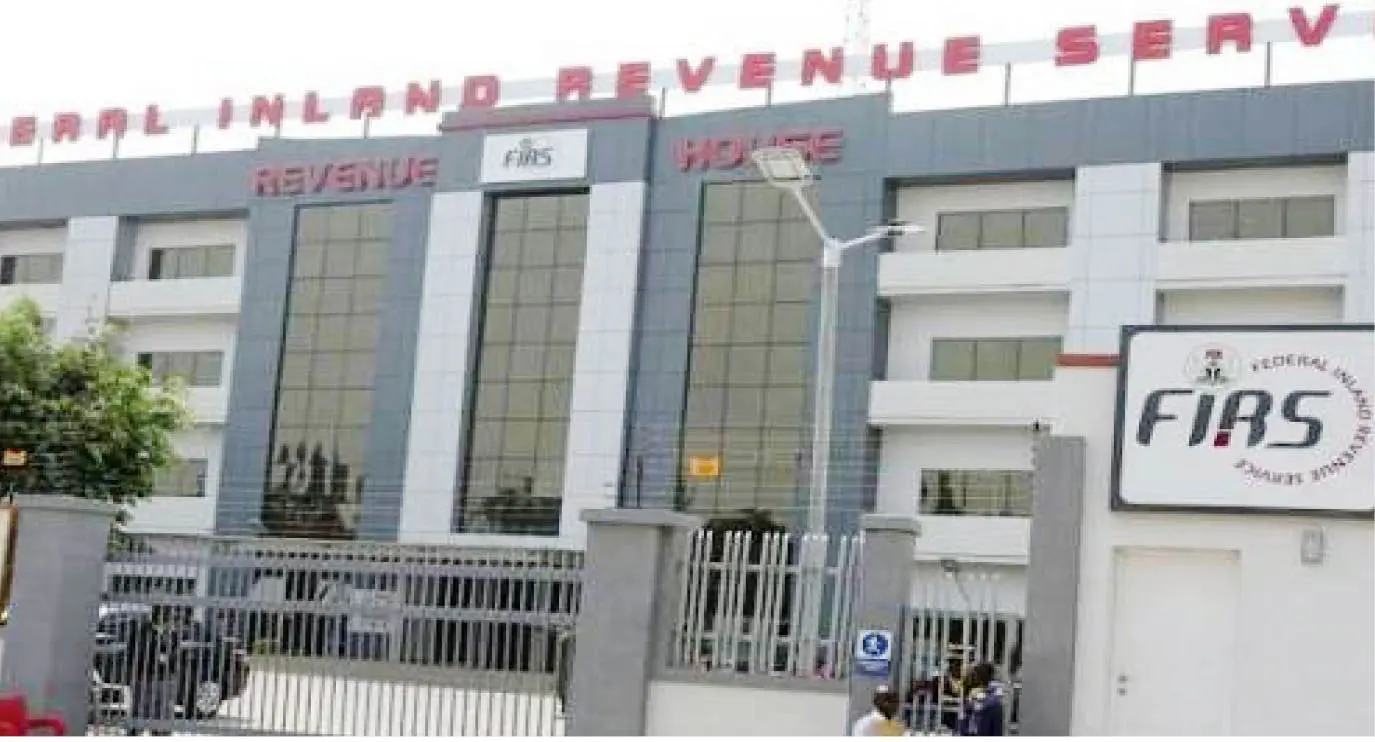
The federal government generated the sum of N8.09trn between January and November 2025, analysis of documents of the Federal Account Allocation Committee (FAAC) has shown.
A breakdown showed the government collected N7.69trn from Value Added Tax and N403.68bn from Electronic Money Transfer Levy (EMTL).
Analysis for VAT indicates that the government collected N771.86bn in January but reduced to N654.456bn in February and down to N637.61bn in March.
It increased slightly to N642.26bn in April then N742.82bn in May before experiencing another drop to N678.16bn in June. There was a notable increase to N687.9bn in July and further increase to N722.61bn in August.
September saw the continuous increase to N872.63bn before it further dropped to N719.82bn in October and N563.04bn in November.
For EMTL, January saw a collection of N21.40bn while in February it was N36.63bn and N26.01bn in March. April recorded the collection of N40.48bn while N28.82bn was collected in May.
In June it increased to N30bn and July witnessed further increase to N39.16bn but August’s collection dropped to N33.68bn.
September recorded the highest collection during the year with N53.83bn while there was a slight reduction in October to N49.86bn and N43.4bn was collected in November.
EMTL replaced with stamp duties from January 1
Meanwhile, the Electronic Money Transfer Levy (EMTL) has been replaced with Stamp Duties effective January 1, 2026.
This is in accordance with the Nigeria Tax Act (NTA) 2025, with N50 Stamp Duties charged on account when transfer of N10,000 or more to another beneficiary as mandated by the Federal Inland Revenue Service (FIRS).
A statement by PalmPay to its customers at the weekend said the sender will be charged Stamp Duties and not the receiver.
It read: “In accordance with the Nigeria Tax Act (NTA) 2025, the Electronic Money Transfer Levy (EMTL) has been renamed Stamp Duties effective January 1, 2026. N50 Stamp Duties will be charged on your account when you transfer N10,000 or more to another beneficiary as mandated by the Federal Inland Revenue Service (FIRS).
The sender will be charged Stamp Duties and not the receiver.
These Stamp Duty does not apply to transfers between your own PalmPay accounts where the names and BVN/NIN match.
Please note that PalmPay does not benefit from this stamp duty. It is remitted directly to the Federal Government. The Stamp Duty replaces the Electronic Money Transfer Levy (EMTL).”
Daily Trust reports that EMTL is a small but growing source of government revenue.
It generated N219.11bn in 2024, beating its N174.24bn projection.
That growth was driven largely by the extension of the levy to fintech platforms such as OPay, PalmPay, and Moniepoint.
Initially, EMTL applied only to deposit money banks. However, in December 2024, fintech transactions were also subjected to the same EMTL.
With the expanded stamp duty regime, the government is projecting N456.07bn in revenue in 2026, rising to N579.82bn in 2027 and N752.45bn in 2028.
The projections have been factored into the medium term expenditure framework (MTEF) for the 2026 budget making stamp duty a key pillar of fiscal certainty.
Also, under EMTL, revenue was shared between the federal government (15%), state governments (50%), and local governments (35%). Under the new tax law, the federal share drops to 10%, while states take 55%.
Replacing EMTL with stamp duty is part of a broader package of tax reforms set to take effect in January 2026. The new tax laws were enacted to improve tax collection and grow non-oil revenue.
The extra N50 people have to pay is insignificant in isolation, but multiplied across millions of daily transfers, it adds up to hundreds of billions for the government, and steadily erodes affordability for Nigerians who rely on digital payments to move money quickly and cheaply.
The EMTL was introduced under the Finance Act 2020 and it places a singular and one-off levy of N50 on the recipient of any electronic receipt or transfer of N10,000 or above.
Since its introduction, small business owners and point-of-sale (POS) operators and individual account holders have lamented the erosion of value of transfer made to them.
For instance, if N10,000 was transferred to a recipient with zero account balance for instance, the N10,000 reduces in value.
Many POS operators have particularly raised concern over the N50 levy which they said has led to reduction in their profit bottom-line.
Our correspondent however reports that some of the POS operators have devised several methods to hedge against it.
Daily Trust learnt that POS attendants charge N100 on transactions less than N5,000 and N200 on N10,000 while some of them had to review their charges to remain in business.
From EMTL to Stamp duty explained
Stamp duty is a tax on instruments (written or electronic documents). The Stamp Duties Act Cap. S8 LFN 2004 (“SDA” or the Act”) can be traced to the 1893 Stamp Duties and Stamp Duties Management Acts passed by the British Parliament.
It was enacted and came into force on 1 April 1939. specific amount regardless of the value of the transaction. The Finance Act 2019 (“the FA 2019”), particularly section 52, expanded the scope of the SDA to capture electronic transactions.
The FA 2019 (in section 54 which amended section 89 of the SDA) also expressly introduced stamp duties on bank deposits and transfers. This has been replaced by an Electronic Money Transfer Levy (‘EMTL”) now contained in a new section 89A of the SDA (amended by section 48 of the Finance Act, 2020 (‘the FA 2020”).
The Act, amongst other things, imposes stamp duties on written or electronic instruments (agreements, contracts, receipts etc.). Under the Act, stamp duties may be levied either at an ad valorem or flat rate depending on the type or nature of the instrument.
Chairman of the Presidential Committee on Tax Reform, Mr. Taiwo Oyedele had insisted that no new tax has been introduced in the new tax reform laws which would take effect on January 1, 2026.
According to him, the new government is on record to have repealed, reversed and suspended more taxes.
He listed the taxes that have been suspended to include 5% excise tax on airtime & data; Cybersecurity levy on money transfers; Carbon tax on single use plastics; Excise tax on imported vehicles; Import duties on food items, Agric and pharmaceuticals ; 4% import levy; FRCN charge on private companies and Expatriate employment levy.
In a recent presentation on the new tax laws, Oyedele expressed confidence that the new tax laws would stimulate growth without adding to inflation burden. (Daily Trust)