Updating your news feed...

NEWS EXPRESS is Nigeria’s leading online newspaper. Published by Africa’s international award-winning journalist, Mr. Isaac Umunna, NEWS EXPRESS is Nigeria’s first truly professional online daily newspaper. It is published from Lagos, Nigeria’s economic and media hub, and has a provision for occasional special print editions. Thanks to our vast network of sources and dedicated team of professional journalists and contributors spread across Nigeria and overseas, NEWS EXPRESS has become synonymous with newsbreaks and exclusive stories from around the world.

























Loading banners
Loading banners...

By FAIZA ABUBAKAR, Kaduna
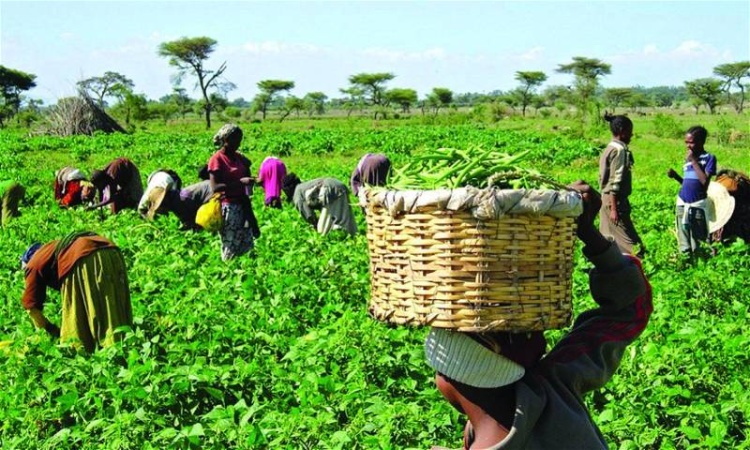
A coalition of agricultural non-state actors has raised concerns over what it described as the adverse effects of some Federal Government interventions on farm-gate prices of major commodities, warning that the situation now threatens farmers’ livelihoods and national food security.
The coalition, comprising farmer associations, cooperatives and civil society groups, spoke at a press conference in Kaduna, where it lamented the sharp decline in prices of maize, sorghum, rice and ginger across the country.
Spokesperson of the coalition, Bonet Emmanuel, in a statement on Sunday, December 22, 2025, said recent market developments had left many farmers counting heavy losses despite increased productivity. He attributed the situation to market distortions, weak post-harvest systems and an influx of cheaper imports.
“We are reviewing the impact of federal government waivers and the devastating collapse in farm-gate prices for major commodities,” Emmanuel said. “Our objective is to restore farmer confidence, protect rural livelihoods and safeguard national food security.”
Data presented by the group showed that maize prices dropped from N550,000 per tonne in December 2024 to about N240,000 in December 2025, representing a loss of N310,000 per tonne. Sorghum fell from N630,000 to N260,000 per tonne, while rice declined from N630,000 to N371,000 per tonne over the same period.
According to the coalition, the trend reflects a market failure rather than shortcomings on the part of farmers. “Productivity gains are turning into poverty,” Emmanuel added.
While commending the Kaduna State Government for its support to farmers through the provision of inputs, fertiliser, extension services and mechanisation, the coalition said many farmers were still unable to recover production costs, repay loans or meet basic household needs.
It noted that youth and women agripreneurs were among the worst hit, with returns on investment dropping to break-even or negative levels. The group also raised concerns over rising loan defaults among cooperatives and microfinance institutions.
The coalition called on the Federal Government to urgently introduce a Guaranteed Minimum Price (GMP) for key commodities, establish strategic commodity offtake programmes and review existing market waivers. It also urged the strengthening of warehouse receipt systems, improved linkages with processors and the creation of a national early warning and market intelligence system to prevent price crashes.
Members of the coalition include the Maize Association of Nigeria, the Ginger Association of Nigeria and the Small Scale Women Farmers Organisation of Nigeria (SWOFON).
The group pledged continued engagement with governments at all levels but warned that current price levels were unsustainable. “A food-secure Nigeria demands a farmer-secure Nigeria,” Emmanuel said.
Stakeholders across the sector have echoed the call for urgent intervention, warning that failure to act could trigger a wider agricultural and humanitarian crisis in rural communities.