Updating your news feed...

NEWS EXPRESS is Nigeria’s leading online newspaper. Published by Africa’s international award-winning journalist, Mr. Isaac Umunna, NEWS EXPRESS is Nigeria’s first truly professional online daily newspaper. It is published from Lagos, Nigeria’s economic and media hub, and has a provision for occasional special print editions. Thanks to our vast network of sources and dedicated team of professional journalists and contributors spread across Nigeria and overseas, NEWS EXPRESS has become synonymous with newsbreaks and exclusive stories from around the world.





Loading banners
Loading banners...
Abdullahi D Mohammed
By ABDULLAHI D MOHAMMED
For decades, Nigeria’s energy, oil, and gas sector has been the pulsating heart of the nation’s economy, fueling dreams and forging destinies. Nigeria is Africa’s largest oil producer. According to a 2024 OPEC report, the country pumps over 1.4 million barrels daily, accounting for 90% of export earnings and 65% of federal revenue.
This black gold drives monumental infrastructure—roads, bridges, and power grids—while anchoring national budgets and foreign exchange reserves, attempting to stabilise the naira amid global volatility and shocks.
Through monthly FAAC allocations, it sustains sub-national entities, empowering states and local governments to deliver services, ensuring Nigeria’s resilient stride toward prosperity.
Yet, corruption festers deeply in Nigeria’s oil sector, a venomous blight on the nation’s black gold. Successive governments have waged war against this scourge, each promising a cleaner dawn.
Lack of political will has inadvertently stalled such moves. Failures pile high, mocking reformist zeal across administrations. At the heart of it all lies the Nigerian National Petroleum Corporation (NNPC), once a proud national asset reduced to a cash cow for those in power.
The NNPC has morphed into a cesspool of graft, siphoning billions in petrodollars. Four refineries stand as stark monuments to this decay: Port Harcourt, Warri, Kaduna, and Eleme. For instance, the Port Harcourt’s twin plants, with 210,000 barrels per day capacity, lie idle since 2019. Warri’s 125,000 bpd facility gathers rust, offline for over a decade. Kaduna, at 110,000 bpd, hasn’t refined a drop since 2018. Eleme, the 10,500 bpd subsidiary, mirrors this paralysis.
Billions vanished into turnaround contracts—$1.5 billion alone from 2011-2019, per NEITI audits. No fuel flows; imports drain $10 billion yearly, fueling round-tripping scams. NNPC symbolized inefficiency, opaque deals, and elite plunder.
Under President Buhari, bold and ambitious efforts led to the passing of the Petroleum Industry Bill (PIB) in 2021. This landmark law deregulated upstream operations, birthing transparency mandates.
Consequently, it mandated 30% of profits for host communities, curbing militancy’s cash cow. PIB unshackled gas licensing, spurring investments worth $5 billion by 2023.
In all of this, supposedly, the NNPC shed its old skin and was rechristened Nigerian National Petroleum Company Limited (NNPCL). Known as a commercial entity, NNPCL eyes efficiency under private-sector governance.
In spite of all these, the unbundling of different sectors of the industry—the Nigeria Upstream Petroleum Regulatory Commission (NUPRC) and Nigerian Midstream and Downstream Petroleum Regulatory Authority (NMDPRA)—could not get the refineries working.
Aliko Dangote, Africa’s richest man and the wealthiest Black person on earth, stormed into Nigeria’s petroleum industry like a thunderbolt, vowing to shatter the stranglehold of greed that has choked the nation’s energy lifeline for decades. His monumental $20 billion mega-refinery—with a staggering 650,000 barrels per day capacity—rises as a beacon of salvation for millions of ordinary Nigerians, long battered by unregulated price hikes and the shadowy subsidy cabals that fattened themselves on public misery.
No longer must the masses endure the scandalous ripping by the Nigerian National Petroleum Corporation (NNPC) and its cronies, who gorged on imported fuel scams while local refineries rusted into oblivion. Dangote’s bold vision promises energy independence, flooding the market with affordable, homegrown fuel and rewriting Nigeria’s trajectory from import begging bowl to self-reliant powerhouse. This refinery isn’t just steel and pipes; it’s a dagger thrust into the heart of unhinged exploitation.
For years, NNPC and its allies orchestrated a vicious cycle: importing substandard fuel at inflated costs, pocketing billions in “subsidies,” and leaving Nigerians queuing in despair amid scarcity. Dangote flips the script, producing premium products that slash costs and end the cabal’s feast. Hope surges for the helpless and hapless—truck drivers, market women, factory owners—who now envision steady power, lower transport fares, and economic revival. His plant’s mechanical heartbeat pumps out diesel, kerosene, and petrol, directly challenging the importers’ profiteering empire and heralding an era where Nigeria refines its own black gold.
After many back and forth, and finally takeoff, over four grueling episodes Dangote had to contend with, who obviously tried to sabotage his efforts. First, the Pengassan labor strike crippled operations, halting progress amid union muscle-flexing. Then, marketers and importers, fearing their juicy margins, waged import wars to flood markets and undercut his prices. Foreign collaborators dragged their feet on tech transfers, while government agencies buried him in regulatory quicksand—endless audits, delays, and red tape.
Other sector players, from rival oligarchs to entrenched cabals, unleashed covert assaults: supply chain blockades, smear campaigns, and legal landmines. Undeterred, Dangote stands resilient, a colossus exposing the rot and forging a new dawn. His refinery doesn’t just refine oil; it refines Nigeria’s future.
In the blistering arena of Nigeria’s energy wars, billionaire industrialist Aliko Dangote emerges as the unsung champion of the common man. Despite relentless barrages from regulatory overlords—most brazenly the NMDPRA under Engr. Ahmed Farouq—Dangote Refinery powers ahead, a monumental force capable of satiating the nation’s insatiable fuel demands with pristine, homegrown quality.
Farouq’s latest gambit? Shamelessly greenlighting dubious importers to peddle substandard sludge into our veins. Call it deregulation, liberalization, or open-market fairy tales—it’s all smoke and mirrors for entrenched cabals to keep squeezing the masses dry. No sudden epiphany for regulators’ welfare; just transactional treachery in new garb.
But here’s the knockout truth: Dangote doesn’t dodge rivals or hoard monopoly. His refinery obliterates import dependency, crashes pump prices, and hands ordinary Nigerians the golden key to affordable energy. Amid spats and sabotage, Dangote isn’t just refining fuel—he’s igniting prosperity for the people.
The fierce pushback from Aliko Dangote, recently again against Engr. Ahmed Farouq and the NMDPRA, is likened to “I HAVE HAD ENOUGH OF YOUR MEDDLESOMENESS.”
He tries to uncover, loudly, how corruption thrives unabated in government agencies. How an individual, a public servant holding public office, could afford $5 million dollars to fund his children’s education in Switzerland.
Dangote’s petition to the ICPC against Engr. Ahmed Farouq is yet another heroic move on the part of the industrialist. It shows the anti-graft agencies and NGOs have their job cut out for them.
In the ensuing battle, like every ordinary Nigerian, I would side with Dangote, for obvious reasons. He has brought reprieve at a time we were being crushed by the impact of fuel subsidy removal. If he sought protectionism, it should not be mistaken for monopoly. It is nationalism. Serious countries protect and promote investments of their citizens, especially when such investments contribute to alleviating sufferings.
However, as the two elephants are battling, the grass—ordinary Nigerians—would inadvertently bear the brunt, should it lead to an increase in prices of fuel, which somehow government regulatory agencies are seemingly disposed to arrange.
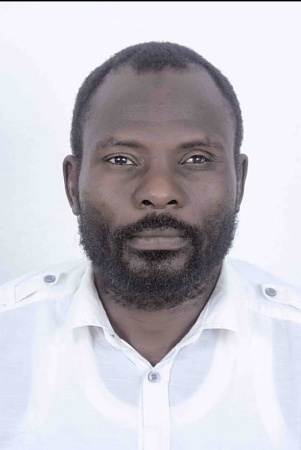
•Abdullahi D Mohammed is the coordinator, Initiative for Concerned Citizens Againts Drug Abuse and Community Awareness, can be reached via