Updating your news feed...

NEWS EXPRESS is Nigeria’s leading online newspaper. Published by Africa’s international award-winning journalist, Mr. Isaac Umunna, NEWS EXPRESS is Nigeria’s first truly professional online daily newspaper. It is published from Lagos, Nigeria’s economic and media hub, and has a provision for occasional special print editions. Thanks to our vast network of sources and dedicated team of professional journalists and contributors spread across Nigeria and overseas, NEWS EXPRESS has become synonymous with newsbreaks and exclusive stories from around the world.














Loading banners
Loading banners...

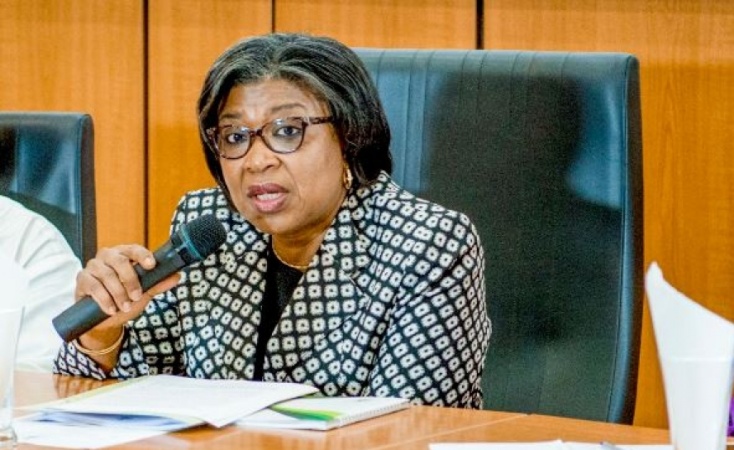
Patience Oniha, Director-General, DMO
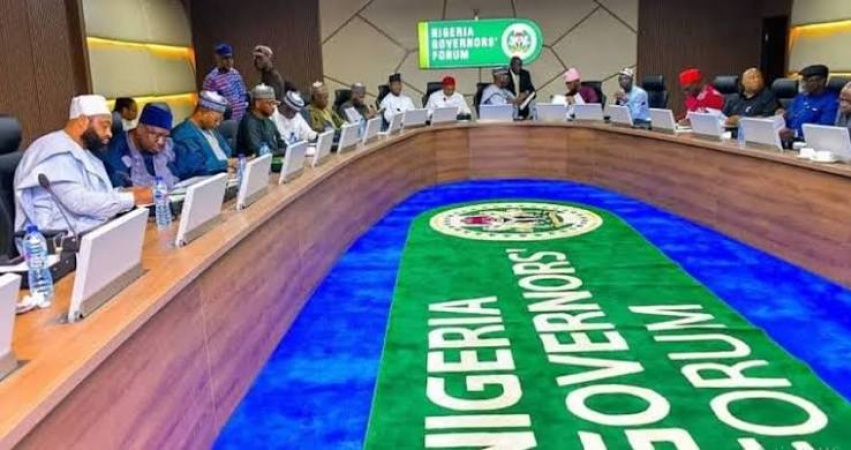
The Debt Management Office (DMO) has urged state governments across the federation to comply with the provisions of the Fiscal Responsibility Act and other relevant laws when contracting loans.
The DMO also warned state governments that borrowing outside the established framework could undermine fiscal sustainability at the sub-national level.
The Director-General of the DMO, Ms. Patience Oniha, gave the charge in Abuja on Tuesday at a workshop on borrowing guidelines organised for officials of state governments and the Federal Capital Territory.
Oniha said the workshop formed part of the Office’s ongoing capacity-building programme aimed at strengthening debt management practices among sub-national governments and ensuring that borrowing is undertaken in a transparent, responsible and legally compliant manner.
“We have been doing capacity building for what we call the sub-national governments, meaning the 36 states of the Federation and the Federal Capital Territory, to put them through the things that we do – debt recording, debt sustainability analysis, medium-term debt management strategy, how to record debt. All of that we put them through,” she said.
According to her, the training is designed to familiarise state officials with the borrowing process and the legal requirements that guide access to domestic and external loans.
She noted that compliance with the Fiscal Responsibility Act is not optional, as it sets clear conditions for borrowing by all tiers of government.
“This is very important because we want the states to be familiar with the guidelines for borrowing, to adhere to the provisions of the Fiscal Responsibility Act which have set the conditions for borrowing,” Oniha said.
She explained that the current workshop was a targeted training focused strictly on borrowing guidelines, rather than an assessment of states’ debt profiles. “This part of it, which is the workshop on borrowing guidelines, is a targeted training. So it’s not about what is your debt stock. It is a case of what are the requirements and what is the process for borrowing,” she said.
Oniha recalled that in previous years, the borrowing process for many states was often slow and cumbersome due to poor understanding of the legal and procedural requirements. She said this experience prompted the DMO to introduce the workshop series to close knowledge gaps among state officials.
“Our experience several years back was that each time a state wanted to borrow, because one way or the other, based on the laws – the Fiscal Responsibility Act, the DMO Act and the Investment and Securities Act – it has to pass through the Honourable Minister of Finance and through the Debt Management Office. We saw that the process was taking time because there wasn’t clarity or understanding. That was why we initiated this workshop,” she said.
The DMO boss disclosed that the first edition of the workshop was held about five years ago in Lagos, but the current exercise was expanded to accommodate more participants from each state. She said some states were represented by as many as eight officials to ensure wider institutional understanding of the borrowing framework.
“As you saw today, each state has about five, six, some eight people, so that they can all understand the borrowing guidelines which basically explain the major laws that govern borrowing,” she noted.
Oniha listed the Constitution of the Federal Republic of Nigeria, the Fiscal Responsibility Act and the Debt Management Office Act as the core legal instruments regulating public borrowing, stressing that compliance with these laws is mandatory. “There’s no flexibility. If it’s in the law, you really have to comply,” she said.
She said the ultimate goal of the training is to help states understand how to navigate the borrowing process efficiently, while ensuring that funds are raised strictly for development purposes.
“So how do we make the process work? How do we make the sub-national governments understand the process of borrowing, so that they can raise the funds that they need for development?” she asked.
Oniha added that even loans from development finance institutions such as the World Bank must follow the same approval process, noting that lack of understanding could delay access to critical development financing.
“This is very critical because if they haven’t understood the process, they can’t comply and they can’t raise the funds. Any lender they are borrowing from, even if it is a development finance institution like the World Bank, still has to go through that process,” she said.
She said the DMO remains committed to equipping state governments with the skills and knowledge required to ensure smooth borrowing processes and sustainable debt outcomes.
“The idea is to equip them with all the skills and the knowledge they need, so that each time they want to borrow, they are ready and the process is smooth,” Oniha said.
According to her, the expectation is that funds raised by sub-national governments will be channelled into projects that drive development and improve the welfare of citizens across the states. (The Nation)