Updating your news feed...

NEWS EXPRESS is Nigeria’s leading online newspaper. Published by Africa’s international award-winning journalist, Mr. Isaac Umunna, NEWS EXPRESS is Nigeria’s first truly professional online daily newspaper. It is published from Lagos, Nigeria’s economic and media hub, and has a provision for occasional special print editions. Thanks to our vast network of sources and dedicated team of professional journalists and contributors spread across Nigeria and overseas, NEWS EXPRESS has become synonymous with newsbreaks and exclusive stories from around the world.
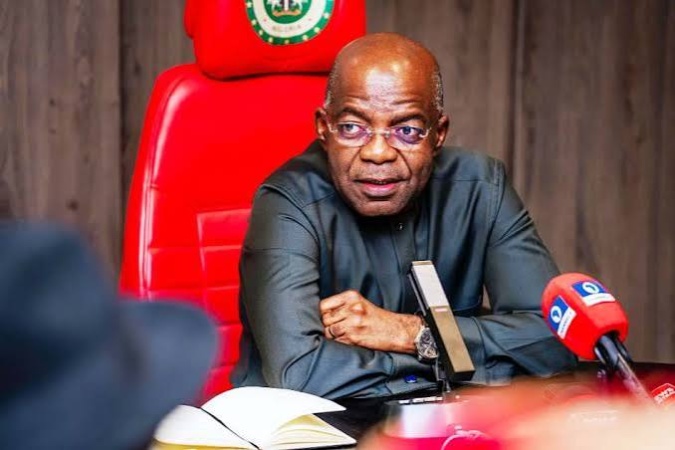



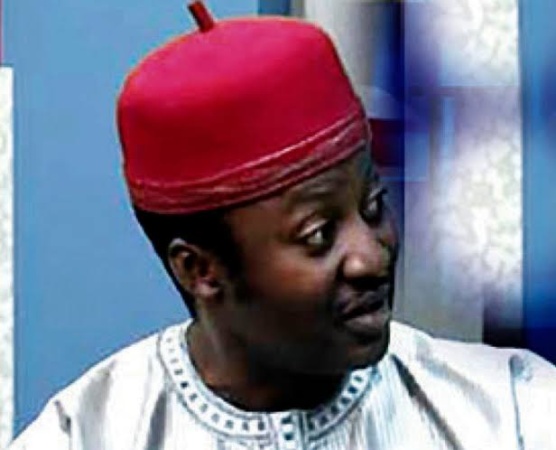



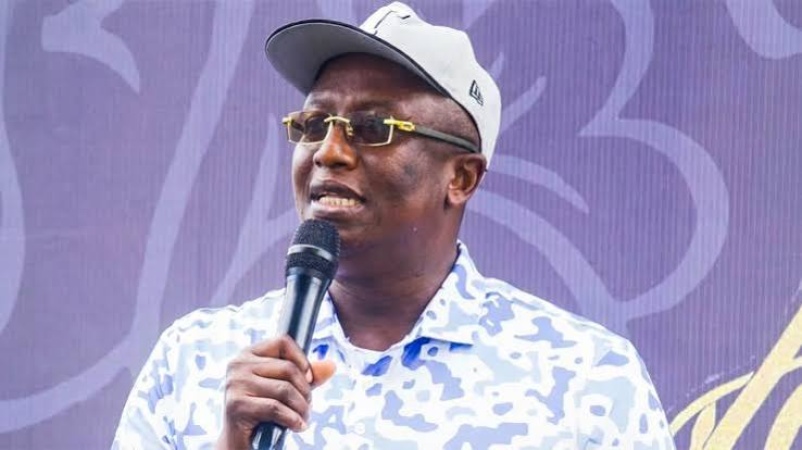
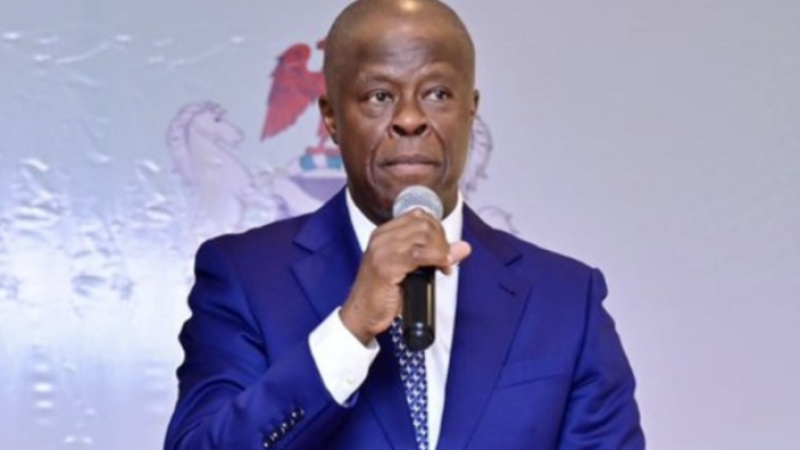
Wale Edun, Minister of Finance and Coordinating Minister of the Economy
The Federal Government on Monday, defended plans to roll over large portions of the 2024 and 2025 capital budgets into 2026, even as it acknowledged persistent revenue shortfalls and outlined a renewed strategy to stabilise Nigeria’s fiscal operations under the 2026–2028 Medium-Term Expenditure Framework (MTEF).
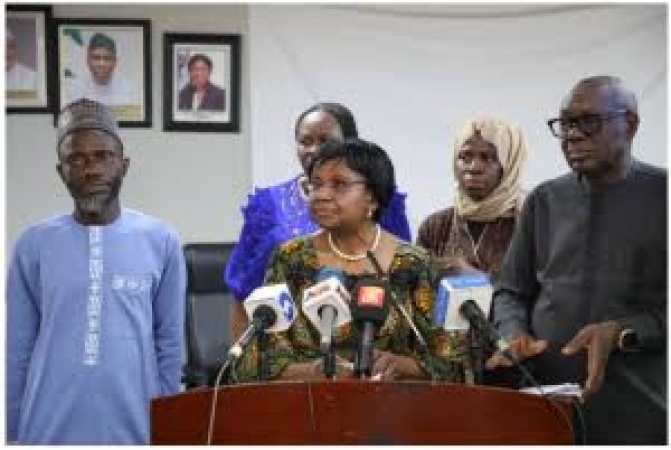
At an interactive session with the Senate Committee on Finance on the 2026 – 2028 Medium Term Expenditure framework, the Minister of Finance and Coordinating Minister of the Economy, Mr. Wale Edun, told lawmakers that the proposed rollovers were part of deliberate efforts to end the long-standing practice of running multiple budgets simultaneously and to restore a January-December fiscal cycle.
Edun explained that under the Fiscal Responsibility Act, government was legally required to present a three-year medium-term framework, noting that the 2024 capital budget had been extended to the end of 2025, with funding now fully available for projects captured on the automated payment gateway up to September.
“Funding is fully available for the 2024 capital budget that has been finalised and is in the gateway up to September,” the minister said. “Funding is available for a portion, and the other portion, the plan is to roll it over to the 2026 budget.”
On the 2025 budget, Edun disclosed that warrants had been issued and funding secured for 30 per cent of the capital component, while the remaining 70–75 per cent would, with the cooperation of the National Assembly, be rolled into the 2026 Appropriation Act.
According to him, the rollover approach was designed to avoid further extensions such as the one granted to the 2024 budget, which he said had contributed to fiscal distortions and implementation delays.
Revenue Targets Under Scrutiny
A major focus of the session was revenue performance, with senators expressing concern over the growing gap between projections and actual collections.
Edun admitted that revenue estimates in recent budgets had exceeded actual cash inflows, but insisted that government obligations were still being met through treasury management and financing operations.
He recalled that in 2024, the Federal Government’s revenue was estimated at about ₦25.9 trillion, but actual cash receipts stood at roughly ₦8.27 trillion, even though the overall budget performance was sustained.
“There was a treasury management operation, there was a financial engineering operation that closed that gap such that the 2024 budget revenue was met,” he said.
For 2025, while the revenue estimate stood at ₦40 trillion, Edun said actual Federal Government cash revenue was projected at about ₦10 trillion, underscoring the need for a “very, very robust revenue effort” going into 2026.
He stressed that despite revenue constraints, government had continued to meet key obligations.
“Within the context of what you call this year a 25 per cent performance of revenue, salaries have been paid, pensions have been paid, statutory transfers have been paid, debt service both domestic and foreign has been paid,” he said.
Debt Profile and Borrowing
Addressing concerns over Nigeria’s rising debt stock, Edun said the current figure of about ₦152 trillion was often misunderstood.
He explained that roughly ₦80 trillion of the total did not represent new borrowing, but rather the regularisation of previously unrecorded “Ways and Means” advances and exchange rate adjustments following foreign exchange reforms.
“Thirty trillion was the bringing into the books of government of ‘Ways and Means’ that were previously kept outside. Another ₦50 trillion was accounted for by the fact that the exchange rate doubled,” he said.
Nevertheless, the minister emphasised that the focus of the MTEF was no longer borrowing but revenue optimisation and fiscal sustainability, including proposals being considered by President Bola Tinubu to mobilise mass savings through public-private partnerships.
Conservative Oil Assumptions
In his presentation, the Minister of Budget and Economic Planning, Senator Abubakar Atiku Bagudu, said the 2026–2028 MTEF reflected extensive consultations within the executive, with development partners and state governments.
Bagudu disclosed that the framework adopted conservative oil benchmarks to improve credibility and performance.
He said the government introduced a target oil production level of 2.06 million barrels per day, while using a lower benchmark of 1.84 million barrels per day for revenue computation. Similarly, although Nigeria’s crude had traded between $71 and $73 per barrel in 2025, the MTEF adopted a reference price of $64.48 per barrel.
“These are all in line with being conservative so that the projections can have a better chance of being met,” he said.
Bagudu also outlined agreements reached between President Tinubu and state governors, including sustaining macroeconomic reforms, increasing infrastructure and security spending, minimising revenue losses in oil, gas and solid minerals, and launching a Renewed Hope Ward Development Programme to drive grassroots economic growth across the country’s 8,809 wards.
Senators Raise Red Flags
Despite the explanations, senators raised sharp concerns over budget implementation delays and the implications of rolling over large portions of enacted budgets.
Chairman of the Senate Committee on Finance, Senator Sani Musa, questioned how the proposed 70 per cent rollover of the 2025 capital budget would affect priority projects already approved by law.
“Since the 2025 budget has been enacted as a law, not until that is either amended or repealed… when you say you are taking it over, we assume that you are taking exactly what is in the Act to now create the next Appropriation Act,” he said.
Senator Danjuma Goje queried whether all completed 2024 projects had been fully paid, warning against carrying unpaid obligations into subsequent fiscal years.
Similarly, Senator Adams Oshiomhole cautioned that weak capital budget performance translated directly into job losses, arguing that growth without job creation amounted to “jobless growth for the pleasure of statisticians.”
“Where do the jobs come from? They come from the execution of capital projects,” Oshiomhole said, warning of dashed expectations in constituencies where budgeted projects failed to materialise.
Other lawmakers, including Senators Ireti Kingibe, Victor Umeh and Kamarudeen Oyewumi, pressed the finance team on why borrowed funds could not be deployed to close revenue gaps and called for a more bottom-up, constituency-driven approach to budgeting.
Payments, Gateways and Assurances
Responding, Edun assured the Senate that funding had been arranged to clear all warranted 2024 obligations, with half paid in cash and the balance to be covered through service-wide votes under the 2026 budget.
He confirmed that funding for the 30 per cent of the 2025 capital budget already warranted was “sitting there,” stressing that delays were largely linked to verification processes and payment initiation by MDAs on the GIFMIS platform.
The Accountant General of the Federation’s representative, Mr. Ogunjimi, told the committee that payments to indigenous contractors had commenced and explained that delays often arose when MDAs failed to complete required steps on the system.
To fast-track disbursements, the committee resolved to set up a three-man ad-hoc team to liaise with the Ministry of Finance and the Office of the Accountant General before the end of the year.
Revenue Agencies Defend Projections
Executive Chairman of the Federal Inland Revenue Service (FIRS), Dr. Zacch Adedeji, defended Nigeria’s non-oil revenue drive, noting that non-oil collections had outperformed targets and were a better test of economic diversification.
He explained that budgeting involved three components expenditure, revenue and loans and warned that using one year’s revenue to fund multiple years of expenditure would continue to create imbalances unless corrected.
Other agencies, including the Nigerian Ports Authority and NIMASA, also presented their projections, while the committee declined to take the Nigeria Customs Service report in the absence of its Comptroller General.
As deliberations continue, lawmakers insisted that resolving revenue realism, timely payments and strict adherence to the fiscal calendar would be critical to restoring confidence in the budget process ahead of the 2026–2028 cycle. (The Sun)