Updating your news feed...

NEWS EXPRESS is Nigeria’s leading online newspaper. Published by Africa’s international award-winning journalist, Mr. Isaac Umunna, NEWS EXPRESS is Nigeria’s first truly professional online daily newspaper. It is published from Lagos, Nigeria’s economic and media hub, and has a provision for occasional special print editions. Thanks to our vast network of sources and dedicated team of professional journalists and contributors spread across Nigeria and overseas, NEWS EXPRESS has become synonymous with newsbreaks and exclusive stories from around the world.




















Loading banners
Loading banners...

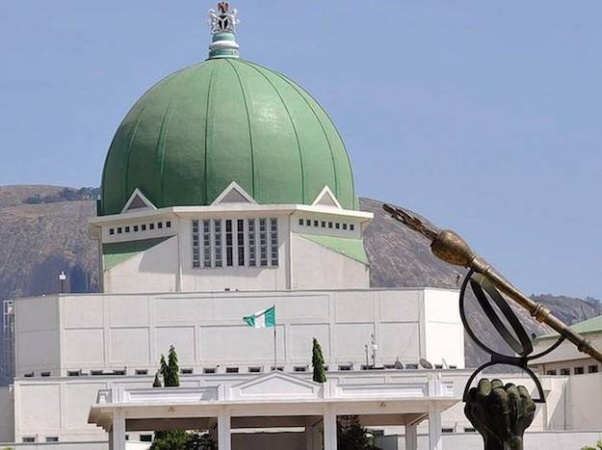
Joint local government accounts may soon be history in the country, according to proposals by the National Assembly.
Federal lawmakers who are in the process of amending the 1999 Constitution are rooting for greater autonomy for the third tier of government, The Nation has learnt.
Also, under consideration for inclusion in the amendment are state/community policing, independent candidacy, an electoral offences commission and separation of the position of Attorney General of the Federation from that of Justice Minister.
The proposals are contained in the report of the House of Representatives Committee on Constitution Review, sighted by our correspondent.
The report, which was prepared following the recent joint retreat of the National Assembly on Constitution Review, has just been distributed to the Reps for their perusal ahead of deliberation on the floor of the House.
In all, there are 44 provisions in the report.
The House is expected to discuss each of the provisions and vote on them.
A similar process will take place in the Senate.
The proposed Electoral Offences Commission will be responsible for the investigation of electoral offences and the prosecution of offenders.
It will be administered by a chairman and 12 members to be designated as commissioners.
Although participants at the Lagos joint retreat voted in support of the creation of seven additional states, including two in the South East, the report sighted by our correspondent says there shall be 36 states in the country grouped into six geo-political zones in Nigeria, namely, North East, North Central, North West, South East, South West, and South-South.
“Each Geo-Political Zone shall comprise the States prescribed in Part 1A of the First Schedule to this Constitution,” it explains.
One of the bills seeks to empower local government legislative houses to make laws for the good governance of the local government areas.
It says: “The legislative powers of a Local Government shall be vested in the Local Government Legislative Council. The Local Government Legislative Council shall make by-laws for the peace, order and good government of the Local Government or any part thereof with respect to the following matters (a) any matter contained in the Fourth Schedule to the Constitution; and (b) any other matter with respect to which it is empowered to make laws in accordance with the provisions of the Constitution.”
It adds: “subject to the provisions of this Constitution, the Executive Powers of a Local Government- (a) shall be vested in the Chairman of that Local Government, and may, subject as aforesaid and to the provision of any by-law made by the Legislative Council of that Local Government, be exercised by him either directly or through the Vice Chairman of the Local Government or Supervisory Councilors of the Local Government Council or other officers in the public service of the Local Government.
“The system of local government by democratically elected local government councils is under this Constitution guaranteed; and accordingly the Government of every State shall, subject to section 8 of this Constitution, ensure their existence under a Law which provides for the establishment, structure, composition, finance and functions of such councils. No system of government, by whatever name called, shall be instituted to administer local government.
“The Government of every State shall, (a) subject to section 8 of this Constitution, ensure the existence of Local government Councils under a Law of the House of Assembly of that State; and (b) make laws for the structure and administration of Local Government subject to the provisions of this Constitution.”
On revenue allocations to the third tier of government, the proposed amendment states that “subject to the provisions of this Constitution – (a) the National Assembly shall make provisions for statutory allocation of public revenue to Local Governments in the Federation; and (b) the House of Assembly of a State shall make provisions for statutory allocation from internally generated public revenue to Local Government within the State.”
No provision is made for local government joint accounts.
Part of the proposed amendment seeks to amend Sections 162 (6)(7) to read “(6) Each local government council shall maintain a special account to be called ‘Local Government Council Allocation Account’ into which shall be directly paid allocations to the local government council from the Federation Account and from the Government of the State.
“Each State shall pay to local government councils in its area of jurisdiction such proportion of its total internally generated revenue on such terms and in such manner as may be prescribed by a Law of the House of Assembly of the State.
“The amount standing to the credit of local government councils of a State shall be distributed among the local government councils of that State on such terms and in such manner as may be prescribed by the House of Assembly of the State. Provided that the House of Assembly of the State shall make law for direct payment of at least five per cent from the amount standing to the credit of the local government Councils, to the head of the Traditional Council in each State.”
The proposed amendment prescribes a four-year tenure for elected local government chairmen and councillors.
The proposal amends Section 212 of the 1999 Constitution to provide that “subject to the provisions of subsection (1) of this section, the Chairman shall vacate his office at the expiration of a period of four years commencing from the date when – (a) in the case of a person first elected as Chairman under this Constitution, he took the Oath of Allegiance and oath of office, the person last elected to that office took the Oath of Allegiance and oath of office or would, but for his death, have taken such oaths.”
It also provides that “in the determination of the four-year term, where a re-run election has taken place and the person earlier sworn in wins the re-run election, the time spent in office before the date the election was annulled shall be taken into account.”
The lawmakers will also be considering an amendment to the citizenship provision in the constitution to include the acquisition of Nigerian citizenship by foreign nationals through investment in the economic development of the Federation, under such terms and conditions as may be prescribed by an Act of the National Assembly.
It says any law made in regards to the issue of citizenship by investment shall (a) specify the categories of eligible investment, including, but not limited to (I) direct investment in designated priority sectors of the economy; (ii) investment in real estate above a prescribed minimum value; (iii) establishment of business enterprises that create employment or promote technology transfer; or (iv) contribution to a national development or sovereign investment fund established for that purpose.
Provisions are made for the creation of a senatorial seat in each of the six geo-political zones and the FCT, as well as one House of Reps seat per state and the FCT exclusively for women.
But it says the exclusive seats do not preclude women from contesting any other seat in accordance with the provisions of this Constitution.
“The provisions shall take effect after the expiration of the current National Assembly and shall be reviewed once the special Senate seat has rotated through all the States in each geopolitical zone, such that every State has taken its turn to produce a woman Senator for one term”.
Provisions are made for independent candidates to contest elections at all levels.
Such candidates are required to “obtain the verified signatures of at least twenty per cent of registered voters from each of the local government areas in the respective Senatorial District or Federal Constituency, as the case may be, provided that- “(a) a registered voter shall not sign for more than one independent candidate in respect of the same office; and the signatures shall be verified by the Independent National Electoral Commission.”
The lawmakers are seeking to separate the functions of the Minister of Justice and the Attorney General for the Federation.
The report says: “There shall be a Minister of Justice who shall be a Minister and the Chief Law Officer of the Government of the Federation.”
Candidates for the office must be legal practitioners in Nigeria with a minimum of 15 years at the bar.
The Attorney-General of the Federation will be appointed by the President upon recommendation of the National Judicial Council and subject to confirmation by the Senate, and shall act independently and not be subject to the direction or control of any other person or authority.
If the amendment sails through, the Attorney-General of the Federation will be have power to among others, a) institute and undertake criminal proceedings against any person before any court of law in Nigeria, other than a court-martial, in respect of any offence created by or under an Act of the National Assembly; (b) take over and continue any such criminal proceedings that may have been instituted by any other person or authority.
He Is also expected to have power to discontinue, at any stage before judgment is delivered, any such criminal proceedings instituted or undertaken by him or any other person or authority as well as supervise, monitor, control and ensure that all government agencies with investigative and prosecutorial powers carry out their functions in accordance with the law establishing them; and perform such other functions as may be conferred upon him by an Act of the National Assembly.
The Attorney General, under the new constitution will be expected to hold office for a term of five years and may be reappointed for a further term of five years and no more, or he attains the age of sixty-five years, whichever is earlier and can be removed from office by the President acting on a resolution supported by two-thirds majority of the Senate praying that he be so removed for inability to perform the functions of his office.
The lawmakers are also altering the provisions of Section 187 to ensure that the removal of a deputy-governor or deputy-governorship candidate on account of qualification or disqualification by a Court or Tribunal does not affect the election of a governorship candidate or governor-elect, while allowing the governor or governorship candidate the right to nominate another person as deputy-governor or deputy-governorship candidate.
The constitution review committee also recommended the establishment of state and community policing in addition to the federal police to maintain law and order at the state and community levels.
The proposal explained that “Community Police” means a policing approach in which law enforcement personnel work in close partnership with residents, community institutions, and local stakeholders to prevent crime, maintain public safety, and resolve security concerns through collaboration, problem-solving, trust-building, and regular engagement with the community and includes proactive, nonviolent, preventive, and service-oriented policing activities carried out within the community to enhance security, uphold human rights, and strengthen public confidence in law enforcement”.
Another proposal says: “the President shall cause to be prepared and laid before the joint session of the National Assembly, at least at least 60 days before the end of the preceding financial year, estimates of revenues and expenditure of the Federation for the succeeding financial year.”
The committee wants to strip the President and the governors the power to issue proclamation for the first sitting of the National or state House of Assembly by inserting a new subsection whichh states that “subject to the provisions of this Constitution, the first session of the National Assembly shall hold and be deemed to be convened on the second Tuesday of June at a time not later than 12 noon.”
The amendment also states that “the Supreme Court shall, to the exclusion of any other court of law in Nigeria, have original jurisdiction to hear and determine any question as to whether – (a) any person has been validly elected to the office of President or Vice President under this Constitution, (b) the term of office of the President or Vice President has ceased, or (c) the office of President or Vice President has become vacant.
“In the hearing and determination of any election petition under subsection (1A), the Supreme Court shall be duly constituted if it consists of at least five Justices of the Supreme Court. In every Presidential election petition, the Supreme Court shall deliver its judgement in writing within 60 days of filing of the suit. (The Nation)