Updating your news feed...
NEWS EXPRESS is Nigeria’s leading online newspaper. Published by Africa’s international award-winning journalist, Mr. Isaac Umunna, NEWS EXPRESS is Nigeria’s first truly professional online daily newspaper. It is published from Lagos, Nigeria’s economic and media hub, and has a provision for occasional special print editions. Thanks to our vast network of sources and dedicated team of professional journalists and contributors spread across Nigeria and overseas, NEWS EXPRESS has become synonymous with newsbreaks and exclusive stories from around the world.













Loading banners
Loading banners...


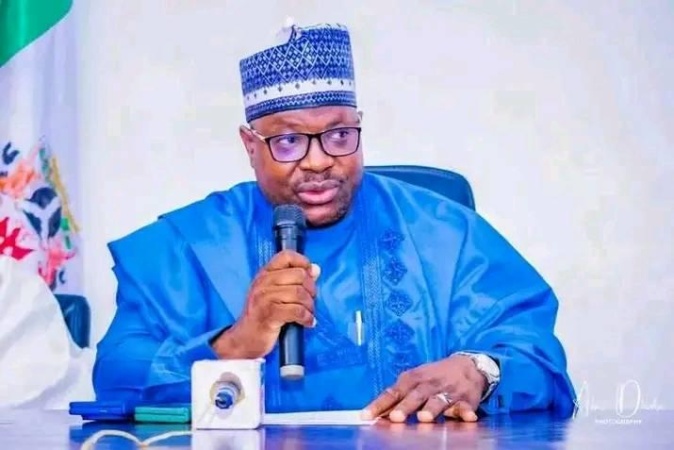
ALGON National president, Mr Aminu Muazu Maifata
This is not the first time efforts have been made towards amending the 1999 Constitution by the National Assembly. Even as the current attempt is ongoing, the interest it has attracted towards the reformation of the local government structure in Nigeria has remained unparalleled due to the action taken by the federal government towards restructuring the third tier of government.
In May, the federal government filed a suit seeking to alter the structure and operations of local governments in Nigeria in two significant ways.
The first Is to safeguard the funds due to local governments from the federation account by preventing state governors from tampering with it; and the second is to ensure democracy thrives at the third-tier level of government by restraining governors from dissolving elected councils and replacing them with interim committees.
The two issues are quite significant due to the manner state governors have rendered the operation of the local governments and their intended autonomy as a tier of government ineffective.
Under the current revenue allocation formula, the federal government receives 52.68 per cent of the country’s monthly revenue while the states get 26.72 per cent, and local governments are collectively allocated 20.60 as disbursed by the Federation Account Allocation Committee (FAAC).
But the 20.60 per cent meant for the local governments does not go directly to the local governments. It is paid into a joint account, the Joint Account Allocation Committee (JAAC) operated by states and local governments.
There are allegations, however, that governors have taken advantage of the JAAC to dip their hands into the funds meant for the exclusive use of local governments while appropriating the bulk of the money.
This, according to those familiar with local government administration, was not the practice during the military administration and early in the current democratic dispensation. Local governments were given their allocations directly.
A former chairman of Ado Local Government Area of Benue State, Chief Otse Otokpa, who served between 1999 and 2002, confirmed that during his tenure, local government councils were given their allocations directly; hence the chairmen could do much with it.
“Our cheques were coming straight from the Central Bank of Nigeria (CBN) at that time. We were given CBN cheques and it was paid directly to the local government account. When we came to the state capital, Makurdi for JAAC, we only came to discuss issues that state and local governments could finance jointly. But our money came directly to us and we did whatever we wanted with it as discussed by the council,” he said.
Along the line, however, governors started having access to the JAAC and have been accused of taking advantage of the transit route to tamper with local government funds.
The Supreme Court, on July 11, however, put paid to those practices while answering the prayers of the federal government by granting financial autonomy to the local governments and making it illegal for state governors to sack elected local government councils.
The judgement has been hailed across the country as positive due to its potential to deepen democracy and accelerate development at the grassroots through the freeing of funds directly by the councils and protecting the tenure of elected councils.
The Association of Local Governments of Nigeria (ALGON), through its national president, Mr Aminu Muazu Maifata, said it believes the implementation of the judgement would ensure accountability as people would be able to monitor allocations to local governments.
“We will channel those resources towards implementing laudable programmes, implementing projects and tackling challenges at the grassroots. We are ready for that and will not let our people down,” Maifata said.
The Peoples Democratic Party (PDP), through its Deputy National Publicity Secretary, Abdullahi Ibrahim, also said it supported the decision of the Supreme Court “because we believe it is time the local governments enjoy their subvention directly from the federation account.”
He added, “If we are truly in a democracy, it is expected that the federation is made up of three tiers of government – the federal, state and the local government. So, we see what has happened as a commendable development, and we are solidly behind the Supreme Court.”
The second Issue is closely linked to the first and has to do with how most of the state governors, due to their interest in the affairs of local government councils, do not allow democracy to cascade to the third tier of government as they dissolve elected councils at will and appoint their lackeys in the name of caretaker committees.
Several interest groups, including political parties, civil society organisations and individuals have, since the pronouncement by the apex court, demanded for a total reform of the local governments, starting with its leadership selection process, which rests squarely with state governments.
Section 197 of the 1999 Constitution empowers the states, through the State Independent Electoral Commissions (SIECs) to organise local government elections at the local government level.
But like the JAAC, which is widely believed to have been abused by most state governors, the operations of the SIECs have also been hijacked by the governors, making them subservient to chief executive officers of various states.
Consequently, many have lost faith in local government elections, with the conviction that no true election can take place at that level once it is conducted by state governments.
A local government staff in Bauchi State, who does not want to be named, said, “Local government councils suffer the worst form of abuses; they are at the mercy of governors, who do as they wish with them.” (Excerpted from a Weekend Trust report)