ADAD
ADADUpdating your news feed...

NEWS EXPRESS is Nigeria’s leading online newspaper. Published by Africa’s international award-winning journalist, Mr. Isaac Umunna, NEWS EXPRESS is Nigeria’s first truly professional online daily newspaper. It is published from Lagos, Nigeria’s economic and media hub, and has a provision for occasional special print editions. Thanks to our vast network of sources and dedicated team of professional journalists and contributors spread across Nigeria and overseas, NEWS EXPRESS has become synonymous with newsbreaks and exclusive stories from around the world.
























Loading banners
Loading banners...


CPPE CEO, Dr Muda Yusuf
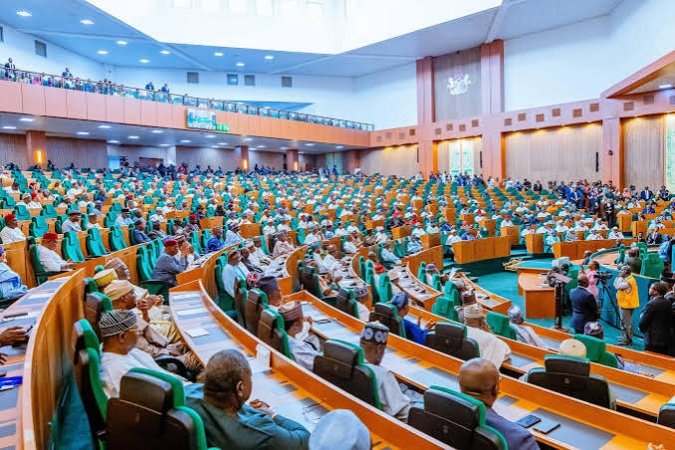
The Centre for the Promotion of Private Enterprise (CPPE) has expressed concern over remarks on cement price made on the floor of the House of Representatives. CPPE said the remarks portrayed cement manufacturers in very bad light.
Chief Executive Office of CPPE, Dr Muda Yusuf, said: “Members alleged that the manufacturers were exploitative as they engaged in arbitrary fixing of cement price. Some members even described the manufacturers as unpatriotic,” adding: “These were narratives on the floor of the house which we consider to be most unfair to investors in the cement sector, especially when the perspectives of the cement manufacturers had not been heard by the members of the house.
“Most of the remarks at the session were capable of inciting the public against the cement manufacturers and putting their huge investments at risk.It is a dangerous thing to do, given the huge stake they have in the Nigerian economy and their enormous contributions to the economy.”
Dr Yusuf, an economist and the immediate past Director-General of the Lagos Chamber of Commerce and Industry (LCCI) further said: “We plead with the leadership of the house to ensure moderation in the use of language to avoid adverse consequences for investors in the economy, going forward.”
He also stated that it was more troubling that the members had not listened to the manufacturers before rushing to judgment and castigating the manufacturers. He remarked: “Cement manufacturers were disparaged, denigrated and portrayed as deliberately inflicting pains on Nigerians by arbitrarily increasing the price of cement.This is most unfair in our humble opinion. Such weighty allegations should be premised on painstaking study, empirical facts and evidence. The dimensions of the pricing dynamics need to be properly understood.
For an economy seeking to industrialize, attract investors and create jobs, such commentaries represent negative signalling.Principles of fairness demand that the cement manufacturers should be given an opportunity to tell their own story before members could come to fair conclusion and judgement.But regrettably, they have been judged publicly, before giving them the opportunity to present their own side of the story.We believe this is a breach of the norms and standards of fairness and equity.”
In addition, he said: “It is even more painful because the major players in the sector are indigenous companies making giant strides amid a very difficult operating environment including the multitudes of macroeconomic and structural headwinds. They have created hundreds of thousands of jobs (directly and indirectly), and paid billions of naira in taxes.This is coupled with numerous corporate social responsibility initiatives to which they have committed billions of naira. These are facts that we should appreciate.”
According to Yusuf, the business of manufacturing is perhaps the most challenging enterprise in the contemporary Nigerian economy and has laid foreign firms in that space under necessity to either exit the country or downsize their operations.
“We appeal to the national assembly to always extend due courtesies to investors in the economy in the course of their legislative duties,” he added. Dr Yusuf’s position stems from his observation that the private sector plays a very critical role in the economy, accounting for over 80 per cent of the country’s GDP, about 90 per cent of the employment and over 70 per cent of the government revenue.
“They deserve to be addressed with respect, courtesy, civility and fairness. This is without prejudice to the imperative of compliance with extant laws and regulations as well as responsible corporate citizenship by the investors,” he also stated.
According to him, cement production is highly energy intensive with gas as the major energy source. The CPPE boss further observed that while gas is priced in dollars for manufacturers in the country, cement manufacturers sell their products in naira, and describes as a major predicament for domestic manufacturers. He said: “The implication of that for production cost is better imagined, especially in the light of the plunge in the value of the naira.
The logistics cost of cement distribution is humongous, given the escalating cost of diesel and the state of the roads. Exchange rate depreciation is taking a huge toll on the cost of imported components of production inputs, including spare parts and machineries. Cost of fund is mounting as the CBN continues its aggressive monetary policy tightening. Latest headline inflation for February was 31.7%. All these are variables which are not within the control of the manufacturers, and which have profound impact on production and operating cost.
It is important to stress that matters of this nature require painstaking and thorough investigation to determine the pricing dynamics and the ramifications of the factors driving prices. This is critical to avoid hasty and emotional conclusions.”
According to him, the risk of profiteering increases with monopoly powers in any economy and in any sector.This risk, he remarked, exists in the Nigeria cement industry as there are few dominant players. Yusuf, however, contends that it remains a regulatory issue that could be addressed within the framework of the Federal Protection and Competition Act of 2018.The Federal Competition and Consumer Protection Commission (FCCPC), he argues, has a responsibility to ensure compliance with the Act to ensure the protection of the interests of the consumers and the public. “If there are proven lapses in this respect, the FCCPC should be held to account,” he concludes.