ADAD
ADAD
Updating your news feed...
NEWS EXPRESS is Nigeria’s leading online newspaper. Published by Africa’s international award-winning journalist, Mr. Isaac Umunna, NEWS EXPRESS is Nigeria’s first truly professional online daily newspaper. It is published from Lagos, Nigeria’s economic and media hub, and has a provision for occasional special print editions. Thanks to our vast network of sources and dedicated team of professional journalists and contributors spread across Nigeria and overseas, NEWS EXPRESS has become synonymous with newsbreaks and exclusive stories from around the world.






Loading banners
Loading banners...

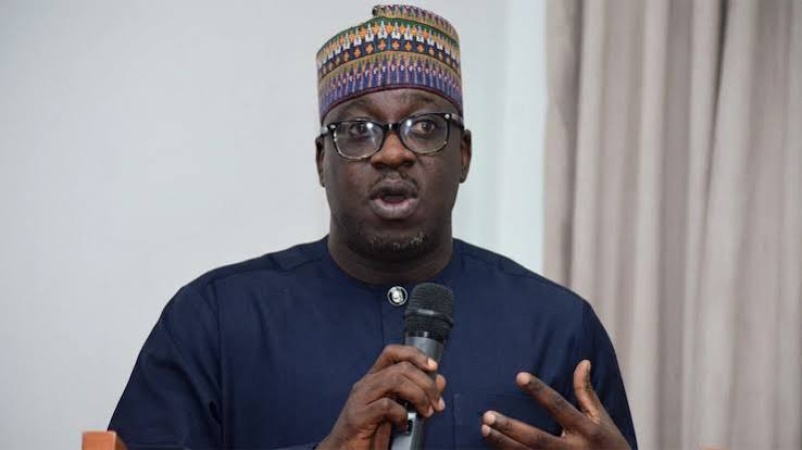
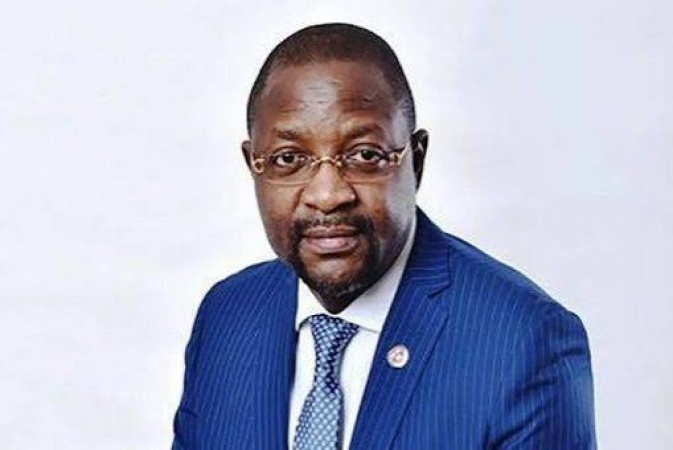
ADC National Publicity Secretary, Bolaji Abdullahi
The national publicity secretary of the African Democratic Congress, (ADC), Bolaji Abdullahi, has defended the party’s proposed subsidy policy under its presidential candidate, Atiku Abubakar, saying the plan is aimed at reducing the cost of living and protecting Nigerians from further economic hardship.
In an interview on ARISE NEWS on Tuesday, Abdullahi said the party’s position was based on the need to make economic policies more responsive to the realities facing ordinary Nigerians, dismissing the N19 trillion figure attached to the proposal as a “straw man” constructed by the APC government to undermine the plan.
“The most important argument here is that Nigerians are too poor to be left unsubsidized. We have seen the consequences in the last four years. When you have a population that is that poor, your priority as a government is how do you protect the people. What Atiku Abubakar is proposing is consistent with the philosophy of the ADC. Our economic principle is very clear: How do we make life better for Nigerians? How do we reduce the cost of living? The citizens of Nigeria must be at the head of every economic policy of our government. This is what Atiku Abubakar is proposing.
“When you anchor your argument on the N19 trillion cost of the fuel subsidy proposal that we are making, I think that is wrong. Because what the APC government is doing is setting up a straw man, as they say. They constructed this arithmetic and said it is going to cost N19 trillion, then started looking for the N19 trillion and saying you cannot afford it. But that is not the case.”
Abdullahi also faulted the government’s approach to the old subsidy regime, arguing that while corruption was a major problem, the solution should have been to tackle the corruption rather than remove the subsidy entirely.
“What the government is doing is attacking the old subsidy regime that was fraught with corruption. Is corruption a problem associated with subsidy? Yes, corruption was a problem associated with subsidy. But if you have a corruption problem, attack corruption, not subsidy. What the Bola Tinubu administration did was because the old subsidy regime was fraught with corruption and had a headache, they quickly removed the head completely, without caring what implications it would have for Nigerians.”
He argued that the benefits of subsidy removal had not translated into improved living conditions for Nigerians, alleging that the additional revenue generated was not being effectively used to address the country’s economic challenges.
“The question I would ask is that, since the last three years or so that they removed subsidy, what they call the benefits of the subsidy—which by the admission of the Minister of Finance has gone to something trillion—where is the benefit? How have the benefits affected the lives and improved the lives of Nigerians? They are still owing contractors. They are the only government in Nigerian history running three budgets at the same time and implementing none of them.
“So the point we are making is that Nigeria in the last three years has made so much money due to a combination of many factors. But how has this improved the life of citizens? So the people are not getting the benefits. All we are saying is that the extra $30 per barrel can go into a production subsidy to deliver cheaper fuel for Nigerians. That is the point.”
Abdullahi clarified that Atiku’s proposed subsidy plan would not depend on oil windfalls, but would support local refinery production through incentives aimed at reducing fuel prices at the pump.
“No, it’s very clear. The proposal to fund subsidy is not based on the oil windfall. Because the significant difference between the subsidy that we are proposing and what was existing in the past is that in this case, we are supporting production.”
Speaking on how the Atiku economic redemption plan would address corruption, Abdullahi said the proposed subsidy model would incentivise local refineries to produce cheaper fuel while avoiding the malpractice associated with the current subsidy regime.
“The objective is how do we deliver cheaper fuel for Nigerians. Our target is very clear. Are there strategies that can be combined that can deliver fuel to Nigerians at a rate that they can afford? It is very clear. Ultimately, it is about reducing the cost of living; we repeatedly emphasize that.
“The question about how do we stop corruption, the point I made earlier is that this is not the old subsidy regime that subsidized pump price and gave room for all kinds of malpractices. This is completely different. This is about supporting or incentivizing local refineries to deliver cheaper fuel for Nigerian citizens. If the old strategy was fraught with corruption, then you fight corruption. You don’t pass the suffering to the Nigerian people.
“It is the inability to punish those who have stolen subsidy money in the past that has led to the argument of why don’t you remove it completely, which has led us to this point. So the point we are making is that if you have a corruption problem, deal with corruption.
“What we are proposing, is it risk-free? No, it is not. Every policy comes with its own risk. But that’s not a reason not to do it; that’s a reason to be alert to the risk and take care of the risk. At the end of the day, what we expect will be delivered to citizens are cheaper fuel. Cheaper fuel will have a knock-on effect on the price of other commodities and will bring down the general cost of living for the people.”
Rejecting the claim that increased allocations to state governments had improved their finances, Abdullahi argued that the additional revenue had not translated into meaningful relief for Nigerians, noting that many states were still struggling to pay the minimum wage. He said the removal of subsidy had compounded economic hardship, particularly because it was implemented without first stabilising the naira, adding that the proposed ADC model was focused on reducing production costs rather than simply transferring money from government coffers to oil companies or local refineries.
“That is not true. That is President Tinubu’s narrative, and it is not true. Up till now, many states are still not able to pay the minimum wage. Removing subsidy itself is problematic in terms of the hardship it delivered to the people. When you do that without first stabilizing your currency, which has led to the situation we find ourselves in now, then you create the kind of problem that we have found ourselves in.
“The proposal we are making is not about taking money and giving it to oil companies or for subsidy; we are talking about making production cheaper. By making production cheaper, the pump price of fuel will be cheaper. We are saying that we will support local refineries so they can deliver cheaper fuel for Nigerians. It’s not about taking money from federal coffers and giving it to local refineries. No, that’s not what we are proposing,” he insisted.
Turning to the G100 Group Summit, Abdullahi said the gathering was primarily focused on discussions and cooperation among political parties rather than presidential candidates, stressing that Atiku’s absence was therefore not consequential. He added that the ADC was fully represented at the summit, with about four of its vice chairmen in attendance.
“The summit, the way we understand it, is more about conversation between political parties rather than conversation among candidates. It’s more about exploring cooperation opportunities among political parties. So it’s not consequential that Alhaji Atiku Abubakar was not present. I was there, the party was highly represented—we had about four vice chairmen there at the G100 Summit. So ADC was fully represented and we participated in the process.”
On the ideological differences within the opposition coalition, Abdullahi maintained the ADC’s commitment to subsidy was non-negotiable, stressing that any merger would have to address differences over the policy.
He said the party remained open to cooperation with other opposition parties but could defeat President Bola Tinubu independently in 2027, adding that an alliance with parties that shared its position on subsidy would make the task easier.
“I agree with them completely that when the opposition comes together, they stand a better chance. But we in the African Democratic Congress, we are happy to have this conversation,:but everything we are doing is not dependent on whether we are able to produce a single presidential candidate. We are saying that on our own as the ADC, we can defeat President Bola Tinubu in 2027. But if we are able to negotiate this cooperation, then it means the job is easier.
“We are firmly committed to the issue of subsidy, because that is the ideological pillar of our strategy to bring down the cost of living for Nigerians. So that’s a question that the promoters of this coalition will have to answer. The NDC candidate, Peter Obi, if he doesn’t believe in the return of subsidy and we believe in the return of subsidy, then what will be the basis for the merger? For us, it is non-negotiable. For us, it is something that we are not going back on.”
Reflecting on the 2023 election, where Atiku Abubakar and Peter Obi each polled over six million votes, Abdullahi cautioned against relying on past voting patterns to determine the 2027 outcome, arguing that Nigeria’s political and economic realities had changed significantly.
He said Nigerians had endured severe hardship over the past three years, stressing that the ADC’s focus remained on improving citizens’ lives rather than being driven solely by electoral calculations.
“I think we need to be careful not to allow ourselves to be held hostage to past trends. Yes, those numbers are indicative of what happened in the last election, and they may be indicative of the current political situation, but they do not follow. Nigeria in 2023 was a completely different country from the Nigeria we have today.
“Nigerians have gone through hell in the last three years, and what we are proposing is, let us first of all improve the life of citizens. This is not politics; we are convinced about it. If you listen to some of my conversations even before Alhaji Atiku Abubakar’s announcement, we said ADC will revisit the issue of subsidy. So for us, it is something that we are convinced about, and it is something that we will continue to work on.” (AriseNews TV)