
Updating your news feed...
NEWS EXPRESS is Nigeria’s leading online newspaper. Published by Africa’s international award-winning journalist, Mr. Isaac Umunna, NEWS EXPRESS is Nigeria’s first truly professional online daily newspaper. It is published from Lagos, Nigeria’s economic and media hub, and has a provision for occasional special print editions. Thanks to our vast network of sources and dedicated team of professional journalists and contributors spread across Nigeria and overseas, NEWS EXPRESS has become synonymous with newsbreaks and exclusive stories from around the world.









Loading banners
Loading banners...


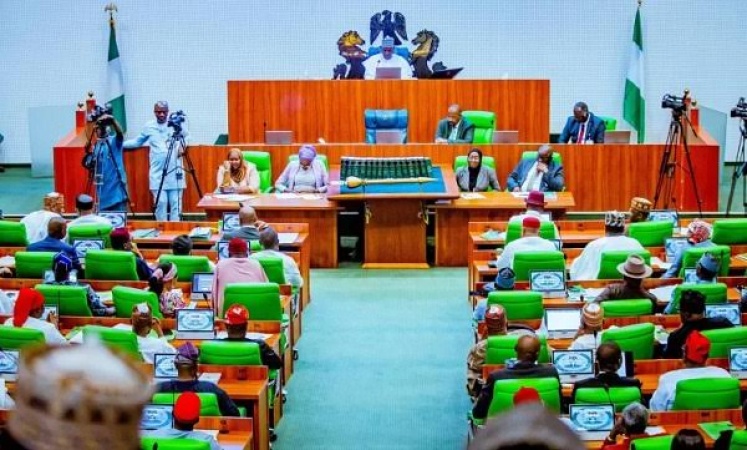
National Assembly Complex
As the dust settles after the general elections, the minimal influence of women in Nigeria’s politics, and by extension, other spheres of national life, is glaring. In 2023, 378 women ran for Senate and House of Representatives seats, but only 17 were successful. While all the current female senators are not returning, seven of the current 13 female members of the House in the Ninth National Assembly also lost their re-election bids. Nigeria needs to adopt effective policies to attract more women into decision-making at all levels in public and private affairs.
While some democracies and emerging economies are making strides with greater female visibility in public affairs, Nigeria appears to be backsliding. In the Ninth NASS, only seven of the 109 senators are women; aside from two – Oluremi Tinubu, who is the wife of the President-elect, Bola Tinubu, and Aisha Dahiru, who ran for the Adamawa State governorship, – the others lost their bids to return.
Barring changes by court decisions, only three women will be in the Senate and 14 in the 360-member House. Seven women won seats for the first time in the House. The figure of 17 women only out of the 469 federal lawmakers in the 10th NASS is a pitiable 3.62 percent.
Yet, quoting diverse sources, Nigeria’s total female population by 2021 was 105.57 million, and male 107.83 million. Countrymeters put the country’s population sex ratio in 2022 at 1,026 males per 1,000 females. The under-representation is glaring. Women groups complain that women are similarly under-represented in government and in the private sector.
The United Nations Women emphasises the importance of representation for every part of the population and of involving women in decision-making. It declared, “Women’s equal participation and leadership in political and public life are essential to achieving the Sustainable Development Goals by 2030.”
But 24 years since the return to democratic rule, women are still far behind in Nigeria’s political space. There are a few deputy governors; one state House of Assembly speaker was impeached by her male colleagues.
Nigeria’s National Gender Policy recommended affirmative action and sought a more inclusive representation of women with at least 35 percent of both elective political and appointive public service positions respectively. (The PUNCH)