ADAD
ADAD
Updating your news feed...
NEWS EXPRESS is Nigeria’s leading online newspaper. Published by Africa’s international award-winning journalist, Mr. Isaac Umunna, NEWS EXPRESS is Nigeria’s first truly professional online daily newspaper. It is published from Lagos, Nigeria’s economic and media hub, and has a provision for occasional special print editions. Thanks to our vast network of sources and dedicated team of professional journalists and contributors spread across Nigeria and overseas, NEWS EXPRESS has become synonymous with newsbreaks and exclusive stories from around the world.











Loading banners
Loading banners...


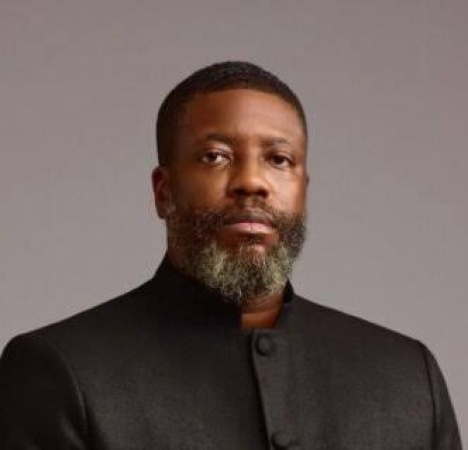
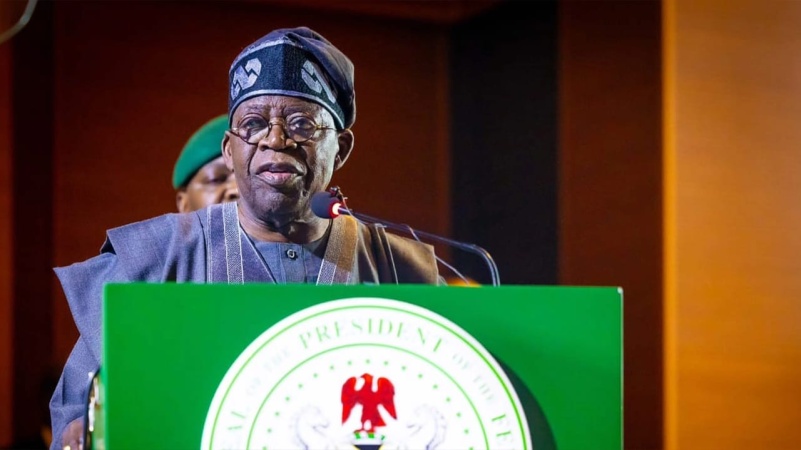
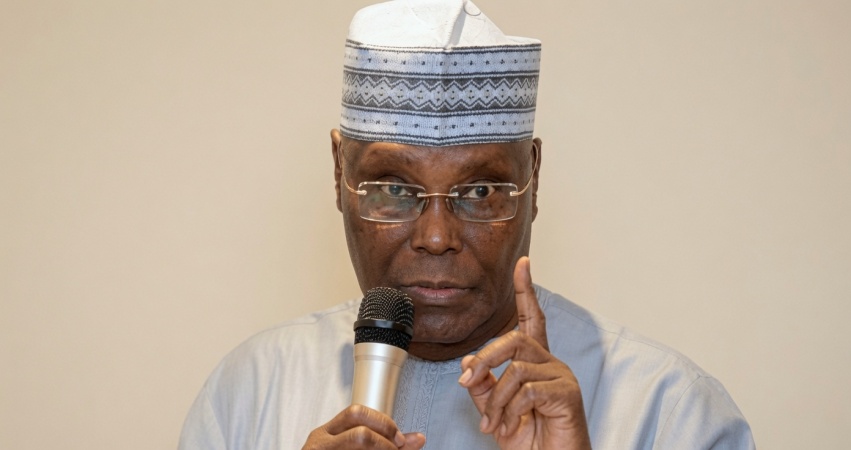
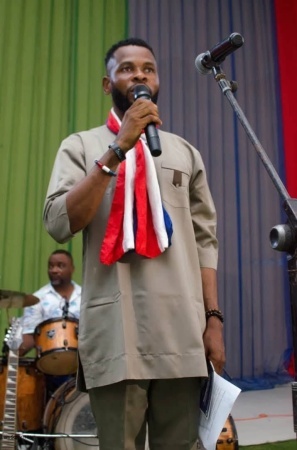
Obi, Tinubu, Atiku, Kwankwaso
It is an interesting political time for the people of the South-East as the various political parties, especially their presidential candidates, battle each other for the votes in the five states that make-up the geopolitical zone in the February 25 presidetial election. Orddinarily, the scramble for the voes of the people of the South-East would have been between the Peoples Democratic Party (PDP), All Progressives Grand Alliance (APGA) and all Progressives Congress (APC) but fourth leg has emerged in Labour Party (LP).
The South-East with five states – Abia, Anambra, Ebonyi, Enugu and Imo – was before now under the firm control of the PDP with the All Progressives Grand Alliance (APGA) having some pockets of elective positions, mostly in Anambra State. The PDP won all the five states of the zone during the 1999 general election, a feat it repeated in 2003. However, the party’s fortune in the zone witnessed a setback in the 2007 elections as the Peoples Progressive Alliance (PPA) took over Imo and Abia states. The PDP, which was then the ruling party at the centre, had before the 2007 general polls (2016) lost Anambra to APGA through the court.
The party’s loss in Imo and Abia, however, turned out to be temporary, when Ikedi Ohakim and Theodore Orji, who were elected governors of the respective states through PPA later dumped the party for PDP. Consequently, the PDP had four states – Imo, Abia, Ebonyi and Enugu until 2011, when it lost Imo to APGA. With that development, PDP and APGA became the dominant parties in the South-East with two states (Anambra and Imo) for APGA and three states (Abia, Enugu and Ebonyi) for the PDP.
The Action Congress of Nigeria (ACN) that held sway in the South- West at that time, however, made inroads into the South-East, especially Anambra State, where it won a senatorial seat through a former governor of the state, Dr. Chris Ngige (now Minister of Labour and Employment) as well as pockets of House of Representatives and state Assembly seats. While many argued post-2011 elections that another party outside PDP and APGA would find it difficult to make an incursion into Igbo land, the defection of then Imo State governor, Rochas Okorocha, from APGA to APC upon its formation in 2013, opened the window for the party to win the “Eastern Heartland” in the 2015 elections.
APC is the product of a merger deal between then main opposition parties – ACN, Congress for Progressive Change (CPC), All Nigeria Peoples Party (ANPP) and a faction of APGA led by Okorocha, who at that time described the party as the fastest political vehicle for the realisation of a Nigerian president of Igbo extraction.
Having won the governorship of Imo State and pockets of legislative seats in the South-East as well the presidency after 16 years unbroken rule by the PDP in the 2015 elections, APC chieftains in the South-East became more optimistic that the party would sweep across more states in the zone in the 2019 general election. Their hope was dashed as PDP not only retained Abia, Enugu and Ebonyi, but regained Imo through a former Deputy Speaker of the House of Representatives, Emeka Ihedioha. But politics, being a game of the possible in which nothing is foreclosed, the Supreme Court annulled PDP’s victory in Imo State.
To the consternation of many, the apex court declared APC’s candidate, Hope Uzodinma, as the winner of the election. The ruling party only won three out of the 15 senatorial seats in the South-East as well as pockets of House of Representatives and states Assembly seats mainly in Imo and Abia states through the ballot in the 2019 elections although many described that as an appreciable result compared to that of 2015, when the party was almost rejected in the zone. With Imo in the kitty for the APC, chieftains of the party in the zone began to express optimism over the possibility of the ruling party expanding frontiers in the South- East come 2023.
Their hope got a boost, when Ebonyi State governor, Dave Umahi, who was reelected for a second term on the platform of the PDP, dumped the party for the APC. As the moment, the two major parties (APC and PDP) control two states each in the South-East – Abia and Enugu for PDP, while APC in in charge in Imo and Ebonyi. The fifth state of the zone – Anambra – is under APGA’s control. Ordinarily, many will expect that the presidential candidates of these three parties – Bola Tinubu (APC), Atiku Abubakar (PDP) and Peter Umeadi (APGA) to leverage on the strength of their respective platforms in the states in the forthcoming elections but the emergence of a former governor of Anambra State, Peter Obi, as the candidate of Labour Party (LP) altered the calculation.
Rabiu Kwankwaso of the New Nigeria Peoples Party (NNPP), is no doubt one of the presidential frontliners but he stands little or no chance in the South-East given that his party has no formidable structures in the zone. Against these backdrops, electorate across the five states are not likely to be swayed by party leaning as several other factors will come to play in determining who gets the votes of the South-East.
The total number of registered voters in the zone is 10,057,130 while the number of Permanent Voters (PVC) collected stands at 8,590,420. A breakdown of this figure shows that Anambra leads with 2.07 million voters and followed by Enugu with 1.78 million voters. Abia and Imo have 1.72 million and 1.70 million voters, respectively, while Ebonyi has 1.29 million voters.
The question against this configuration is: What will determine the voting pattern in the South-East come February 25, when the presidential election is expected to hold. To most APC chieftains in the South-East, the ruling party has all it takes to sweep the south eastern states in the 2023 presidential election given emerging developments in the polity ahead of the polls.
They predicate their belief on the assumption that the zone has benefited in terms of infrastructure from the Muhammadu Buhari-led administration compared to PDP’s years in power. PDP chieftains, on their part, are of the view that the South-East has always been a stronghold of their party and that Ndigbo will not abandoned their candidate, Atiku, who has always shown preference for them by always picking his running mate from the Igbo stock.
Though these suppositions are subject of debate among Ndigbo, depending on which side of the political divide they find themselves, most political analysts and observers are of the view majority that the zone’s support is likely to go for the party that gave its presidential ticket to a south easterner. This assumption was premised on the age-long clamour for a Nigerian president of Igbo extraction. Since 1999, when the country returned to civil rule, the Igbo is yet to occupy the country’s number one position.
Abia State
Being a PDP-controlled state, the belief before the presidential primary of the party was that whoever emerged the candidate of the main opposition party will have it good in the state. PDP has maintained dominance in the state since the advent of the Forth Republic in 1999.
In the most recent presidential election (2019), the party polled 219,698 votes (67.96 per cent) to beat the APC, which had 85,058 votes (26.31 per cent). However, the political calculation, which gave PDP an edge in the past has changed with emergence of Atiku as the party’s presidential candidate for 2023 elections and the reason for the twist is not farfetched. Abia State governor, Okezie Ikpeazu, had backed his Rivers State counterpart, Nyesom Wike, during the primary election but Wike was defeated by Atiku. The Rivers State governor polled 237 votes against Atiku’s 371 votes. Following his loss, Wike accused some PDP stakeholders from the South of “betrayal.”
He was further frustrated when Atiku snubbed him as running mate and picked Delta State governor, Ifeanyi Okowa. Many had thought that Wike’s performance at the shadow election would earn him the party’s vice presidential ticket but that was not to be. As expected, the choice of Okowa was greeted by mixed feelings by Wike’s camp, comprising Governors Ikpeazu, Ifeanyi Ugwuanyi (Enugu), Seyi Makinde (Oyo) and Samuel Ortom (Benue).
The group of five governors popularly referred to G5, are insisting on the resignation of the National Chairman of the PDP, Senator Iyorchia Ayu, before they will mobilze support for the presidential candidate of the party (Atiku). According to them, Ayu’s resignation will not only pave the way for the emergence of a southerner as national chairman but will ensure equity as the North should not produce both the presidential candidate and national chairman.
It is against this backdrop that Ikpeazu, who is contesting for Abia North senatorial seat, pulled out of the PDP presidential campaign council, concentrating only on delivering the governorship, national and state Assembly candidates of the party in the state.
The consequence of the governor’s action coupled with the bad blood over PDP primaries in Abia State that saw Ikpeazu, anointing Prof. Uche Ikonne, who hails from Abia Central against party chieftains for a governorship candidate from Abia North in line with the governorship zoning arrangement in the state and the defection of Senator Enyinnaya Abaribe (a former deputy governor and ex-Senate minority leader to APGA), have opened Abia for grabs by any of the parties in the presidential election. With Labour Party gaining momentum as a result of the Obedient Movement, there is no doubt that Obi stands a better chance in Abia State more than any of the presidential candidates. However, Obi and his party will still contend with the PDP and to some extent the APC as both parties have bigwigs, who are capable of swinging voters to their respective folds.
The likes of former Senate President, Adolphus Wabara (now acting chairman, PDP Board of Trustees) and ex-Governor Theodore Orji are still with the PDP and are expected to mobilize support for Atiku, while the Chief Whip of the Senate, Senator Orji Uzor Kalu (also a former governor of Abia State) will lead the charge for APC and its presidential candidate, Tinubu, in the state.
Imo State
The political scenario in Imo State, which is Abia’s next door neighbour is quite different. Governorship election will not hold in the state that prides itself as “Eastern Heartland,” so Governor Uzodinma is under less pressure. He will therefore focus attention on delivering APC’s presidential candidate (Tinubu) as well as the party’s candidates for the national and state Assembly elections.
In the 2019 presidential election, during which APC’s Rochas Okorocha was the governor of the state, the ruling party polled 140,463 votes (27.46 per cent) against PDP’s 334,923 votes (65.47 per cent). No doubt, Uzodinma has been able to strengthen APC structures in the state since he assumed office; it is also incontestable that the PDP has equally remained strong in the state despite Ihedioha’s loss of the governorship position. The former deputy speaker of the House of Representatives is still the rallying point for the party in the state and is known to be a strong supporter of Atiku.
The PDP will is also bank on its National Secretary, Senator Samuel Anyanwu, who also hails from Imo and other chieftains of the party, who have held on despite entreaties to jump ship to make a strong showing in the state in the presidential election. The optimism in both APC and PDP’s camps, notwithstanding, there is no doubt that Obi poses a big threat to Atiku and Tinubu in Imo State.
Obi has really warmed himself into the hearts of many in the state, particularly the youth, who constitute a larger percentage of the voters. This informs the political ground LP is gaining in Imo State. Ordinarily, Governor Uzodinma would have swayed the votes for his party given the place of power of incumbency in politics but the security situation in the state, which has led to wanton destruction of lives and property is likely to shape the voting pattern. Most people in the state have continued to blame the APC-led administration for the situation in the state, however, with structures across the 27 local government areas of the state and the machinery of the state in Governor Uzodinma’s hands, the battle for Imo votes in the presidential election will be a three-horse race between APC, PDP and LP. APGA, which used to be force in the state on the ground of Igbo sentiment, is likely not to make any meaningful impact this time as most Imo political bigwigs are either in APC or PDP, while the conviction that LP will make a good showing is predicated on support by the youth.
Anambra State
This is definitely a south eastern state to watch in the 2023 presidential election. The state is presently controlled by APGA and the party’s presidential candidate, Umeadi, is an indigene of the state. While the APGA candidate is a former Chief Judge of Anambra State, Obi, who is flying LP’s flag equally hails from the state and served as governor for two terms.
Like Imo, only state and national Assembly elections will hold in Anambra but the state will definitely be the epicenter of the presidential poll in the South-East given the Obi and APGA factors. Governor Chukwuma Soludo, who was elected in the November 2021 gubernatorial election in the state is expected to seize the opportunity of the 2023 polls to ensure that APGA consolidates on its grip on the state but he will only achieve this if he is able to deliver the party’s candidates for the various elective positions. Obi, on his part, is expected to prove that he is popular in his home state and that that the 524,738 votes (86.63 per cent) he galvanized for the PDP in the state during the 2015 presidential election ( as the party’s vice presidential candidate) against APC’s 33,296 votes (5.50 per cent) was as a result of his acceptance by his people.
This, according to analysts, will make the contest for votes in Anambra State an interesting one. Already, there is indication that Obi is not likely to enjoy the kindred spirit he had in 2019 in Anambra State. The belief is that Governor Soludo will rather work for Umeadi to avoid a situation that will cause defeat for APGA’s candidates for the national state Assembly elections and put him good stead for a second term. Some level of credence was given to this belief on Thursday, when Soludo said the investments being credited to Obi, were worth next to nothing.
The governor, who spoke in an interview on Channels TV’s Politics Today, also said he was not aware of any investments by his predecessors – Obi and Willie Obiano. “I think there was something I read about somebody speculating about whatever investment. With what I’ve seen today, the value of those investments is worth next to nothing.
So, let’s leave that aside,” Soludo said in reference to the $15 million Obi invested in International Breweries but some say his comment is part of efforts to demarket the LP presidential candidate in Anambra State. While there is no doubt that the battle for Anambra votes in the presidential election would be between APGA and LP, the chances of PDP and APC cannot be ruled out although the main opposition is better positioned to do well in the state than the ruling party given the fact that it has more established structures across the 21 local government areas of the state.
Ebonyi State
The state has been predominantly PDP in the present political dispensation until Governor Dave Umahi, who was elected on the platform of the main opposition party defected to the APC in 2020. In the 2019 presidential election, Atiku, who flew the PDP flag defeated President Muhammadu Buhari of the APC in Ebonyi by 258,573 votes (72 per cent) to 90,726 votes (25.26 per cent). Although the PDP still enjoys a measure of followership in the state, with chieftains of the party like Senator Anyim Pius Anyim (a former president of the Senate) and Senator Sam Egwu (a former governor of the state) steering the ship of the party in the state since Umahi left, things are not looking positive for the presidential candidate of the main opposition party ahead of the 2023 polls.
Umahi is contesting for Ebonyi South Senatorial District seat and has repeatedly pledged to work for Tinubu, so the battle for Ebonyi votes in the presidential election is likely to be between the APC and LP. The PDP is not really in the picture here because not much has been heard about Anyim as regards support for his party since he lost the presidential ticket to Atiku.
Besides the Umahi factor, chieftains of other political parties in the state are likely to focus more on the governorship, national and state Assembly elections as not much seems to be at stake for them in the presidential election. This will set the stage for a showdown between Obi’s supporters, who cut across the various parties and Umahi-led APC. Again, as with other states in the South-East, the security situation in the zone and the quest for power at the federal level by Ndigbo are majorly the factors that will shape the voting pattern in Ebonyi State and not necessarily political leaning or influence of any political office holder, particularly the governors.
Enugu State
Enugu is another south eastern, which has been ruled by the PDP since 1999. The party has equally maintained dominance in the state in previous presidential elections. In the 2019, presidential election, PDP polled 355,553 votes in the state against APC’s 54,423 votes (12.93 per cent).
However, it is likely to be different ball game for the main opposition party in the 2023 presidential poll. The governor of the state, Ugwuanyi, although elected on the platform of the PDP, belongs to the Wike camp, which has withdrawn support for the party’s presidential candidate (Atiku). The governor is vying for Enugu North Senatorial District seat and his focus for now is more on delivering PDP’s candidates in the state for the governorship, national and state Assembly elections.
Another indication that Enugu would be open for grabs in the presidential election despite being a PDP dominated state is former Governor Chmaroke Nnamani’s support for Tinubu’s presidential ambition. Interestingly, Nnamani, who is presently the senator representing Enugu East Senatorial District, is seeking reelection on the platform of the PDP.
It is against these backdrops that many believe that APC and LP stand a good chance of breaking PDP’s dominance in Enugu State. While APC is expected to leverage on Nnamani’s Ebeano political structure in the state, Obi’s camp believes that Enugu State will not be an exemption to the growing support LP is enjoying in the states of the South-East. No doubt, the presidential candidates of the leading parties as well as that of are not leaving anything to chance in their respective bids to win bulk votes in the South-East, emerging trend in the politics of the zone will make the 2023 presidential contest in the area more interesting than previous ones. (New Telegraph)