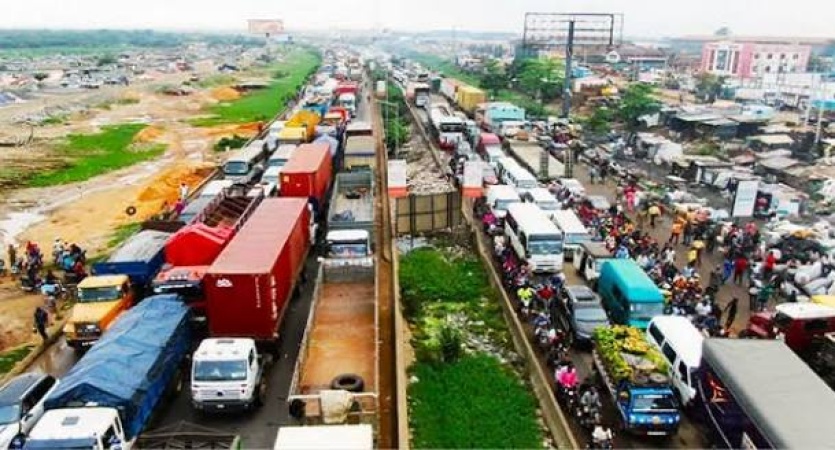
The Nigerian government unfriendly policies are pushing manufacturers out of business. The Organised Private Sector, OPS, made this claim while raising the alarm over the tough times they are going through.
OPS which is made up of five business groups in Nigeria consequently rejected the government’s proposed increase in excise duty on food and beverages, especially on alcoholic, non-alcoholic drinks, beverages & tobacco.
The five groups, comprising the Manufacturers Association of Nigeria, MAN, Nigeria Association of Chambers of Commerce, Industry, Mines and Agriculture, NACCIMA, Nigeria Employers Consultative Association, NECA, Nigeria Association of Small-Scale Industries, NASSI, and Nigeria Association of Small and Medium Enterprises, NASME, lamented that there were no fewer than 17 bills pending in the National Assembly, NASS, aimed at imposing more levies on the private sector, with negative implications on business’ sustainability of businesses.
In an 8-point position paper, titled “Proposed Increase in Exercise Duty for Tobacco, Spirit, Alcoholic and Non-Alcoholic Beverages,’’ OPS also contended that rising production costs, epileptic power supply, insecurity, access to financing, multiple taxation were further compounding the woes of businesses in Nigeria.
It stated: “There is doubt that the Nigerian economy is witnessing some growth.
“However, the rate of growth is far below what is required to meaningfully impact the citizens positively. The contribution of the manufacturing industry over the years, in terms of employment generation and government revenue, cannot be over-emphasized, contributing annually about 15 percent to GDP in the last five years.
‘’One of the highest contributing sectors to the growth of the industry is the food, beverage and tobacco sector. The World Trade Organisation, WTO, ranks Nigeria as the largest food market in Africa, with significant investment in the local industry and a high level of imports.
‘’The food, beverage and tobacco sector is estimated to contribute 33.5 percent of the manufacturing industry value. In terms of number of companies, this sector remains the largest in manufacturing in Nigeria.”
Manufacturing sector
“The manufacturing sector in Nigeria faces common challenges that must be overcome before the sector can play its expected role in the growth process. Such challenges have impeded the competitiveness of Nigerian products and, therefore, rendered such products unattractive in the global arena.
‘’Some of these include lack of competitiveness arising from prevalent high cost of production, including taxes and levies. This has also been compounded by incessant, unbridled smuggling/dumping of highly subsidized cheap and substandard imported products.
“Proliferation of adulterated/fake products without regulatory constraints/checks forcing genuine businesses to go extinct and non-availability/difficulty in securing required forex to do legitimate business in the country.
‘’This has continued to be a major issue the industry faces, especially in these times of severe currency devaluation, deficiencies in physical infrastructure- failed road network, inefficient railway system, frequent power outages and inefficient waterways.
‘’Policy inadequacy, inconsistency and reversals are major constraints to industrialization. An example is the planned increase in excise duty on alcoholic, and non-alcoholic beverages & tobacco at a time the sector is ailing and needs the support of the government for survival.
“Multiple taxation/levies, which have remained a major burden on businesses, particularly manufacturing, as a result of conflicting constitutional provisions and ineffective implementation of existing laws in the quest to generate revenue by states and local government councils.
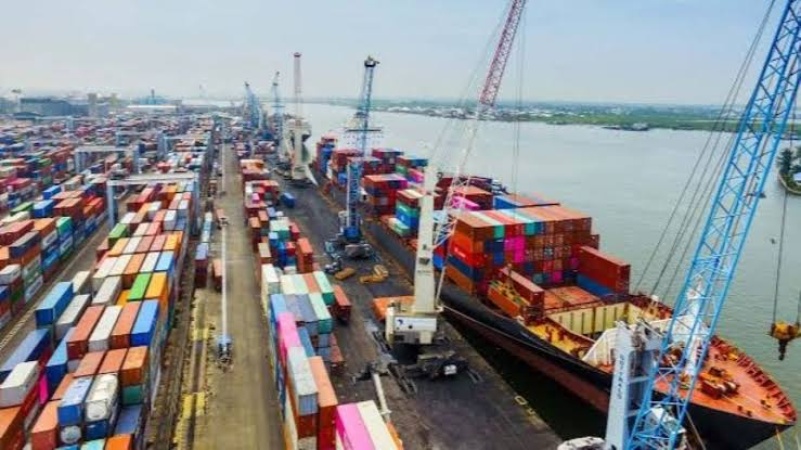
“Poor administration of the ports arising from non-establishment of regulatory agencies to manage the activities of port operators; high port charges by concessionaires; lack of adequate port handling equipment; discrepancies on HS Code interpretation by the Nigeria Customs Service leading to the abandonment of cargoes by importers.
“Import and trade restrictions/challenges- import and export costs in Nigeria are almost double of those of other regions.
“In addition, the Central Bank of Nigeria, CBN, ban on the importation of 41 foreign products, some of which are intermediate products, from accessing forex as well as the imposition of levy on some imports, constitute barriers to trade and have far-reaching implications for the manufacturing sector.”
Pending bills
The OPS said it was not unaware of debate in the National Assembly on some bills aimed at imposing more levies on the private sector, with negative implications on the sustainability of businesses.
It stated: ‘’The bills include the National Youth Service Corps Trust Fund (Est) Bill, 2021 HB. 1795.
“The bill, now transmitted to the President, seeks to establish the NYSC Trust Fund (NYSCTF) for the purpose of providing sustainable source of funds for the NYSC, skill acquisition training, empowerment of corps members, training and retraining of the personnel of the NYSC as well as development of camps and NYSC formations and facilities.
‘’It seeks to impose levy of 1% on net profit of companies operating in Nigeria. The bill has been passed in the House of Representatives and has gone through its first reading in the Senate.
“Youth Entrepreneurship Development Trust Fund (Establishment) Bill, 2021 HB. 1448. The bill seeks to create a fund that shall be used to provide financial support to Nigerian youths with entrepreneurship skills.
‘’It seeks to impose a levy of one percent profit as declared by each private entity in the country. It is awaiting its third reading in the House of Representatives. There is also the National Health Fund Bill, 2021 HB. 1823.
‘’The bill seeks to provide a framework for the establishment of the National Health Fund with the sole responsibility of equipping and providing infrastructural and manpower development at federal hospitals across the federation.
‘’Section 6 provides for the imposition, collection, administration and monitoring of levies & gifts amongst others. The bill in its current form, does not include specifics about what percentage will be imposed as levy. This is expected to be introduced when it is reviewed by the relevant House committee.
“There is the Raw Materials Research and Development Council Bill, 2022 HB. 47 in the Senate. The bill seeks to amend the Raw Materials Research and Development Council and establish a new council with powers to do research on raw materials and related matters. It seeks to impose a levy of 2 per cent surcharge on all imports.
“There is also National Tax Crimes Commission (Establishment) Bill, 2022 SB. 951. The bill seeks to establish the National Tax Crimes Commission to promote economic efficiency and effectiveness in administering the nation’s tax system, detect/deter fraud and abuse in taxation and to protect taxpayer’s rights.
“This poses the risk of additional regulatory compliance obligations, among several other bills.’’
Excise duty in Nigeria
Continuing, the OPS stated: “An excise is any duty levied on manufactured product at the point of manufacture, rather than at sale. By this assertion, excise duty directly adds to cost of production, which is critical to competitiveness.
‘’Excise duty in Nigeria is levied on beer/stout, wine/sprit, cigarette, carbonated drinks, some manufactured or goods imported into the country at 20 percent rate. The Finance Act 2021 introduced excise duty of N10/liter on non-alcoholic carbonated and sweetened beverages drinks.
“The proposed increase in excise duty by the Tariff Technical Committee, TTC, of the Federal Ministry of Finance in June 2022 is summarized as follows: Tobacco: 30 per cent ad valorem rate with a specific rate of NGN 4.2/stick of cigarette for 2022; It is planned to be N8.40 in 2023 & 2024? Beer: N40/litre in 2002: N75/litre in 2023 and N100 /litre in 2024.
‘’Wines: 20 per cent ad valorem with a specific rate of N50/litre in 2022; It is proposed to be N75 in 2023 and N100 in 2024.
“Spirits: 20 per cent ad valorem rate with a specific rate of N50/litre in 2022; This will move up to N150 per litre in 2023 and N200 in 2024, in addition to the current specific of N10 per litre.
Sweetened Non-Alcoholic
Beverages: 20 percent ad valorem to be introduced in 2023 plus the existing N10 per litre specifically introduced this year. The food, beverage, and tobacco sector has been the sole driver of manufacturing in the country for a good number of years, including the difficult period of COVID-19 pandemic.
‘’The sector has also been a critical driver of employment and government revenue, considering the huge number of workers, numerous direct and indirect taxes, levies and charges it takes up.
“In the past, poor policies such as this had triggered capital flight and driven many vibrant manufacturing companies to neighbouring countries.”
The OPS noted that it “is aware that tax plays a crucial role in the development of any economy in the context of revenue generation and tool for economic stabilization.
‘’As a revenue generator, it provides the government with the funds needed for meeting the fiscal responsivities. Taxes and tax systems are, therefore, central to any effort to build a nation, including the developing world such of ours.
‘’Unfortunately, de