ADAD
ADAD
Updating your news feed...
NEWS EXPRESS is Nigeria’s leading online newspaper. Published by Africa’s international award-winning journalist, Mr. Isaac Umunna, NEWS EXPRESS is Nigeria’s first truly professional online daily newspaper. It is published from Lagos, Nigeria’s economic and media hub, and has a provision for occasional special print editions. Thanks to our vast network of sources and dedicated team of professional journalists and contributors spread across Nigeria and overseas, NEWS EXPRESS has become synonymous with newsbreaks and exclusive stories from around the world.















Loading banners
Loading banners...


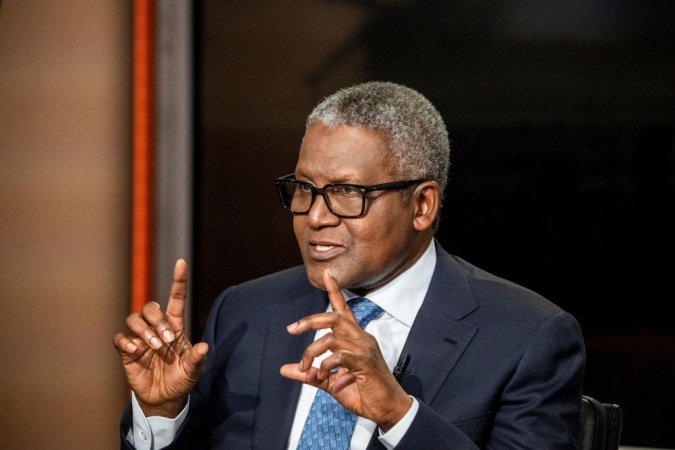
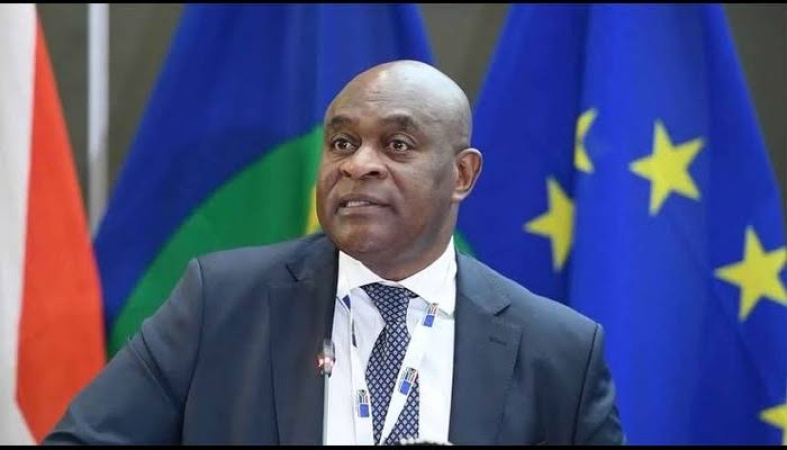
Secretary of the UBEC, Hamid Bobboyi
Despite the overwhelming importance of Early Childhood Development (ECD), and its critical contribution to Millennium Development Goals 2 and 3, as well as, the realisation of Education for All (EFA) objectives, the political class has continued to show lack of commitment to human capital development.
In fact, the failure of states to place a high premium on basic education has found vent in their refusal to access intervention fund from the Universal Basic Education Commission (UBEC).According to the agency, as at August 31, 2018, a whopping N51b was not accessed by states, while as at same date, only 13 of the 36 states and Abuja accessed the 2017 UBE matching grants totaling N18, 008, 804, 569.70.
In fact, as politics take centre stage, stakeholders are worried that the UBEC intervention fund not accessed could jump to over N80b as things may take a while to settle down. For now, some states may be concerned with draining their treasuries to fund election, and it might take a while to stabilise their economies, post-election.
The Executive Secretary of the UBEC, Dr. Hamid Bobboyi, in an interview with The Guardian, listed the 13 states and the Federal Capital Territory (FCT) that have so far accessed the 2017 UBE matching grants totaling N18, 008, 804, 569.70 as at August 31, 2018 to include Jigawa, Kebbi, and Sokoto states (North West Zone); Borno, Gombe and Taraba states (North East Zone); Kogi and the FCT (North Central Zone); Lagos, Osun and Oyo states (South West Zone); Cross River, Delta and Rivers states (South South Zone), while no state in the South East has taken advantage of the intervention fund for 2017.
Giving a breakdown of the total matching grants yet to be accessed, which stood at N50, 988, 931, 720. 66 as at August 31, 2018, Bobboyi said in 2014, N2, 175, 673, 787. 40 was not accessed, while the figure for 2015 was N5, 341, 133, 791. 96. For the year 2016, matching grants of N13, 896, 230, 919. 65 was not touched and the figure for 2017, which is the largest is N29, 585, 893, 221. 65.
Worried at the rate, which states fail to access the intervention fund, the executive secretary said the “commission adopted a number of strategies in order to reduce the high rate of failure to access the matching grant.
These include, scale-up advocacy visit to state governors and other relevant stakeholders, presentations at the National Executive Council (NEC) meetings and at the Governors’ Forum meetings, and publication in national dailies etc,” adding that apart from lack of political will by state governors, “there is the issue of priority needs. Some states make basic education as a top priority need, while others don’t.”
On whether there were parts of the UBE Act that needed to be tinkered with in order to make states more committed to improving basic education, the executive secretary responded in the affirmative, saying, “the possibility of states forfeiting matching grant funds in excess of two years not utilised,” and the “suspension of states that misuse UBE funds from accessing any form of additional funds from UBEC until such misused funds have been fully accounted for,” would actually be of great help.
UBEC has put measures in place to track funds released to state governments for the implementation of basic education. Even though some stakeholders are suspicious of the success of such moves, Bobboyi insists that quarterly financial monitoring exercise is bearing fruits.
•Excerpted from The Guardian report.