ADAD
Updating your news feed...

NEWS EXPRESS is Nigeria’s leading online newspaper. Published by Africa’s international award-winning journalist, Mr. Isaac Umunna, NEWS EXPRESS is Nigeria’s first truly professional online daily newspaper. It is published from Lagos, Nigeria’s economic and media hub, and has a provision for occasional special print editions. Thanks to our vast network of sources and dedicated team of professional journalists and contributors spread across Nigeria and overseas, NEWS EXPRESS has become synonymous with newsbreaks and exclusive stories from around the world.















By FRANCA OFILI
The Federal Government says it is intensifying contact tracing and monitoring, following the confirmation of one case of Ebola disease caused by the Bundibugyo virus in the Federal Capital Territory (FCT).
Dr Jide Idris, the Director-General, Nigeria Centre for Disease Control and Prevention (NCDC), disclosed this at a media conference on Sunday in Abuja.
According to him, public health teams are identifying people who might have been exposed to the confirmed case and monitoring them for 21 days after their last possible exposure.
Idris said the patient was receiving medical care under isolation, with infection prevention and control measures in place, while clinical teams continued to monitor the patient’s condition.
He said the response involved the Federal Ministry of Health and Social Welfare, NCDC, FCT health authorities, other relevant government agencies and technical partners.
According to him, the coordinated response is aimed at preventing further transmission and to protect Nigerians.
Idris said the case was detected after healthcare workers attending to the patient recognised clinical features that raised concern, prompting an alert through NCDC’s event-based surveillance system.
He said the agency subsequently engaged FCT health authorities, leading to investigations and laboratory testing that confirmed the infection.
The director-general said contact tracing covered healthcare workers, patients, caregivers, household members, travel-related contacts and others who might have had relevant exposure.
He urged Nigerians contacted by public health officials to cooperate with monitoring teams and provide accurate information about their movements, contacts and any symptoms they might have experienced.
“Being identified as a contact does not mean that you have Ebola,” he said, explaining that the exercise was intended to assess and monitor people’s health and identify possible infections early.
Idris said the agency was also working with the treating facility to strengthen clinical management and infection prevention and control, while drawing on the expertise of clinicians and case managers who participated in Nigeria’s 2014 Ebola response.
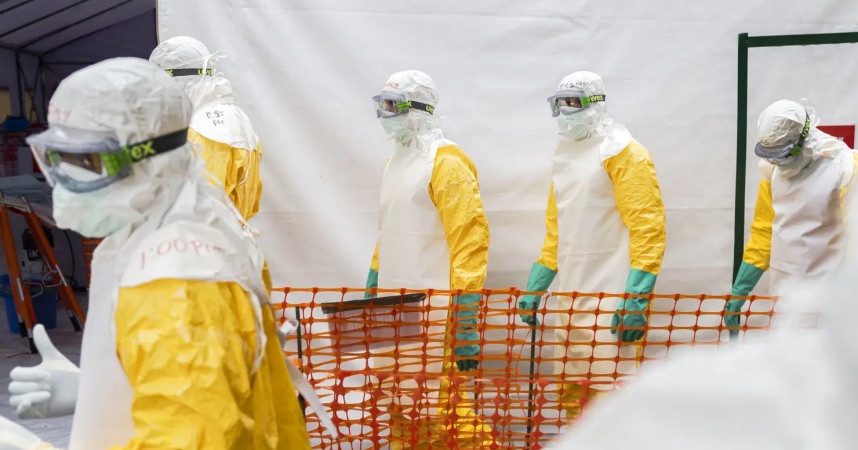
He said NCDC and FCT health authorities were strengthening screening, triage, isolation readiness and healthcare worker protection, while deploying trained infection prevention and control professionals to support healthcare facilities.
He called on public and private healthcare facilities nationwide to review and strengthen their infection prevention and control measures, including hand hygiene, environmental cleaning, injection safety, safe sharps management and the proper use of personal protective equipment.
“Healthcare workers should not wait for laboratory confirmation before taking appropriate precautions,” he said.
Idris also urged healthcare facilities to promptly separate suspected cases from other patients and report them to the relevant public health authorities.
He said heightened surveillance and laboratory arrangements were being maintained to ensure that suspected cases could be promptly investigated and tested.
The director-general further urged Nigerians to rely on verified information from NCDC, the Federal Ministry of Health and Social Welfare and other authorised public health sources.
He warned that misinformation could create fear, discourage people from reporting symptoms and undermine the cooperation needed to contain the disease.
Idris recalled Nigeria’s experience during the 2014 Ebola outbreak, when he served as Lagos State Commissioner for Health and led the state’s response.
He said the experience provided important lessons in leadership, coordination, early detection, contact tracing, infection prevention and control, and public trust.
According to him, Nigeria is drawing on those lessons and the public health capacities developed since then to manage the current situation.
He advised Nigerians to practise regular hand hygiene, avoid direct contact with the blood and body fluids of anyone suspected of having Ebola, and report possible exposure promptly.
He also urged anyone who developed symptoms following a possible exposure to contact public health authorities immediately and follow their Instructions before visiting a healthcare facility.
Idris said the success of the response depended on cooperation among government institutions, communities, healthcare workers, civil society organisations, the private sector and development partners.
He urged Nigerians to remain calm, support healthcare workers, reject misinformation and cooperate with public health measures to prevent further transmission. (NAN)