ADAD
Updating your news feed...

NEWS EXPRESS is Nigeria’s leading online newspaper. Published by Africa’s international award-winning journalist, Mr. Isaac Umunna, NEWS EXPRESS is Nigeria’s first truly professional online daily newspaper. It is published from Lagos, Nigeria’s economic and media hub, and has a provision for occasional special print editions. Thanks to our vast network of sources and dedicated team of professional journalists and contributors spread across Nigeria and overseas, NEWS EXPRESS has become synonymous with newsbreaks and exclusive stories from around the world.








Loading banners
Loading banners...

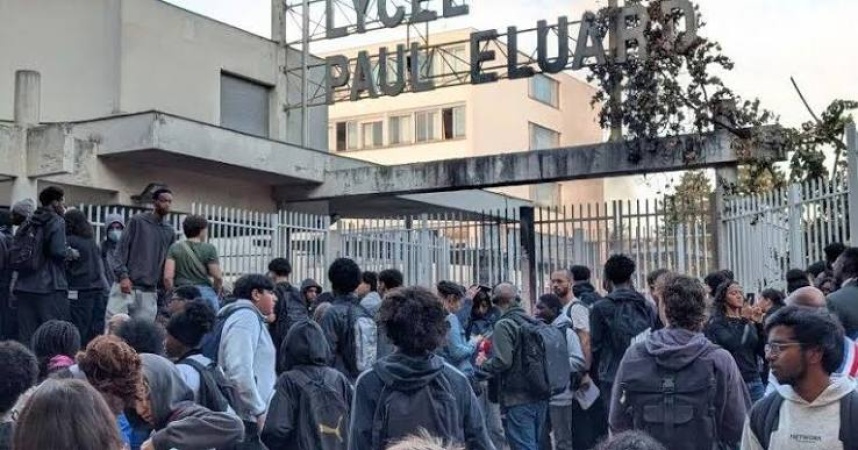
French officials are imposing localized curfews — including in parts of Paris — as the country reels from its worst rioting in years.
The move comes after protests over education and the cost of living spiraled into a wave of deadly, country-wide violence over the weekend that has sparked a blame game at home and threatens to spill over into its European neighbors.
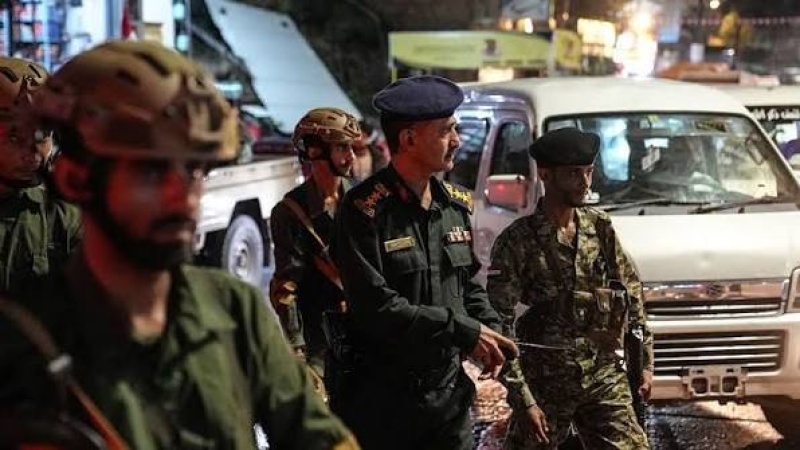
The mood in the country remained tense on Monday, with Prime Minister Sébastien Lecornu asking some cities to impose “partial curfews” to protect people, property and businesses.
Paris’ Place de la République will be under curfew from 11 p.m. (5 p.m. ET) Monday to 6 a.m. Tuesday, as will the streets around Les Halle, from 10 p.m. Monday to 6 a.m. Tuesday, CNN affiliate BFMTV reported citing Parisian elected officials. And in Lyon, gatherings on public roads are prohibited from 6 p.m. to 9 p.m. on Monday followed by a curfew on parts of the city from 9 p.m. Monday to 6 a.m. Tuesday. Meanwhile in Marseille, officials banned all gatherings and demonstrations from midday until 8 p.m. local time.
Curfews for minors will take place from 9 p.m. Monday (6 p.m. ET) to 6 a.m. Tuesday on the streets of downtown Nice, according to the city’s mayor, and in several towns and cities in the country’s Nord department. BFMTV, citing the prime minister’s office, said these curfews would cover Lille, Douai, Wattignies and Denain and run from 8 p.m. Monday local time to 6 a.m. Tuesday.
Those measures were introduced after more than 2,000 people were arrested this past weekend, with at least two deaths and reports of serious injuries, including two people who lost their hands.
During the protests police fired tear gas into crowds and fought running battles with black-clad, hooded rioters who set fires and broke into shops and government buildings, with images showing historic buildings ablaze.
As France begins to count the cost, accusations are mounting that the government failed to adequately anticipate the scale of the crisis, with an election to succeed French President Emmanuel Macron just six months away.
The vast majority of protesters have been peaceful, authorities and political leaders stress – but the level of fighting and destruction, the worst seen in years, has shaken the nation and prompted forceful condemnations from leaders and the public alike.
“Those who destroyed must pay,” Macron said on Sunday evening. “Those who looted must pay back. Those who sought to bring down the Republic will be held accountable.”
He also promised to hold meetings this week to discuss “concrete proposals” and to listen to protesters’ demands. But it remains to be seen whether this will be enough to stem the protests in France – as well as similar demonstrations against costs of living now spreading in other countries nearby.
How did this begin?
It started in September with a strike by students and teachers at a high school in the Parisian suburbs, who demanded more staff and resources. Their demands were met and the strike ended – but it lit a spark that soon caught nationwide.
Students around the country, long frustrated with an understaffed and overcrowded education system, launched protests that at times turned violent. A heavy-handed police response fueled public anger and pushed hundreds of thousands of people onto the streets, especially after videos of a police officer using a banned headlock on a girl.
Within a few weeks, the protests swelled to become a broader movement beyond students, capturing widespread discontent over affordability, perceived government inaction, a growing wealth divide, and a deep desire for social and political change.
“This can’t go on,” said 57-year-old Maria Pallas, a member of a major French trade union, speaking to CNN at Saturday’s protest in Paris. “There’s the cost of living. There’s unemployment. There’s a bunch of things. A young person will go looking for work, we’ll promise him a lot, and he’ll end up with nothing.”
What happened this weekend?
Over half a million people demonstrated across France on Saturday. For the most part, things were peaceful; far-left leader Jean-Luc Mélenchon described the crowd in Paris as “moving calmly.”
But in several locations the protests spilled into violence, especially as night fell. In Paris, groups of masked young people looted shops and started fires; in Lyon, protesters torched the city’s tourist office; in the central city of Limoges, the spire of a 143-year-old town hall collapsed in flames, reviving painful memories for some of the Notre Dame Cathedral fire. Hundreds of businesses were vandalized across the Île-de-France region, which includes Paris, a local business representative told BFMTV.
The protests subsided somewhat on Sunday, with small pockets flaring, and police firing tear gas into the hallowed Place de la République, one of the largest public squares in Paris
By the end of the weekend, Paris looked like a “war zone,” one visitor to the city told Reuters. Residents across the capital were stunned, with some condemning the looters and rioters, and others placing blame with authorities who failed to address the crisis earlier.
“It’s heartbreaking, heartbreaking seeing our city like this,” said 59-year-old Marseille resident Farida, who did not give a last name, according to Reuters. “If every protest ends with all the shop windows smashed and stores trashed, this simply cannot go on — it cannot go on.”
One Paris resident, 56-year-old Paola Formenti, voiced support for the protesters’ “legitimate” anger, even as she condemned the violence.
In his Sunday address, Macron acknowledged protesters’ grievances and said he would take “a number of international initiatives” to tackle fuel prices and ensure a stable supply from Gulf nations. He did not make any concrete assurances or give further specifics.
Even interior minister Laurent Nuñez admitted authorities had failed to anticipate the scale of the riots and offered his resignation, though Macron refused to accept it.
What comes next and will it spread?
The protests and fallout could shape France’s upcoming election next spring. Far-right leader Marine Le Pen, who is leading in the polls, claimed this weekend that “legitimate social grievances have, yet again, been held hostage by the far left.” Her hard-left rival, Mélenchon, has repeatedly defended the students’ right to protest.
Protesters have taken to the streets elsewhere in Europe this weekend, too.
Alain Berset, Secretary General of the Council of Europe, said the anger of the peaceful protesters deserves an answer and cautioned against it becoming a political tool amid the violence.
“From Paris to Milan, Brussels to Tirana, protests in Europe have gone viral,” he posted to X. “Inequality. Education. Housing. No perspectives. A sense of not being heard.”
In Belgium, students demonstrated against the state of their education system. In Lisbon, Portugal, tens of thousands of people marched on Saturday to protest rising costs of living and the country’s housing crisis.
In Italy, Milan also saw two consecutive nights of unrest this weekend. Protesters threw stones and looted supermarkets, while police responded with tear gas, and water cannons, and arrested 32 people. Italian Foreign Minister Antonio Tajani said shops in the city remained closed Monday and that the government would “respond firmly” to the violence. Deputy Prime Minister Matteo Salvini announced 500 military personnel would be sent to Milan.
Meanwhile in Albania, students have been taking to the streets for months, protesting perceived government corruption. Demonstrations in the capital Tirana turned violent this weekend, with one person photographed throwing a Molotov cocktail at riot police.
Authorities in many of these countries have condemned the violence and called for calm. The protests have caught the attention of the White House, with Vice President JD Vance posting a video of the burning Limoges town hall on X and blaming the unrest on failed immigration policy.
US President Donald Trump also mentioned the protests during a rally in Georgia this weekend, joking: “Let’s go to France and join the revolution and spend our $5,000 there,” referring to the dividend promised if the Republicans win the midterm elections. (CNN)