 ADAD
ADADUpdating your news feed...

NEWS EXPRESS is Nigeria’s leading online newspaper. Published by Africa’s international award-winning journalist, Mr. Isaac Umunna, NEWS EXPRESS is Nigeria’s first truly professional online daily newspaper. It is published from Lagos, Nigeria’s economic and media hub, and has a provision for occasional special print editions. Thanks to our vast network of sources and dedicated team of professional journalists and contributors spread across Nigeria and overseas, NEWS EXPRESS has become synonymous with newsbreaks and exclusive stories from around the world.



Loading banners
Loading banners...

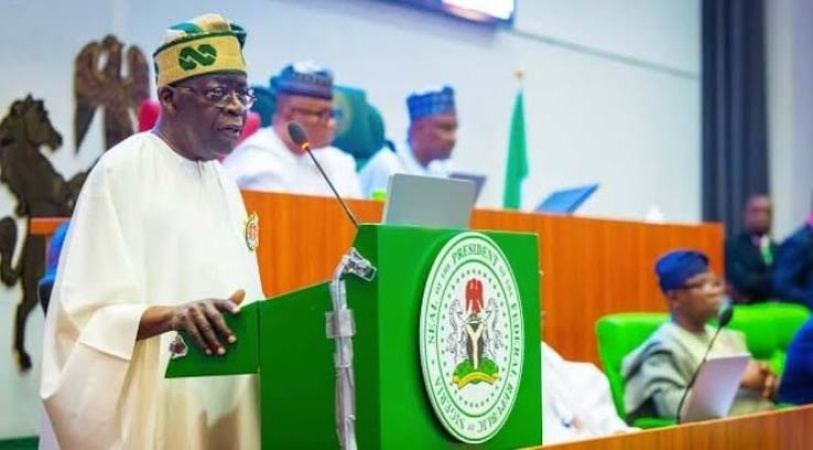
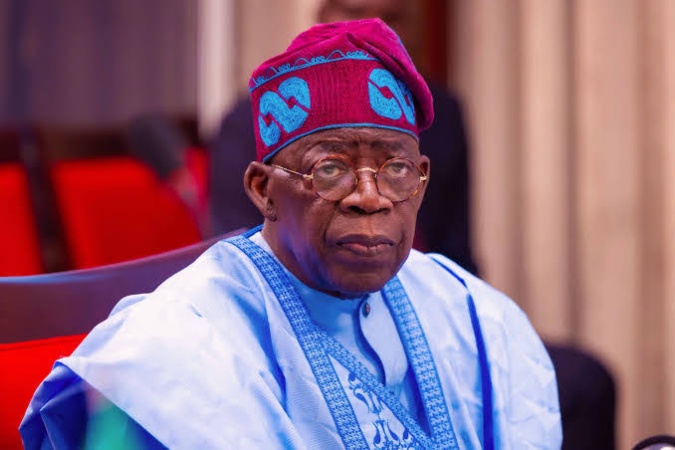
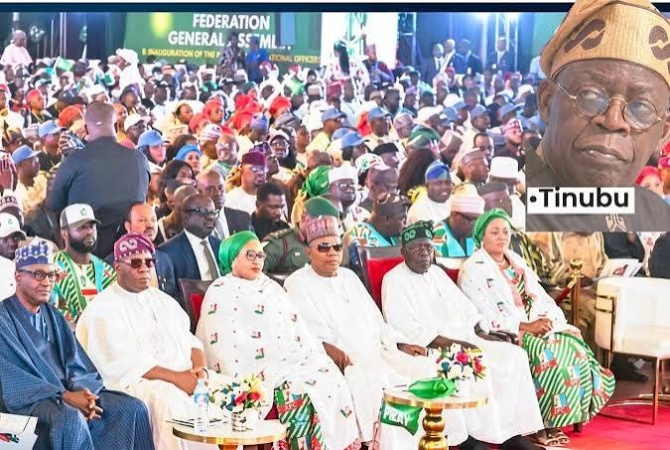
President Tinubu presents 2026 budget to a joint session of the national assembly
With the 2027 general elections now firmly on the political horizon, the fate of the 2027 Appropriation Bill hangs in the balance. The executive had conveyed its intention to present the proposal to the National Assembly by the end of September and the apparent failure to do so has raised the question whether lawmakers can combine campaigns with their constitutional duties.
The Budget Office had disclosed in its Personnel Costs Budget Call Circular that the draft 2027-2029 Medium-Term Expenditure Framework and Fiscal Strategy Paper (MTEF/FSP) had been concluded in July to facilitate submission of the 2027 budget to the National Assembly in September. That target, however, expired without the Appropriation Bill being laid before the legislature.
That missed target has acquired greater significance because the country is already entering the final stretch before the 2027 elections. According to the Independent National Electoral Commission (INEC) timetable, presidential and National Assembly elections will begin on January 16, 2027, leaving a narrowing window for the Executive to present its spending plan and for the legislature to subject it to detailed scrutiny before the election atmosphere becomes even more intense.
There is no law that in itself prescribes September 30 as a statutory deadline for the President to present the Appropriation Bill. Section 81(1) of the Constitution provides that the President shall cause estimates of the Federation’s revenue and expenditure for the following financial year to be prepared and laid before each chamber “at any time in each financial year.”
The Fiscal Responsibility Act, however, establishes an important part of the timetable leading to the annual budget. Its framework requires the MTEF to be prepared within the prescribed period ahead of the next financial year. It also makes the MTEF the basis for preparing the annual revenue and expenditure estimates. The practical implication is that the earlier the fiscal framework is completed, the greater the opportunity for the executive and National Assembly to properly interrogate the following year’s spending plan before January 1.
So, while the September deadline was not itself a constitutional deadline for laying the Appropriation Bill, it would have given the President Bola Tinubu administration an opportunity to move Nigeria away from the perennial late-budget and overlapping-budget cycle. Records show that Tinubu presented the 2024 budget proposal on November 29, 2023; the 2025 proposal on December 18, 2024, and the 2026 proposal on December 19, 2025.
The pattern Is significant not simply because the budgets arrived late in the calendar year, but because late presentation compresses the period available for legislative scrutiny, implementation planning and actual execution. When the cycle delays, the consequences do not remain within the walls of the National Assembly. They are eventually felt in delayed projects, unpaid contractors, incomplete roads, slow procurement, postponed interventions and government agencies struggling to spend within the period for which funds were appropriated, problems already visible in the current budget implementation cycle.
For millions of Nigerians confronting high food prices, inadequate infrastructure, unemployment, insecurity and pressure on household incomes, the budget delay is ultimately about whether government’s promises translate into roads, hospitals, schools, security, jobs and other services that affect daily life.
The National Assembly has just extended implementation of the capital component of the 2025 budget to December 31, 2026 after successive extensions had already moved the deadline from December 2025 to March, June and September 2026. The latest extension was justified on the grounds that ongoing projects should not be abandoned because of funding and execution bottlenecks. But the numbers behind the problem are even more revealing.
According to the Federal Government’s own 2026 budget presentation, only N3.10 trillion, about 17.7 per cent of the 2025 capital budget, had been released as of the third quarter of 2025, while N2.23 trillion had been released for 2024 capital projects following an extension of the 2024 capital budget into 2025.
A Policy and Legal Advocacy Centre (PLAC) report subsequently put the value of unfinished projects from the 2025 budget carried into the 2026 appropriation at N5.71 trillion. The national budgets remaining open across multiple fiscal periods, it becomes harder to establish a clean link between appropriation, releases, expenditure, and physical project completion.”
To the average Nigerian, it does not matter whether the project appears under the 2025 or 2026 appropriation. What matters is whether the road is finished. For a family depending on a public hospital, the question is not which fiscal year contained the allocation, but whether the equipment was purchased and the service is available. For a young person searching for work, the relevance of a budget lies in whether government spending creates productive activity and employment rather than simply producing another list of approved projects.
The same applies to communities waiting for electricity infrastructure, water projects, schools, health centres and security interventions. But the present administration is yet to deliver fully on any budget.
The Presidency and lawmakers have a practical argument for the extension – to allow appropriated funds for ongoing projects to lapse could leave projects abandoned and contractors unpaid. That argument cannot simply be dismissed but it also underlines the deeper problem. If one budget is repeatedly extended because its projects could not be completed within the approved fiscal year, the next budget begins life carrying obligations from the previous one. The result is a fiscal traffic jam.
New projects compete with inherited commitments, while ministries, departments and agencies have to manage several layers of obligations. The legislature, in turn, must scrutinise a new appropriation while dealing with unfinished business from previous budgets. That is precisely the environment into which the 2027 budget is now entering but unlike previous years, the political calendar is likely to exert a stronger pull on both the executive and the legislature.
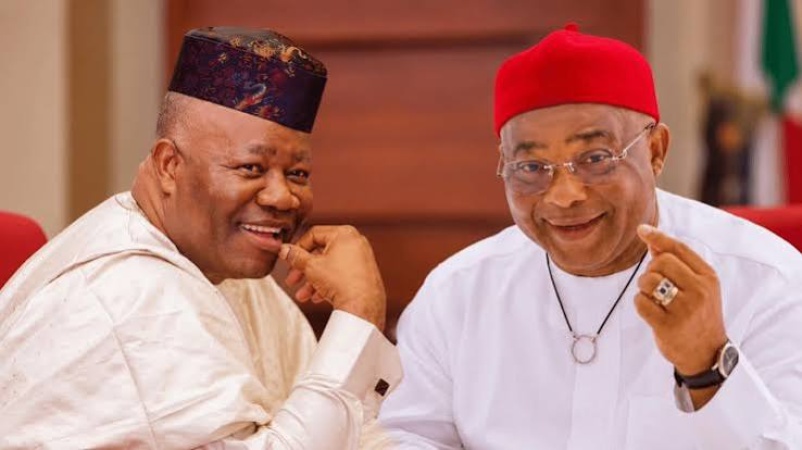
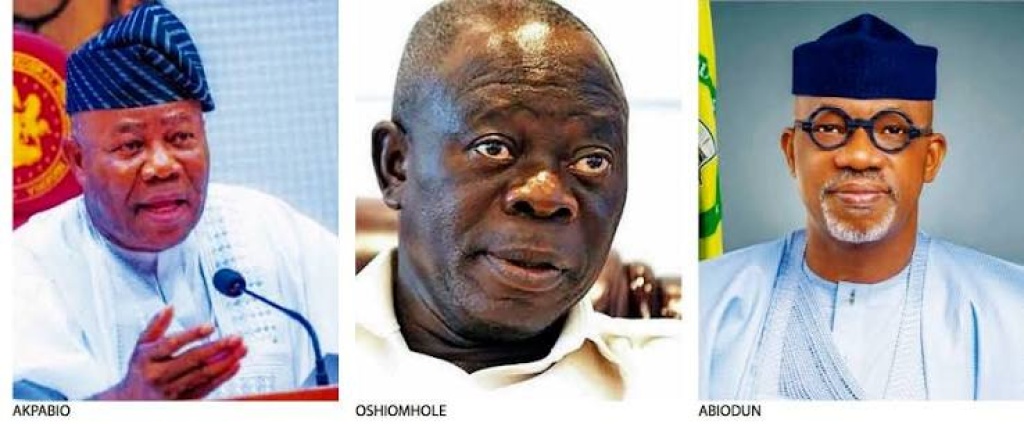
President Tinubu is seeking another term in office, many members of the National Assembly are also seeking re-election, while others will be pursuing different political positions including governorship. Their political parties are already building structures, negotiating alliances and preparing for primaries and the general election. However, Senate President Godswill Akpabio has dismissed the possibility that the election season will interfere with legislative responsibilities.
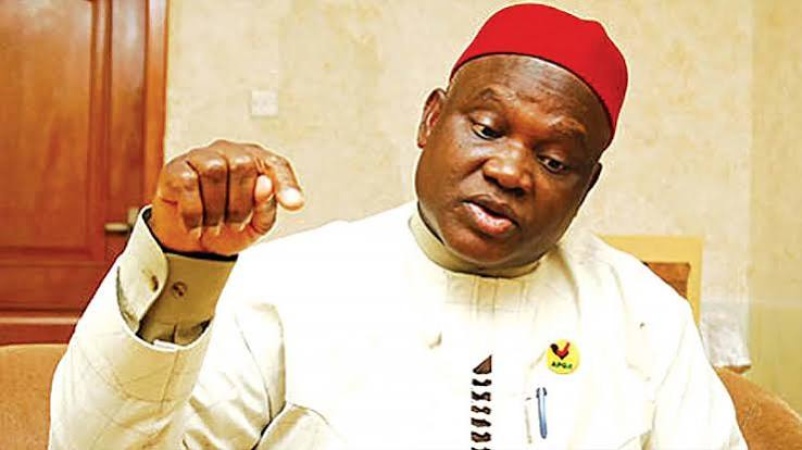
“We are elected for four years, and we are going to work for four years. Anybody that is walking on the tiny rope must be able to do the balancing act,” Akpabio said.
He added, “Campaigns can be fixed in the afternoons or evenings while we do our work in the mornings.”
Akpabio further assured Nigerians that “Nothing will affect legislation. We will continue to make laws to take care of the needs of the people. It has never affected the work of the parliament.”
That assurance is important because the National Assembly cannot suspend its constitutional responsibility simply because an election is approaching. But the real test is not whether plenary sessions will formally continue. It is whether lawmakers will devote the same level of attention to budget scrutiny when many of them are simultaneously dealing with campaign structures, voters mobilisation, power negotiations and their own political survival.
The danger therefore is not necessarily that the National Assembly will shut down its legislative work. It is that the quality and depth of scrutiny could come under pressure as the political calendar tightens. That pressure matters particularly because the 2027 budget will be coming at a time when Nigerians are already demanding evidence that previous appropriations are being translated into tangible outcomes.
Governments naturally want their achievements to be visible before voters. Lawmakers, likewise, have constituencies to return to and political records to defend. Projects with immediate visibility may therefore attract considerable political attention. This does not mean that every constituency project is politically motivated or that every budgetary intervention is improper. It means that the legislature’s constitutional role of scrutinising the Executive’s spending plan becomes even more important when political incentives are heightened.
A budget allocation for a road that remains incomplete is money Nigerians cannot see in improved transport. An allocation for a health facility that is not completed does not improve access to healthcare. Funds tied up in delayed projects do not translate into jobs or economic activity at the speed originally intended. And when projects are repeatedly rolled over, the public is left with appropriations on paper while communities wait for physical delivery.
The National Assembly must resist the temptation to treat the budget as another item to be rushed through because political activities are gathering momentum. If campaigns can indeed coexist with legislative work, as Akpabio has assured Nigerians, then the coming months provide an opportunity to demonstrate that budget scrutiny can be completed without sacrificing either quality or speed.
For Nigerians already living with the consequences of unfinished projects and delayed government spending, that is not an abstract fiscal concern. The 2027 elections will come and go. Politicians will campaign, ballots will be counted and new mandates will eventually emerge.
The Immediate challenge, therefore, is not simply for the Executive to submit the budget or for the National Assembly to pass it. It is for both arms of government to prevent the politics of 2027 from turning another budget cycle into another round of delay, rollover and unfinished promises. (The Sun)




