Updating your news feed...
NEWS EXPRESS is Nigeria’s leading online newspaper. Published by Africa’s international award-winning journalist, Mr. Isaac Umunna, NEWS EXPRESS is Nigeria’s first truly professional online daily newspaper. It is published from Lagos, Nigeria’s economic and media hub, and has a provision for occasional special print editions. Thanks to our vast network of sources and dedicated team of professional journalists and contributors spread across Nigeria and overseas, NEWS EXPRESS has become synonymous with newsbreaks and exclusive stories from around the world.


.webp)













.webp)



Loading banners
Loading banners...

The Nigerian Upstream Petroleum Regulatory Commission (NUPRC) disclosed that more than $57 billion in Field Development Plans had been approved since 2024, with another 22 major offshore projects expected between 2026 and 2030 carrying estimated investment potential of $30 billion to $50 billion.
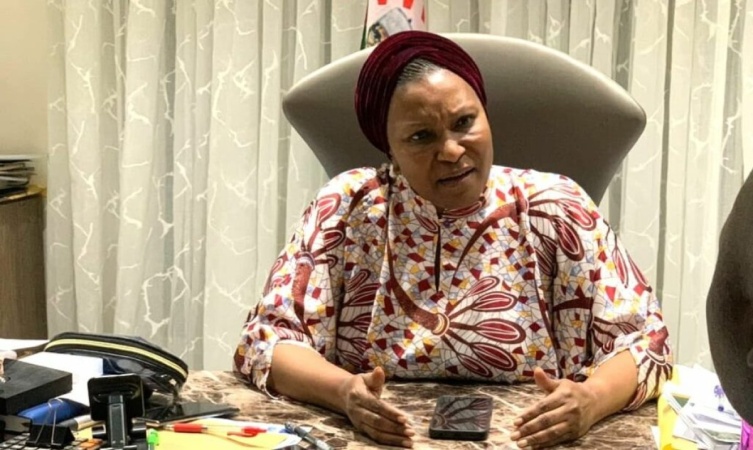
The NUPRC Commission Chief Executive, Mrs. Oritsemeyiwa Eyesan said the figures underscored the need to move from investment commitments to actual project delivery.
“The priority now is execution. Approvals and investment commitments are important, but their real value is realised when projects move and new volumes come onstream.”
Represented by the Director, Surface Development.at the Commission, Mr. Joseph Ogunsola, she said Nigeria averaged about 1.68 million barrels per day of crude oil and condensate in August 2026, with crude production meeting the country’s OPEC quota for the fourth consecutive month.
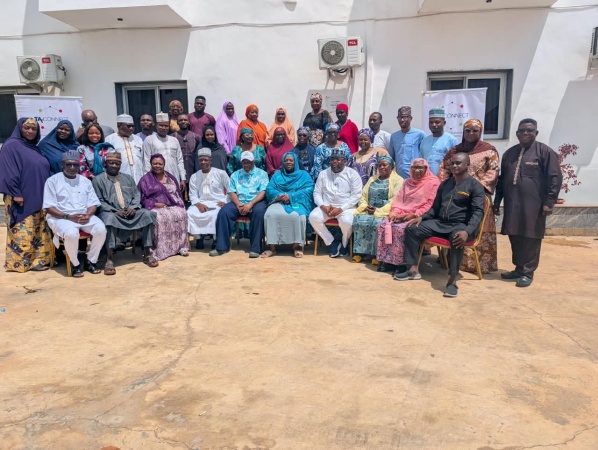
She spoke yesterday at the 2026 Annual Conference of the Association of Energy Correspondents, Abuja FCT (AECAF), themed, “Sustaining Oil and Gas Investment in Nigeria Amid Energy Transition.”
According to her, the development provided a stronger base for the country’s ambition of reaching two million barrels per day in the near term and three million barrels per day by 2030.
She added that achieving the targets would require bringing viable shut-in volumes back onstream, reducing production losses and ensuring operators progressed credible work programmes.
“For me, the starting point is economic value. Nigeria has a significant petroleum resource base, but resources in the ground do not, by themselves, create prosperity.
“This is why our responsibility at the Commission goes beyond regulating activity, we remain focused on creating the conditions that allow good projects to progress without incumberance.”
Eyesan said investors needed clarity on regulations and timelines before committing long-term capital, stressing that regulatory predictability and speed remained critical.
She said the Commission was staying closer to projects, identifying bottlenecks and resolving them early enough to keep investment decisions moving, while holding operators accountable for their commitments.
“We have to spend less time admiring the opportunity and more time converting it. Our role as regulator is not to stand in the way of investment neither is it to lower the standards required to protect Nigeria’s interest.
“The task is to regulate in a way that gives credible investors the certainty to deploy capital and the confidence to remain. I have said before that we want to grow the pie, because when you grow the pie, everybody benefits.”
Eyesan said sustaining investment also required the industry to remain competitive as investors increasingly assessed the efficiency of resource development and production alongside project economics.
She said the Commission’s Upstream Oil and Gas Decarbonisation and Sustainability Blueprint was designed to integrate decarbonisation considerations into new developments from the Field Development Plan stage.
She added that operators would be expected to consider energy efficiency, gas utilisation, flaring and emissions performance alongside the technical and commercial fundamentals of projects.
Earlier, Chairman of AECAF, Mr. John Ofikhenua said the conference was aimed at examining how Nigeria could retain and renew investor confidence in the hydrocarbon industry amid the global shift towards cleaner energy.
He said investment had repeatedly been affected by major global developments and domestic policy decisions, citing the United States shale boom, COVID-19 and the global energy transition.
According to him the energy transition had triggered divestments from Nigeria’s onshore oil assets, while subsequent geopolitical developments, particularly the Russia-Ukraine war, had demonstrated the continuing strategic importance of oil and gas to global energy security.
Ofikhenua said renewed investor interest in opportunities such as the Dangote Petroleum Refinery and Petrochemicals Initial Public Offering and NUPRC’s oil and gas field bid rounds offered Nigeria an opportunity to consolidate investment flows.
He urged government to maintain stable policies, implement the PIA and strengthen security, particularly in the Niger Delta.
“Experience from coverage of the beat has been that of complaint over policy summersaults. Nigeria can only sustain investors confidence with enduring and stable policies.”
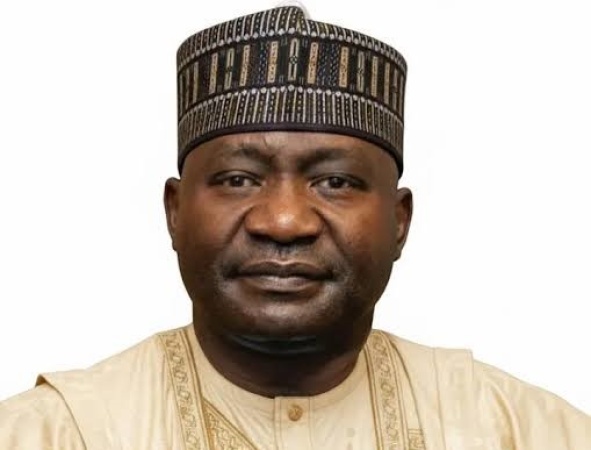
The Minister of State Petroleum Resources (Gas), Hon Ekperikpe Ekpo called for sustained policy stability, regulatory certainty, improved security and faster project execution to attract and retain investment in Nigeria’s oil and gas industry as the global energy transition reshapes the sector.
Ekpo, represented by his Senior Technical Adviser, Abel Nsa, said Nigeria’s challenge was no longer simply having abundant oil and gas resources, but creating an investment environment capable of converting those resources into industrialisation, jobs, infrastructure and improved living standards.
He said: “Our task is therefore not simply to produce hydrocarbons, but to create an investment environment that enables these resources to support industrialisation, job creation, infrastructure development and improved living standards.
“This requires a sustained commitment to policy stability, regulatory certainty, fiscal competitiveness, security and efficient project delivery.”
The minister said implementation of the Petroleum Industry Act (PIA) 2021 and ongoing reforms in the petroleum sector were designed to provide greater clarity for investors, strengthen regulatory institutions and create a more competitive operating environment.
He, however, acknowledged that legislation alone could not guarantee investment, stressing that investors also needed confidence in consistent policy implementation and efficient project execution.
Ekpo said government was particularly focused on leveraging Nigeria’s gas resources as a catalyst for economic transformation through the Decade of Gas Initiative.
According to him, the initiative seeks to move gas beyond its traditional role as an export commodity by expanding its use in power generation, manufacturing, fertiliser production, petrochemicals, transportation and other productive sectors.
He identified the AKK and OB3 gas pipelines, gas processing, LNG and other midstream projects as critical infrastructure required to connect Nigeria’s gas resources to markets.
The minister also said government was promoting LPG and CNG expansion to improve access to cleaner and more affordable energy for households, businesses and industries.
On energy transition, Ekpo said Nigeria’s strategy must reflect its development realities, particularly the millions of Nigerians who still lacked reliable electricity and access to cleaner cooking fuels.
“Natural gas therefore has an important role to play as a transition fuel and as an enabler of industrialisation.” ( The Nation)