
Updating your news feed...
NEWS EXPRESS is Nigeria’s leading online newspaper. Published by Africa’s international award-winning journalist, Mr. Isaac Umunna, NEWS EXPRESS is Nigeria’s first truly professional online daily newspaper. It is published from Lagos, Nigeria’s economic and media hub, and has a provision for occasional special print editions. Thanks to our vast network of sources and dedicated team of professional journalists and contributors spread across Nigeria and overseas, NEWS EXPRESS has become synonymous with newsbreaks and exclusive stories from around the world.
















Loading banners
Loading banners...

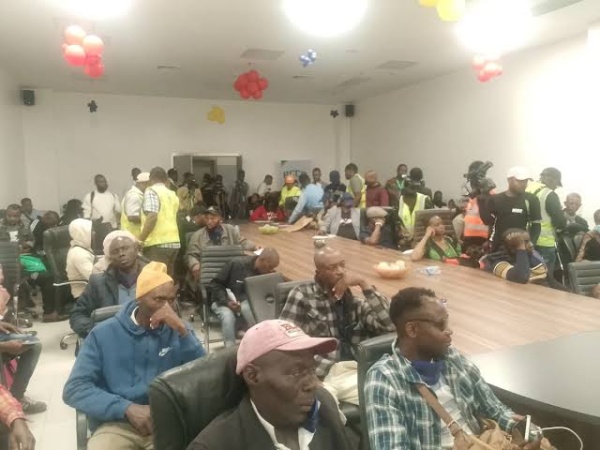
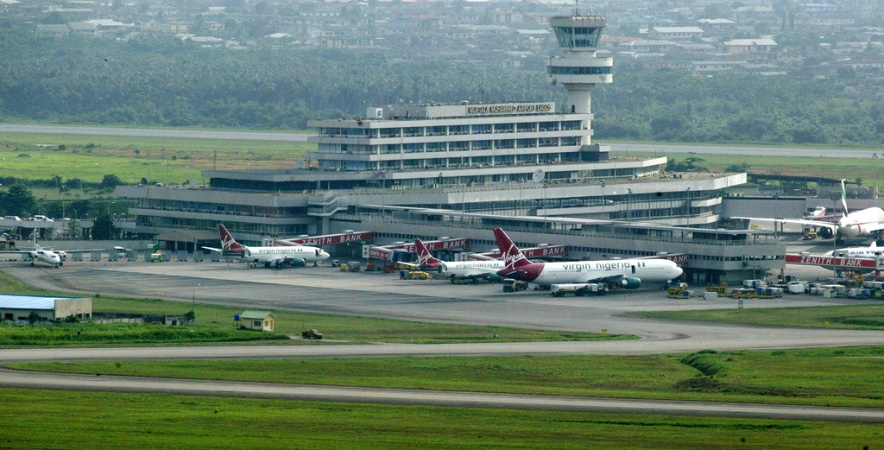
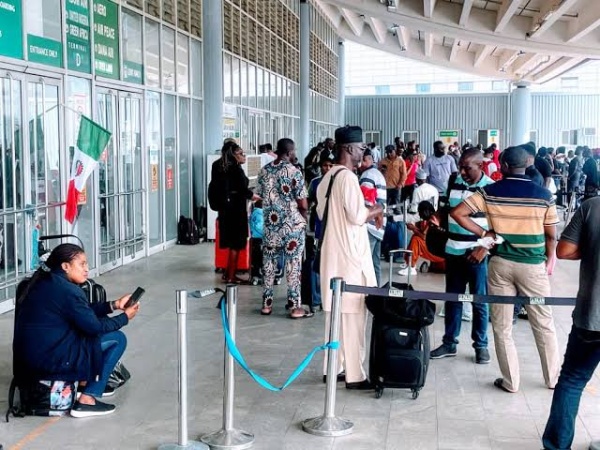
Stranded passengers at the Nnamdi Azikiwe International Airport
For an economy that depends increasingly on air transport to move people and goods across a congested country, the number of flight delays and cancellations recorded last year is not just industry data. They raise fresh concerns about the reliability of Nigerian airlines and, more importantly, the aviation sector’s ability to enable business activities and investment decisions, OLUSEGUN KOIKI reports.
Flight delays and cancellations have remained one of the most persistent challenges confronting Nigeria’s domestic aviation sector, putting both passengers and airline operators under severe pressure.
The Civil Aviation Authority (NCAA) has also come under intense criticism over the enforcement of sanctions on airlines for flight delays and cancellations, as spelt out in the Nigerian Civil Aviation Regulations (Nig.CARs), while other stakeholders have also described the published data as de-marketing to Nigerian operators.
They also argued that the data did not publish the causes of the delayed and cancelled flights. Flight delays and cancellations have a significant impact on airlines’ business plans, including reduced aircraft utilisation, revenue losses, passenger compensation, and damage to customer loyalty and reputation, among others.
But despite these, the August data for 15 domestic airlines, released last week by the industry regulator, indicated a rise in flight delays and cancellations.
According to the data, domestic airlines delayed about 60 per cent of their scheduled flights within the month under review.
The data categorised delayed flights as 16 minutes to three hours and above, raising concerns about the reliability of domestic air transportation.
According to the NCAA data, 15 commercial airlines operated a combined 7,961 flights during the month, out of which 4,765 were delayed. Only 3,196 flights operated without delay, while 36 flights were cancelled.
Also, industry experts argued that some delays are caused by airlines through poor scheduling, inadequate aircraft availability, crew problems, maintenance issues and other operational shortcomings.
Others arise from weather, air traffic restrictions, airport congestion, inadequate infrastructure, security situations, bird strikes, industrial disputes, ground handling, fuel availability, passenger behaviour and other circumstances that may be outside an airline’s immediate control.
However, the Director, Public Affairs and Consumer Protection, NCAA, Michael Achimugu, in an interview with The Guardian, agreed that the airlines were not responsible for some of the flight delays and cancellations and so could not be punished for any violations.
He said that for faults caused by operators, regulatory agencies had previously taken punitive measures against carriers.
According to Achimugu, the regulator had sanctioned some domestic airlines in 2025 for violations.
Achimugu also defended the NCAA’s publication of the data, insisting that the figures were not intended to embarrass or indict individual airlines.
He said: “We have enforced sanctions in the past. In 2025, we sanctioned Aero Contractors, Arik Air, and Air Peace, but we can’t sanction them for delays or cancellations that are not due to their own fault.
“The data we put out is not to embarrass any airline, but just to put it in proper perspective. The figures did not attribute every delay to the airlines because there was insufficient space to publish all the reasons for individual disruptions.”
In his comment, the Chief Executive Officer (CEO) of First Green White Resources, Bonaventure Melah, expressed regret over the persistent flight delays and cancellations among domestic airlines, but said the data presented by the NCAA was inadequate.
According to Melah, the industry regulator should provide greater context when publishing performance statistics for any organisation, including airlines.
He said an airline operating hundreds or thousands of flights should not simply be compared with an operator running a much smaller network on the basis of the absolute number of delayed flights.
The more meaningful assessment, he posited, should include the number and percentage of delayed flights, the duration of delays, the routes operated, airport conditions, and the causes of the disruptions.
He explained that a 20-minute delay due to severe weather was not operationally equivalent to a five-hour delay caused by an airline’s failure to provide an aircraft.
Melah emphasised that statistics are useful only when they provide proper context, noting that numbers presented without adequate explanation could be technically misleading and commercially damaging to the operators concerned.
He insisted it was wrong to simply single out a particular airline as topping the table of delayed flights without aligning it with the total percentage or per unit of the number of flights for each airline operating in the country.
Melah emphasised that not every flight delay is caused by an airline and mentioned adverse weather conditions, airport infrastructure problems, air traffic control restrictions, runway closures, security incidents, and bird strikes as some of the reasons for flight delays.
He added: “Bird strikes, for example, are the responsibility of the NCAA to address. It is categorised as a natural occurrence or force majeure. In the real sense, when flights are disrupted by bird strikes, it is the NCAA that should take responsibility and address the matter rather than pass the buck to airlines.
“Another case is bad weather. Most of the cases of flight cancellation arising from unclear weather conditions can be mitigated if there is adequate infrastructure. But in Nigeria, such ‘bad weather’ often leads to cancellation; you also can’t blame that on airlines since flights are often cancelled based on instructions from authorities.”
He recalled that in August, labour unions disrupted operations in Lagos and Abuja airports, thereby affecting the operations of most domestic carriers, stressing that it would be unfair for the NCAA to place a flight prevented from departing because access to an airport terminal was blocked in the same category as a delay caused by an airline’s own operational inefficiency.
He declared that regulation must distinguish between airline-attributable delays and external or system-induced delays.
“The NCAA has an important responsibility to protect passengers. Airlines that consistently delay passengers because of poor scheduling, inadequate aircraft, crew problems or other avoidable operational deficiencies should be called to account,” he added.
Also, the Chief Commercial Officer (COO) of United Nigeria Airlines, Adedayo Olawuyi, said that many of the factors contributing to delays are beyond the airline’s control.
For instance, he said that many of the nation’s airports lacked adequate, state-of-the-art infrastructure to sustain on-time performance (OTP).
Adewuyi said the priority of every airline should be safety and on-time operations, but declared that safety could not be relegated to second place ahead of OTP.
According to him, an aircraft could be forced to return to its departure airport if the weather or the destination airport’s infrastructure deteriorated to a level that made landing unsafe.
He added: “If you get to the ramp early in the morning, there are times when the aircraft is blocked from moving simply because there are many operators operating today. A flight that pushes back at 6:59 a.m. eventually takes off at 7:38 a.m.
“The flight was supposed to arrive in Abuja by 8 a.m., but there’s already a 40-minute delay that the airline knows nothing about. Now, we are not saying delays will continue or that we intentionally want to delay flights. Airlines don’t want to intentionally delay flights, but the challenges we face are what bring about these delays.
“Secondly, we operate machines. Sometimes we have technical challenges. When these technical challenges occur, we must maintain the safety of that flight and ensure that everything is properly done and that the aircraft is fixed before it is released into service.”
He also posited that the NCAA data did not differentiate between controllable and uncontrollable delays, noting that if this were done and the result still showed 60 per cent, the airline could be blamed for inefficiency.
Rather than solely blaming the airlines for flight delays, Adewuyi said the entire ecosystem – airports, regulators, ground handling companies and others should also be held responsible.
He also said that the passengers should know their rights once their flight is delayed or cancelled.
Adewuyi explained that once a flight is delayed by up to two hours, passengers are entitled to refreshments; a four-hour delay entitles passengers to a full meal, while delays of up to six hours also merit compensation.
Also, the Managing Director of Flight and Logistics Solutions Ltd, Amos Akpan, like others, identified several contributors to delays, including aviation agencies, government organisations, fuel suppliers, telecommunications providers, VIP movements, ground handling companies and passengers.
He also mentioned weather and infrastructure deficiencies provided by airport and airspace agencies as factors that could negatively affect airline operations.
He posited that the industry “must stop operating within a complaint and blame culture.”
Instead, Akpan said every participant should accept responsibility for the part it plays in the aviation value chain.
Also, the Chairman of Air Peace, Allen Onyema, recently debunked the claim that airlines benefited from operational disruptions.
He said most of the delays and cancellations resulted from factors beyond their control, adding that flight disruptions come at a high cost to operators.
He mentioned passenger behaviour as one of the major causes of flight delays in Nigeria, arguing that travellers had refused to accept the culture of rescheduling when flights are cancelled.
“Let me tell you why delays and cancellations will persist in this country. Apart from safety, security, weather and other issues, it is unruly passenger behaviour.
“The misunderstanding of how airlines’ scheduled operations are supposed to be run is a major cause of flight delays,” he said.
Onyema emphasised that 80 per cent of flight delays and cancellations in Nigeria were due to poor infrastructure, instability in the supply of Jet A1 and inadequate parking space for aircraft on the apron.
He also mentioned inadequate screening and exit points at departure, inefficient passenger access and facilitation, natural and unforeseen circumstances such as weather, catastrophic failures and restrictions caused by sunset airports, among others. (The Guardian)