Updating your news feed...
NEWS EXPRESS is Nigeria’s leading online newspaper. Published by Africa’s international award-winning journalist, Mr. Isaac Umunna, NEWS EXPRESS is Nigeria’s first truly professional online daily newspaper. It is published from Lagos, Nigeria’s economic and media hub, and has a provision for occasional special print editions. Thanks to our vast network of sources and dedicated team of professional journalists and contributors spread across Nigeria and overseas, NEWS EXPRESS has become synonymous with newsbreaks and exclusive stories from around the world.





















Niger Delta militants
Fresh facts have emerged on the high-stakes political maneuvers, deep-seated logistical nightmares, and hidden global alignments that characterised the launch of the historic Presidential Amnesty Programme, PAP, under the late President Umaru Musa Yar’Adua.
More than 17 years after the Federal Government declared a ceasefire in the oil-rich Niger-Delta, a groundbreaking scholarly review published in the prestigious International Journal of Intellectual Discourse (IJID) (Volume 7, Issue 3, September 2024) has stripped away the veil of secrecy surrounding the N50 billion peace gambit.
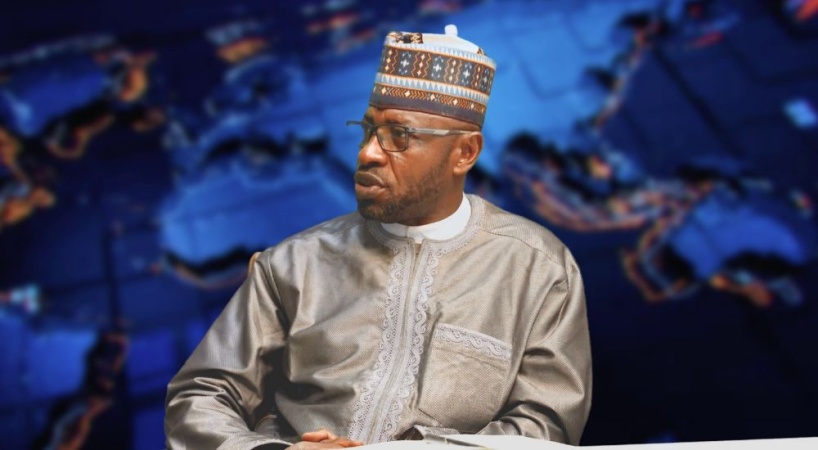
The comprehensive study, authored by renowned researcher, Dr Abdul-Wasi Babatunde Moshood, an associate professor of Political Science at the Lagos State University, Ojo, Lagos, uncovers the complex web of state survival, crude oil economics, and severe administrative paralysis that nearly crashed Nigeria’s most ambitious home-grown security intervention.
State survival vs genuine peace
Writing with precision, Moshood notes that while the Yar’Adua administration framed the amnesty offer around the need to bring lasting peace and development to a long-neglected region, the primary driver was economic survival. Armed militancy had effectively brought the Nigerian state to its knees, cutting crude oil production, the sole lifeblood of the nation’s economy, by more than half.
Citing foundational arguments by prominent conflict scholars like Obi (2014) and Ushie (2013), the author validates assertions that the federal government was forced to act because its financial interests were severely jeopardized by the relentless bombing of oil pipelines and offshore platforms.
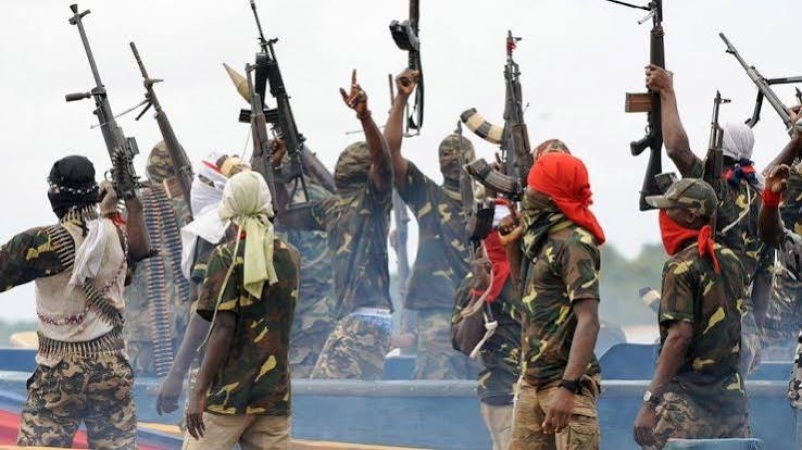
The economic architecture of Nigeria faced an unprecedented existential threat between 2006 and 2008. Militant groups, operating under sophisticated command structures like the Movement for the Emancipation of the Niger Delta, MEND, weaponised their knowledge of the difficult terrain. They carried out calculated attacks on critical oil infrastructure, kidnapped foreign oil workers, and shut down major production facilities such as the Forcados and Bonny terminals.
This systematic sabotage choked national revenue, reduced power generation capabilities linked to gas infrastructure, and triggered a major flight of foreign direct investment. International oil companies began cutting down their operations, relocating their headquarters from Port Harcourt and Warri to Lagos, or exiting the shallow offshore terrain entirely.
However, Moshood introduces a critical balance to this narrative. The study argues that the state’s economic panic cannot be divorced from a genuine need to stabilize the region. Without absolute peace, the paper posits, no sustainable developmental project could ever take root in the volatile swamplands of the Niger Delta. The devastation wrought by years of low-intensity conflict had fractured local communities, destroyed traditional fishing and farming economies, and created a generation of youth who viewed armed agitation as their only viable path. Therefore, while crude oil liquidity remained the immediate target for Abuja, the long-term survival of the region as a functional component of the Nigerian federation hinged entirely on a decisive pivot away from kinetic military action toward structural pacification.
How Villa Power tussle halted progress
One of the damning disclosures in Moshood’s study is how the sudden illness and demise of President Yar’Adua dealt a near-fatal blow to the amnesty process during its critical formative months.
According to official records evaluated in the journal, the programme suffered immediate operational paralysis as the presidency became embroiled in a fierce constitutional crisis. As Yar’Adua’s health deteriorated, the machinery of state ground to a halt. The bitter political turf war over whether Vice President Goodluck Jonathan should assume executive powers created a dangerous administrative vacuum.
This political logjam directly affected the camps. Critical decisions that legally required the president’s direct signature, specifically the urgent release of operational funds and the planned extension of the amnesty window to thousands of willing fighters waiting in the wings, were frozen. The resulting lull left thousands of newly disarmed youth stranded, testing their patience and nearly provoking a catastrophic return to armed resistance in the creeks.
The inner workings of the federal cabinet during this period reflected deep institutional anxiety. A powerful group within the political elite, later dubbed the “Villa Cabal,” actively guarded access to the ailing president. This political containment strategy effectively stalled the files of the Presidential Committee on Amnesty and Disarmament.
Major General Godwin Abbe, retd, who was tasked with running the post-amnesty agenda, found himself trapped in a bureaucratic maze. The funds required to transition ex-militants from temporary camps to permanent training facilities were held up in the Central Bank of Nigeria because executive clearance was stalled.
Meanwhile, field commanders in the Delta reported that mid-level militant commanders were becoming increasingly restless. They openly questioned whether the federal government’s peace offer was merely a tactical trick designed to disarm them before launching a sweeping military crackdown. Rumors of a potential return to the trenches spread across the region, forcing security agencies into a state of high alert. It took the historic invocation of the “Doctrine of Necessity” by the National Assembly to empower Jonathan as Acting President, finally breaking the institutional logjam and unlocking the vital resources needed to save the program from collapse.
UN secret codes for repentant militants
For years, the Federal Government maintained that the Niger-Delta amnesty process was an entirely localized, sovereign arrangement. However, Moshood’s research exposes a fascinating international dimension.
The study reveals that despite the Disarmament, Demobilisation, and Reintegration, DDR, process being conceptualized, executed, and financed entirely from Nigeria’s treasury, it carried the secret blessing and structural backing of the international community.
Quoting an exclusive interview with a top-ranking military general, who operated at the highest level of the security architecture, the study discloses that every single ex-militant who surrendered their weapons was processed into a global database.
“Everybody that went through the amnesty has a UN code,” the anonymous general revealed to the author. “What I just want you to know is that it is a novel idea; this is one of the few cases of countries that went through the DDR process at its own initiative, at its own expenses, at its own effort.”
To fortify this local-international hybrid framework, the managers of the programme bypassed conventional local training systems. During the demobilization phase at the famous Obubra Camp in Cross River State, the government partnerned with the world-renowned Martin Luther King Centre in the United States, alongside specialized peace-building outfits from South Africa. The battle-hardened fighters were systematically exposed to institutionalized principles of non-violence, breaking down years of insurgent indoctrination.
The issuance of unique United Nations tracking codes served a dual purpose that was never officially acknowledged by the federal government. First, it offered the ex-militants an unwritten layer of international visibility. This assurance convinced cynical commanders that they would not be quietly liquidated or arbitrarily prosecuted by state security forces once they surrendered their weapons. Second, it aligned the home-grown initiative with global DDR standards established in post-conflict zones like Sierra Leone, Liberia, and Colombia.
By integrating the training materials of the Martin Luther King Centre for Nonviolent Social Change, trainers worked to deconstruct the hyper-masculine, militant mindsets formed during years of bush warfare. The ex-militants were taught the philosophy of strategic, non-violent agitation for resource control, shifting their perspective from armed confrontation with the state to structured engagement within the framework of civil society.
Medical crisis in camps
Beyond the grand political declarations, Moshood’s paper unearths the harrowing humanitarian and medical crisis encountered by the technical committee led by the pioneer Minister of Interior, Major General Godwin Abbe, retd.
When the gates of the Obubra Camp opened, officials did not just inherit a mountain of surrendered automatic rifles; they inherited a broken, deeply traumatized, and diseased population. The technical head of the presidential amnesty unit, Mr. Lawrence Pepple, provided a striking testimony regarding the state of the youth arriving from the creeks.
“You will learn their health concern, their economic concern, their request, and various other things they will need,” Pepple stated in a personal communication captured in the journal. “Some of them, as at the time we brought them, you can even be moving them for surgery, because some came with bullet injuries that had stayed with them for years. Some of them are tuberculosis infected, some are HIV positive. So, their concerns were now taken over by us.”
The medical emergencies inside Obubra Camp quickly became a major logistical test for the program’s managers. Many of the young men arriving from deep camp locations had spent years without access to basic healthcare, clean drinking water, or proper sanitation. Field clinics had to be quickly converted into fully equipped surgical theaters to extract deeply embedded shrapnel and rusted bullets from old combat wounds that had grown infected over time.
The high prevalence of communicable diseases like Tuberculosis highlighted the cramped, unhygienic conditions of the creek hideouts. Furthermore, managing hundreds of HIV-positive delegates required the immediate setup of confidential counseling networks and a steady supply of antiretroviral therapy, all funded entirely by the state. This massive medical intervention humanized the government in the eyes of the ex-militants, transforming the amnesty program from a cold political deal into a deeply personal rehabilitation process.
N65,000 economic cushion
The study captures the psychological shock experienced by the fighters during their extraction from the creeks. For nearly a decade, the mangrove swamps had served as their sovereign territory and source of livelihood. Their weapons were their physical security, their social safety net, and their economic power.
As Pepple explained to the researcher, removing an insurgent from his camp meant stripping him of his entire economic existence. To manage this volatile transition, the state had to replace the financial yield of the rifle with an immediate alternative.
The government established a mandatory monthly stipend of Sixty-Five Thousand Naira (N65,000). This financial cushion was designed to cover immediate feeding and basic accommodation challenges, keeping the ex-militants stable while the state prepared them for long-term vocational and educational placement.
This stipend allocation was highly controversial within the broader Nigerian political landscape, drawing sharp criticism from various civil society groups who argued that the state was essentially rewarding criminality. However, Moshood’s study reveals the cold, pragmatic security logic behind the payouts. In the creeks, a mid-level militant could secure significant sums through oil bunkering, illegal refining, and protection rackets. Expecting these individuals to completely disarm and return to impoverished communities without any financial transition mechanism would have been a recipe for immediate operational failure.
The N65,000 allowance acted as an effective economic anchor. It transformed the ex-militants from independent actors into state-dependent individuals, giving the government substantial leverage. Any breach of peace or failure to comply with camp rules resulted in the immediate suspension of the stipend, creating a powerful non-kinetic tool for behavioral control.
Why the Creeks may be lost forever
The most profound postulation in Moshood’s study lies in its evaluation of the final and most complex phase of the programme: Reintegration.
The author notes that while disarmament and demobilization are highly tangible processes where managers can easily count the number of rifles collected and stack rows of camp registration files, reintegration is a completely invisible psychological battleground. It requires a fundamental shift in attitude.
The study proves that the late president’s decision to invest heavily in top-tier human capital development paid off. The government sponsored thousands of ex-militants not only into local technical colleges but into prestigious Ivy League universities and advanced vocational centers across the globe. They were trained in marine engineering, commercial aviation, underwater welding, and information technology.
Moshood concludes with a powerful sociological verdict: by exposing these youths to global intellectual environments and adding immense value to their lives, the state effectively insulated them from their past. Combined with the absolute erasure of legal prosecution via the unconditional presidential pardon, the study notes that it becomes structurally and psychologically impossible for these individuals to abandon their new status in civil society to pick up arms in the creeks again. A young man who has experienced life as a licensed commercial pilot or a certified marine engineer is highly unlikely to return to a dangerous, low-yield life in a mangrove swamp.
The acquisition of specialized knowledge gave these youths a tangible stake in the formal economy. It rebuilt their self-worth outside the context of armed conflict. The Nigerian model, despite its early political bottlenecks and administrative hurdles, stands as a rare global example of a state successfully using conditional welfare and intellectual exposure to pacify a deeply entrenched armed insurgency.
Core Insights on the unintended legacy
Commodification of Violence: The state-sponsored stipend and disarmament model inadvertently signaled that violent agitation is an effective bargaining chip for resource allocation, encouraging similar templates of criminality elsewhere.
Exclusion of Root Causes: By focusing heavily on individual ex-militants through stipends rather than regional environmental remediation and infrastructural development, the framework functioned like “mopping the floor while neglecting a leaking roof”.
Elite Capture and Corruption: Financial disbursements often flowed through prominent factional leaders (“diaspora/warlord leaders”) rather than reaching the broader grassroots infantry, sparking fresh grievances and fractional local anger.
Distorted Peacebuilding Discourse: Contemporary security management in Nigeria frequently defaults to a militarized or transactional “amnesty-first” reflex, crowding out holistic frameworks that demand accountability, community inclusion, and sustainable economic integration. (Vanguard)