
Updating your news feed...
NEWS EXPRESS is Nigeria’s leading online newspaper. Published by Africa’s international award-winning journalist, Mr. Isaac Umunna, NEWS EXPRESS is Nigeria’s first truly professional online daily newspaper. It is published from Lagos, Nigeria’s economic and media hub, and has a provision for occasional special print editions. Thanks to our vast network of sources and dedicated team of professional journalists and contributors spread across Nigeria and overseas, NEWS EXPRESS has become synonymous with newsbreaks and exclusive stories from around the world.
















Loading banners
Loading banners...

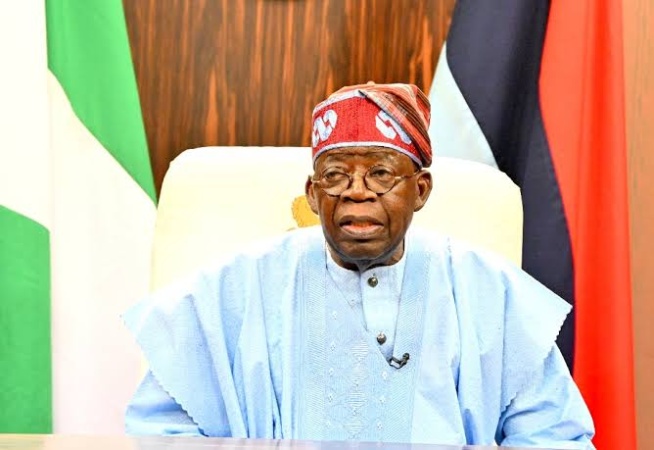
President Tinubu
By BONIFACE AKARAH
The Movement for a Socialist Alternative (MSA) has condemned the reported increase in the price of petrol from N1,165 to N1,400 within three weeks, describing the development as another burden on Nigerian workers and low-income households.
In a press statement signed by A.J. Dagga Tolar, General Secretary, MSA, the organisation said the reported increase amounted to approximately 20 per cent and warned that it would further worsen living conditions amid rising food, transportation, electricity and other essential costs.
The MSA accused the President Bola Tinubu administration of pursuing what it described as **”neoliberal policies”** that place the burden of economic adjustment on working people while protecting the interests of wealthy individuals and big businesses.
“The continuous neglect of the survival of the mass of working people in the hands of neoliberal policies dictated by multilateral corporations like the IMF and World Bank has left the country and its working people much more vulnerable,” the group said.
It argued that successive increases in crude oil prices had been used to justify higher petrol prices, while reductions in international crude prices had not translated into corresponding reductions at the pump.
According to the organisation, “when the price of crude oil drops, as witnessed in June when it fell to $80 a barrel, the price of petrol never dropped,” adding that the situation could only be challenged through action by Nigerians affected by the rising cost of living.
The MSA also criticised the continued rise in the cost of essential goods and services, saying workers, students, traders, farmers, artisans and small business owners were struggling under the weight of higher living costs.
It further described the fuel-price increases as part of what it called a broader economic crisis, arguing that the removal of fuel subsidies, naira devaluation and increases in essential commodities had placed "an enormous burden on ordinary Nigerians.”
The group particularly challenged the Nigeria Labour Congress (NLC) and Trade Union Congress (TUC) to move beyond issuing statements and mobilise workers and other affected groups against further increases in energy costs.
“The Nigeria Labour Congress (NLC) and the Trade Union Congress (TUC) cannot continue to remain silent or limit their response to issuing statements,” the MSA said, urging organised labour to mobilise the working masses against what it described as ongoing exploitation.
The organisation said the rise in petrol prices had become more severe when measured against workers’ earnings, noting that petrol had risen from ?197 to ?1,400 since the beginning of the Tinubu administration, which it calculated as an increase of more than 600 per cent.
It said the labour unions should demand an affordable petrol price that reflects workers’ incomes and allows them to meet basic needs.
The MSA also questioned the argument that fuel-price increases were necessary to improve government revenue or attract investment, saying such explanations did not address the immediate hardship experienced by ordinary Nigerians.
“Workers, students, traders, farmers, artisans, and small business owners are already struggling to survive,” the organisation stated, adding that increases in petrol prices directly affect transportation, food, education, healthcare and other basic needs.
Among its demands, the MSA called for an affordable and accessible petrol price, immediate rehabilitation and full operation of government-owned refineries, an end to rising energy and essential commodity costs, and a living wage capable of meeting workers’ basic needs.
It also demanded what It described as “democratic workers control and accountability over the country’s oil resources” and an end to economic policies that place the burden of economic difficulties on working people.
The organisation maintained that the NLC and TUC had a responsibility to mobilise workers, students, traders, artisans and other sections of the working population to demand changes to policies it said were worsening poverty and hardship.