Updating your news feed...
NEWS EXPRESS is Nigeria’s leading online newspaper. Published by Africa’s international award-winning journalist, Mr. Isaac Umunna, NEWS EXPRESS is Nigeria’s first truly professional online daily newspaper. It is published from Lagos, Nigeria’s economic and media hub, and has a provision for occasional special print editions. Thanks to our vast network of sources and dedicated team of professional journalists and contributors spread across Nigeria and overseas, NEWS EXPRESS has become synonymous with newsbreaks and exclusive stories from around the world.












Loading banners
Loading banners...

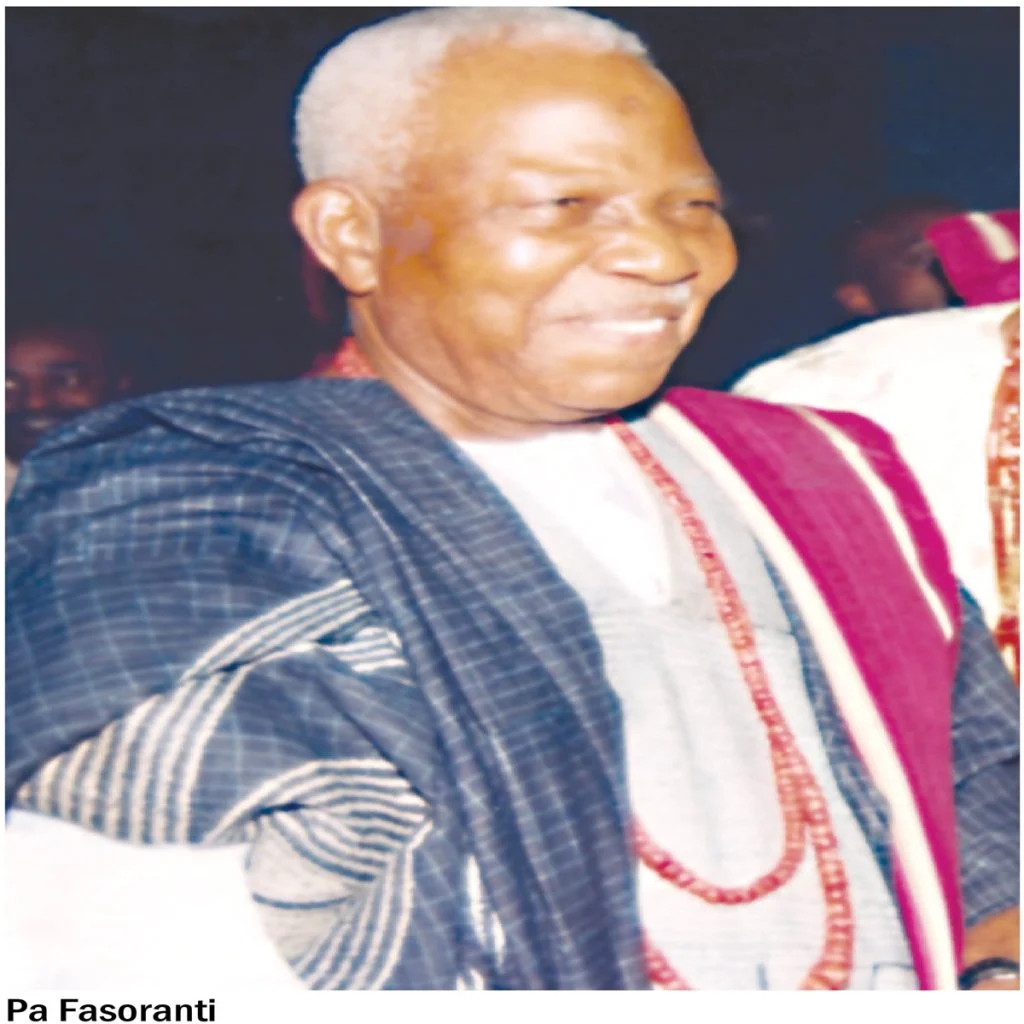
Afenifere, leader, Pa Reuben Fasoranti
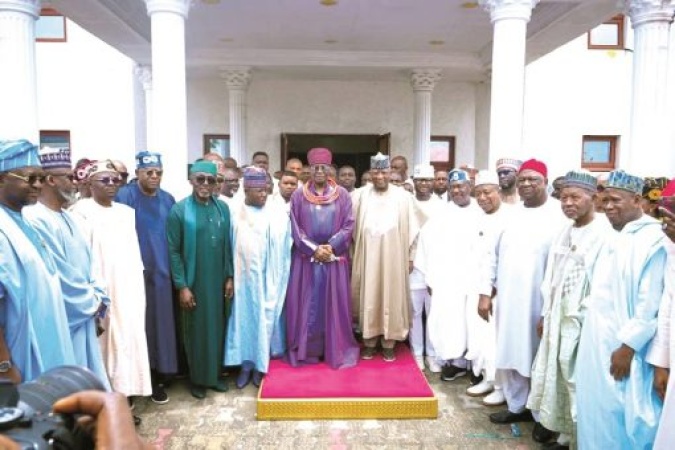
The Shell Hall of the Muson Centre, Onikan, Lagos, came alive penultimate Friday as dignitaries gathered to celebrate the 100th birthday of Afenifere, leader, Pa Reuben Fasoranti, and reflect on a life that has traversed some of the most consequential chapters of Nigeria’s political history.
The event brought together generations of Yoruba political leadership around an elder statesman whose public life has been defined by courage, conviction, democratic ideals and service.
First-class traditional rulers, serving and former governors, politicians across party lines, Afenifere leaders and prominent Yoruba personalities converged to honour Fasoranti, the elder statesman and leader of the pan-Yoruba socio-political organisation.
Governor Lucky Aiyedatiwa of Ondo State was physically present, while other South West governors, including Lagos State Governor Babajide Sanwo-Olu and Ekiti State Governor Abiodun Oyebanji, were represented by their deputies and the Secretary to the State Government (SSG), respectively. Former governors Olusegun Osoba, Niyi Adebayo and Kayode Fayemi also featured prominently.
There were also figures whose political trajectories have placed them on different sides of Nigeria’s contemporary political divide, including the Social Democratic Party (SDP) presidential candidate, Prince Adewole Adebayo.
The occasion, themed “A Century of Courage and Stewardship of Yoruba Democratic Legacy,” inevitably became a reflection on what Nigeria has gained, and perhaps lost, from the political tradition represented by the centenarian and his generation.
At 100, Fasoranti has become more than an individual. He has become a repository of memory.
President Bola Ahmed Tinubu, represented by his Chief of Staff, Rt. Hon. Femi Gbajabiamila, echoed this when he captured the significance of the gathering as he declared that the elder statesman’s contribution could not be confined to Yorubaland.
“The history of Nigeria can never be written without his name being written in gold. His name can never be erased,” Tinubu said.
The statement perhaps best explained the unusual convergence of political figures at the event.
Fasoranti’s political journey belongs to an era when politics was frequently framed not merely as a contest for power but as an instrument of social transformation.
His association with the late sage, Chief Obafemi Awolowo, and the progressive tradition of the old Western Region placed him within a political school that emphasised education, development, social welfare, regional autonomy and disciplined public service.
Tinubu’s message captured the national dimension of Fasoranti’s legacy.
He said: “The life and times of Pa Fasoranti cannot be viewed parochially or limited to the Yoruba race. That would be a great disservice to him and the Yoruba race.”
It was a fitting conclusion to a celebration that began as a Yoruba gathering but repeatedly returned to the Nigerian question.
At 100, Fasoranti’s greatest political significance may no longer lie in the positions he held or the political battles he fought. It may lie in the fact that his life offers a reference point against which contemporary leadership can be measured.
But beneath the birthday tributes was a more difficult demand: that the values associated with his century — courage, character, service, democratic commitment, consultation, sacrifice and collective development — should survive the generation that embodied them.
In his remarks, Ondo State governor, Lucky Aiyedatiwa, described Fasoranti as a “national asset”, stressing that his contribution extended beyond occupying public office.
“Living for a century while contributing to knowledge and upholding democratic ideas and values is an even greater achievement,” he remarked.
The unfinished South-West project
In a sense, Pa Fasoranti’s centenary provided a platform for revisiting one of the central questions of Yoruba political thought: How can a region with a strong historical identity convert that identity into practical economic and social development?
This was the focal point of the submission by Lagos State Governor Sanwo-Olu, who was represented by his deputy, Dr Kadiri Obafemi Hamzat. The governor argued that the region could not achieve meaningful development through isolated efforts by individual states. “We must work together as a team and not move at our own pace. We must have a developmental agenda for the South West,” he added.
The argument introduced an important contemporary dimension to the celebration.
The South West possesses substantial economic resources, human capital, industrial capacity and a sophisticated private sector. Lagos remains Nigeria’s commercial hub, while other states in the region possess significant agricultural, mineral, tourism and human-capital potential.
Yet political coordination among the states has often been inconsistent. Sanwo-Olu’s call for a coordinated regional agenda therefore echoed an older Yoruba political idea: that regional development requires collective planning rather than fragmented state-level initiatives.
For Ekiti State Governor Oyebanji, represented by the SSG, Fasoranti has become a repository of history whose affection for the Yoruba people has helped younger generations understand their origins and democratic heritage.
Professor Ropo Sekoni, one of the lecturers at the event, recalled that Fasoranti had the privilege of working alongside Awolowo between 1952 and 1960, describing their political orientation as rooted in social democracy.
Sekoni said that the elder statesman had devoted his life to the advancement of the Yoruba people and the development of Nigeria.
Perhaps the most striking feature of the celebration was the way the past and present of Yoruba politics appeared to meet under one roof.
The most politically consequential dimension of the celebration, however, was the effort to connect Fasoranti’s legacy with the present political moment.
His endorsement of Tinubu in the 2023 presidential election was repeatedly recalled.
Speaking on behalf of his father, Dr Taiwo Fasoranti recalled asking his father why he had supported Tinubu’s presidential bid.
According to him, Fasoranti replied: “That is the man that is going to turn around Nigeria.”
Three years after that endorsement, Taiwo Fasoranti said his father remained convinced that Tinubu should be allowed to continue. He added, “Pa Fasoranti told me to tell you to ensure that Tinubu returns for another term to continue his great work.”
The message was significant, not simply because of the electoral implications of an endorsement from an influential Afenifere leader, but because it illustrated the continuing contest over the political inheritance of the Awolowo tradition.
For Osoba, Tinubu represents the culmination of a progressive political lineage.
The former Ogun State governor argued that the All Progressives Congress was an offshoot of the progressive political tradition associated with the Alliance for Democracy and that Tinubu, as a former Lagos governor, remained a disciple of Awolowo.
“Tinubu is Awolowo’s son. Tinubu is the first progressive president,” Osoba declared.
He said Fasoranti’s support for Tinubu in 2023 was intended to help translate the ideals of the Awolowo School into national governance. But the significance of the remarks goes beyond partisan politics.
Beyond politics: The question of character
Perhaps the most profound argument at the celebration came from Archbishop Prince Ayo Ladigbolu, whose lecture shifted the focus from political structures to character.
His sub-theme was “Yoruba Ethical Renaissance and Ways to Reinvent Our Natural Values to Rebuild the Nigeria of Our Dream.” For Ladigbolu, the real significance of Fasoranti’s centenary was not simply that he had lived for 100 years. It was that he had accumulated a reputation for character over those years.
The retired clergyman said: “At the heart of Yoruba ethics lies the concept of iwa. In your thought, a person’s true worth is determined by the quality of his character.”
That intervention was particularly relevant in a country where public discourse is increasingly dominated by questions of corruption, institutional weakness, political patronage and declining public trust.
Ladigbolu argued that the Nigerian crisis was fundamentally a crisis of values. The argument placed Fasoranti within a broader Yoruba conception of leadership in which personal integrity is inseparable from public responsibility.
He invoked Awolowo as another example of the same principle. He said: “It is character that makes a leader see into the future while others see only their experiences or today.”
That may ultimately be the most enduring lesson of Fasoranti’s century.
Institutions matter. Policies matter.
Elections matter. But institutions are operated by people, and the quality of public institutions is inevitably influenced by the ethical standards of those who occupy them.
The celebration therefore raised a difficult question for contemporary Nigeria: what happens to a political tradition when its ethical foundations are remembered in speeches but not reproduced in public conduct?
To answer the question of disappearing authority of elders, Ladigbolu identified another challenge — the weakening authority of elders.
Traditionally, Yoruba society invested elders with responsibility for transmitting values, settling disputes and providing moral direction.
But globalisations, changing family structures, social media and rapid cultural transformation have altered that relationship.
“Elders have been our moral compass, but what do we do when the elders have also become victims of globalisation?,” he said.
At 100, the Afenifere leader represents one of the last surviving bridges to a political culture shaped by the nationalist and pro-democracy struggles of the 20th century.
The question is what happens when men like Fasoranti are no longer available to recount those experiences firsthand. The preservation of historical memory, therefore, becomes a political responsibility.
Unity, truth and collective development
Traditional rulers from across the South West also used the occasion to reinforce the centrality of unity and truth. The Chairman of the Ondo State Council of Obas, who is also the Olowo of Owo, Oba Ajibade Gbadegesin, speaking on behalf of traditional rulers across Yorubaland, urged Nigerians to make truth a standard of public and private life.
“We have to use Pa Fasoranti as an example. Let us adopt truth as the standard for our living. We must unite if we want collective development,” he said.
The intervention was significant because the Yoruba political space, like every other political constituency in Nigeria, has not been immune to internal disagreements.
Afenifere itself has experienced periods of division, while Yoruba political actors have sometimes found themselves on opposing sides of major national questions.
Yet the Fasoranti celebration demonstrated that a shared cultural and historical identity can still provide common ground. (Nigerian Tribune)