
Updating your news feed...
NEWS EXPRESS is Nigeria’s leading online newspaper. Published by Africa’s international award-winning journalist, Mr. Isaac Umunna, NEWS EXPRESS is Nigeria’s first truly professional online daily newspaper. It is published from Lagos, Nigeria’s economic and media hub, and has a provision for occasional special print editions. Thanks to our vast network of sources and dedicated team of professional journalists and contributors spread across Nigeria and overseas, NEWS EXPRESS has become synonymous with newsbreaks and exclusive stories from around the world.




.webp)
.webp)


















Loading banners
Loading banners...

By BONIFACE AKARAH
The Director-General of the National Information Technology Development Agency (NITDA), Kashifu Inuwa Abdullahi, has called for a unified regulatory interface across government agencies to reduce bureaucratic delays and make Nigeria more attractive to digital infrastructure investors.
Inuwa made the call at the ITW Data Cloud Africa 2026 event held in Nairobi, Kenya, while speaking at a Regulatory Roundtable session titled, “Regulations that Builds: Aligning Policy and Digital Infrastructure Investment Priorities.”
The NITDA boss said overlapping mandates, multiple regulatory requirements and delays in licensing could discourage both foreign and domestic investors seeking to enter Africa’s digital infrastructure market.
Inuwa said investors wanted government to operate as “a single, cohesive unit” rather than a network of fragmented institutions, adding that internal alignment among agencies would eliminate duplication and provide businesses with predictable approval timelines.
He said establishing “a single regulatory interface” would help accelerate licensing approvals while reducing the difficulties businesses face when dealing with multiple government institutions.
The NITDA DG said the rapid convergence of artificial intelligence, cloud computing and high-density data centres had also made traditional sector-by-sector regulation increasingly inadequate.
According to him, NITDA is adopting a horizontal regulatory framework that provides broad standards upon which sector-specific regulators can build.
Inuwa cited Nigeria’s National Sovereign Cloud Initiative as an example, saying the Central Bank of Nigeria leveraged NITDA’s horizontal framework to issue a single circular for the financial sector.
“This approach allowed banks to comply with digital stability rules without needing to secure separate approvals from multiple agencies,” Inuwa said.
He also called for greater regulatory alignment across African countries to support cross-border data transfers and the development of regional digital markets.
The NITDA chief said common standards should be built around interoperability, trust and security, with clear data classifications distinguishing sovereign in-country data from public and hybrid cloud assets.
He said such an approach would allow African countries to exchange data more efficiently and recognise one another’s compliance standards without imposing repetitive local procedures.
Inuwa also addressed concerns that regulatory agencies could regard technology companies primarily as sources of revenue.
He said NITDA operates under a Regulatory Intelligence Framework designed to support business growth rather than extract revenue from technology companies.
“Regulation should be a tool to shape economic behaviour rather than a rigid rulebook,” he said, adding that NITDA does not charge for its regulations.
The agency, according to Inuwa, is instead focused on “creating markets, building local capacity, and attracting long-term investment.”
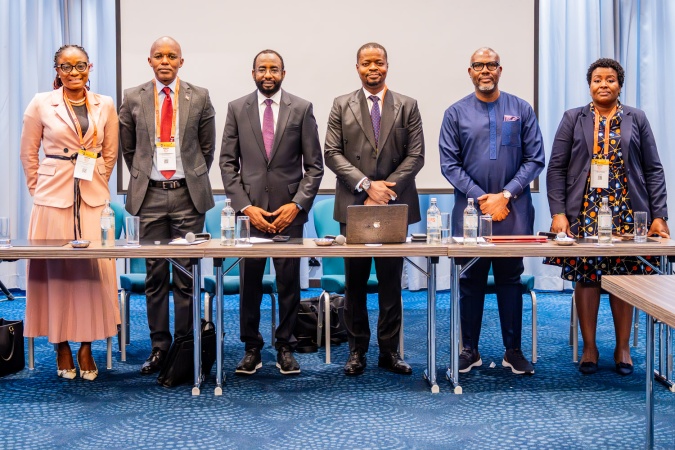
The regulatory roundtable also featured Caroline Okafor, Legal Enforcement and Regulation, Nigeria Data Protection Commission; Tony Izuagbe Emoekpere, President, Association of Telecommunications Companies of Nigeria (ATCON); Mercy Ndegwa, Director, Public Policy, East & Horn of Africa and Economic Policy Lead, Africa, Meta; and Eng. Dennis Chepkwony, Director, Universal Service Fund, Communications Authority of Kenya.
The discussion examined how regulatory systems can better support digital infrastructure investment as African economies respond to the rapid growth of artificial intelligence, cloud computing and other emerging technologies.
•PHOTO, From L-R: Caroline Okafor, Legal Enforcement and Regulation, Nigeria Data Protection Commission(NDPC), Engr. Dennis Chepkwony, Director, Universal Service Fund, Communication Authority of Kenya, Kashifu Inuwa Abdullahi, Director General, National Information Technology Development Agency(NITDA), Temitope Osunrinde, Director, Africa Hyperscalers, Tony Izuagbe Emoekpere, President, Association of Telecommunications Companies of Nigeria (ATCON) and Mercy Ndegwa, Director, Public Policy, East & Horn of Africa/Economic Policy Lead, Africa, Meta.




