ADAD
ADADUpdating your news feed...

NEWS EXPRESS is Nigeria’s leading online newspaper. Published by Africa’s international award-winning journalist, Mr. Isaac Umunna, NEWS EXPRESS is Nigeria’s first truly professional online daily newspaper. It is published from Lagos, Nigeria’s economic and media hub, and has a provision for occasional special print editions. Thanks to our vast network of sources and dedicated team of professional journalists and contributors spread across Nigeria and overseas, NEWS EXPRESS has become synonymous with newsbreaks and exclusive stories from around the world.








Loading banners
Loading banners...

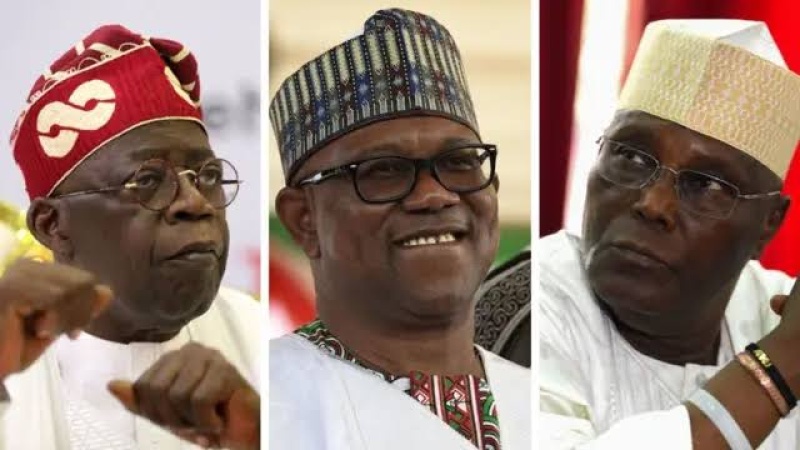
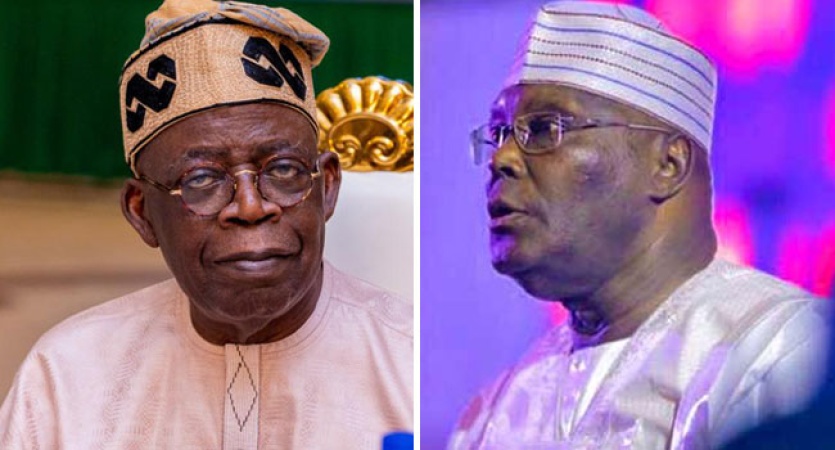
Obi, Tinubu, Atiku
As six opposition parties, through the G-100 group, begin talks on a Single-Term Transition Charter, the prospect of a united challenge to the All Progressives Congress (APC) is generating optimism. But unresolved ambitions, competing structures and the power of incumbency could yet frustrate the opposition’s bid for the presidency, reports MUIDEEN OLANIYI.
THE oppositeion’s search for a common strategy ahead of the 2027 presidential election appears to have entered a new phase, with six political parties agreeing to begin structured negotiations on how they can cooperate to challenge the ruling All Progressives Congress (APC).
At the centre of the latest initiative is a proposal for a Single-Term Transition Charter, alongside a broader framework for opposition unity and the emergence of a common presidential candidate. The development followed the G100 First Summit of Party Leaders and Stakeholders held at the Yar’Adua Centre, Abuja, on August 31, 2026.
Representatives of the African Democratic Congress (ADC), Allied Peoples Movement (APM), Nigeria Democratic Congress (NDC), Peoples Democratic Party (PDP), Peoples Redemption Party (PRP) and Social Democratic Party (SDP) agreed to establish structures for negotiating cooperation ahead of the 2027 general election. The initiative is significant because it comes at a time when opposition politicians are increasingly convinced that the possibility of defeating the APC may depend less on the popularity of individual candidates than on their ability to prevent another division of opposition votes.
The experience of the 2023 presidential election remains a major reference point. While the APC’s Bola Tinubu emerged victorious, the opposition vote was divided principally among Atiku Abubakar of the PDP, Peter Obi of the Labour Party and other candidates.
For opposition leaders, that outcome provides both a warning and an opportunity. The warning is that a fragmented opposition can lose an election despite commanding substantial popular support. The opportunity is that if those votes can be consolidated in 2027, the APC could face a much more formidable challenge. But achieving that objective is considerably more complicated than agreeing on the need for unity.
Building the table before negotiating the seats
In his opening remarks on behalf of G100, Mallam Salihu Moh. Lukman argued that the opposition must first create the structure for cooperation before negotiating candidates and positions. His central message was that the parties should “build the table before negotiating the seats.”
According to him, the experience of 2013 to 2015 demonstrated that political parties that had reasons to distrust one another could still negotiate rules and reach an agreement in the larger national interest. That process eventually produced the coalition that defeated an incumbent president in 2015.
But, according to Lukman, the opposition failed to repeat that experience in 2023. He noted that the winner of the 2023 presidential election secured just under nine million votes, while two opposition candidates obtained approximately seven million and six million votes respectively.
“That is not a conspiracy. Nobody stole thirteen million votes. We divided them ourselves, in public and we did it knowing exactly what the consequence would be,” he said.
The lesson, he argued, Is essentially mathematical: if opposition parties divide their votes among several candidates, the ruling party can prevail with a smaller share of the overall electorate than would otherwise be necessary. Lukman said the G100 had held separate and confidential consultations with the six parties and found a broad consensus that the division of opposition forces had contributed to the 2023 outcome.
“What has been missing is not analysis. It is a table,” he said.
He clarified that the summit was not asking any party to dissolve or surrender its identity, nor was it asking presidential candidates to immediately withdraw from the race.
“It is not asking any party to dissolve. It is not asking any party to disappear into another party. It is not asking any candidate to stand down,” he said.
Rather, the objective was to create a credible platform for negotiations.
“The immediate objective is not to compel any party to surrender its identity, candidate or legitimate interests. It is to create a credible table around which those interests can be negotiated,” Lukman said.
The summit subsequently established three proposed standing organs — the Central Leadership Committee, Publicity and Communication Committee and Legal Committee — as well as five working groups.
The working groups are expected to prepare documents on a National Covenant for Democratic Renewal, Single-Term Transition Charter, National Reform Programme, Framework for Opposition Unity and Roadmap to a Common Presidential Candidate. Each working group has four weeks to produce a document for consideration at a second summit.
Lukman said the process should ultimately aim at producing “a Government of National Competence, built on competence, integrity, national inclusion, and fair representation of every party that contributes to the effort.” That structure gives the latest initiative a more organised appearance than previous calls for opposition unity. But organisation on paper is only the beginning.
Why the opposition is optimistic
There are several reasons for the growing optimism among opposition politicians. The first is dissatisfaction with the state of the country.
The opposition parties have repeatedly pointed to insecurity, rising living costs, unemployment and what they describe as declining living standards as evidence of growing dissatisfaction with the APC administration.
Unlike the 2023 election, when voters were making judgements largely on expectations and promises, opposition leaders argue that Nigerians will enter the 2027 election with a clearer record against which to assess the incumbent government. ADC National Vice Chairman, South-South, Chief Usani Uguru, captured this argument when he said the 2027 contest would be based on “actual performance indices.”
“In 2023, it was speculative of performance indices. Today, we have actual performance indices, and every one of us will agree that today we have a better judgment than the past,” he said.
For the opposition, this provides a potentially powerful electoral weapon.
Economic hardship can generate anti-incumbency sentiment, particularly when voters believe that government policies have worsened their circumstances. But there is another side to the argument. If the economy begins to show significant improvement before the election, the same reforms that are currently unpopular could become part of the APC’s campaign argument.
Consequently, the opposition’s strongest argument today may not necessarily remain its strongest argument in 2027.
The arithmetic of opposition unity
The most compelling argument for the opposition is perhaps the simplest: arithmetic. The 2023 election demonstrated that no single opposition candidate had sufficient votes to defeat Tinubu.
But it also demonstrated that the combined votes of the major opposition candidates constituted a formidable electoral bloc. The challenge for 2027 is therefore whether the opposition can turn aggregate support into a coordinated electoral force. That is why the question of a common presidential candidate has become so important.
However, ADC’s Usani believes that even without a single candidate, opposition parties could still win if they develop the right strategy. Reflecting on the 2023 election, he said: “winning an election and being declared are two different things in the Nigerian democratic context.”
He argued that the political dynamics of 2027 could resemble those of 2023 and maintained that victory depends not merely on the number of candidates but on how effectively opposition parties organise their supporters.
“The parity of concurrency of candidates today is the same as it were in 2023. And if under this contest we know that some other person won, apart from who was declared, it means even if we don’t reach a consensus, we can still win. It’s a function of strategy,” he stated.
His argument Is controversial but important. It suggests that opposition victory is not necessarily dependent on every party collapsing its identity into one platform.
Yet the counterargument is equally compelling: if several opposition candidates divide essentially the same anti-APC electorate, the ruling party may again benefit from the fragmentation.
The real challenge is therefore not simply producing more opposition candidates but finding a formula that enables their combined political strength to produce one electoral outcome.
The coalition’s greatest test: personal ambition
The biggest obstacle may not be ideology, manifesto or even regional politics. It may be ambition. Presidential politics is fundamentally a contest for power, and many of the politicians expected to play major roles in 2027 have presidential ambitions of their own.
This makes the proposed Roadmap to a Common Presidential Candidate particularly sensitive. Who becomes the candidate? How is the candidate selected?
Will the parties accept a primary, consensus or another formula? What happens if a leading candidate loses the process? What guarantees will unsuccessful candidates receive? And, perhaps most importantly, will the losing side genuinely campaign for the eventual candidate?
These questions cannot be resolved by rhetoric about patriotism alone.
The SDP National Chairman, Professor Sadiq Abubakar Umar Gombe, acknowledged the importance of sacrifice, urging opposition leaders to put aside personal ambitions and ego. He said Nigerians were prepared to vote for good governance but that the responsibility rested on opposition leaders to make the necessary sacrifices.
“So the onus lies on us, the leaders who are entrusted with this sacred trust, to make sure that we do the needful. The first is ever we agree to come into coalition and make the necessary sacrifice between our personal ambitions, ego, and whatsoever,” he said.
That may be the defining test of the coalition. It is relatively easy for opposition leaders to agree that Nigeria needs change. It is considerably harder for them to agree on who should lead that change.
The single-term proposal
The proposed Single-Term Transition Charter is potentially the most politically interesting component of the G100 initiative. A single-term arrangement could theoretically provide a mechanism for accommodating competing interests by assuring political actors that the presidency would not immediately become a two-term contest. It could also be presented as a transitional framework under which a coalition government would focus on institutional reforms, electoral reforms, security, economic recovery and national reconstruction before another presidential contest.
But the proposal raises its own questions. Would the arrangement be constitutionally binding? Would all coalition partners accept the same interpretation of a single term? How would succession be determined? Would the candidate who emerges agree not to seek a second term after gaining the immense political advantages of incumbency? These are not minor technicalities.
The proposal will only become politically credible if it is backed by a clear legal and constitutional framework and supported by parties whose leaders are prepared to accept enforceable limitations on their ambitions. The inclusion of the proposal in the working groups’ assignment, however, suggests that the opposition is attempting to address the issue of competing ambitions before choosing its candidate.
No single party can defeat APC alone
PRP National Chairman, Dr Hakeem Baba-Ahmed, was blunt about the scale of the challenge. “No party will be dishonest enough to tell you that, alone, they can defeat the APC,” he said.
That assessment reflects the structural advantages enjoyed by the ruling party. The APC has incumbency, a nationwide political network, access to federal power and relationships with governors, legislators and political actors across the country. Opposition parties, by contrast, have different levels of organisation and varying degrees of influence across Nigeria’s geopolitical zones.
Baba-Ahmed nevertheless expressed confidence that one of the presidential candidates represented at the summit would eventually become president.
“Those who are here as presidential and vice-presidential candidates, please look behind you. Look at the cameras that are standing there. That’s the nation. The nation is paying attention to this event because one of you, by the grace of God and with the support of Nigerians, one of the presidential candidates will be President of the Federal Republic of Nigeria,” he said.
He described the coalition as a necessity rather than an indication of weakness.
“We are not here because we are too weak. We are here because we believe the fight to get Tinubu out of power and to put one of us or all of us in power is absolutely imperative in this country,” he stated.
Though his confidence reflects the growing belief among opposition leaders that the APC is vulnerable, vulnerability, unfortunately, is not the same as defeat.
Taking the coalition to the grassroots
Another major challenge is converting Abuja-level negotiations into grassroots political organisation. Former Niger State governor and Secretary of the Kabiru Turaki-led faction of the PDP Board of Trustees, Dr Babangida Aliyu, urged the opposition to take the coalition process to the states and local governments.
His argument is important because presidential elections are not won at political summits. They are won through voter registration, mobilisation, polling-unit agents, campaign structures, logistics and the ability to protect votes on election day. Aliyu said similar meetings should be held at state and local government levels so that ordinary citizens could become part of the process.
“So I expect that after this meeting, a directive should go out, that similar meetings should be held at the state level, and if possible, at the local government level. So the people will become very conscious of what needs to be done to be able to achieve our objective,” he said.
This may be one of the most important recommendations arising from the summit. A coalition negotiated only among national politicians may produce an impressive communiqué but fail at the polling unit. For the opposition to defeat an incumbent president, its coalition must become a functioning electoral machine.
The power of incumbency
Even the opposition’s strongest supporters acknowledge that defeating an incumbent president will not be easy. Minority Leader of the House of Representatives, Hon. Fred Agbedi, warned that the APC would benefit from the “paraphernalia of office.” He said the opposition should understand the nature of the challenge ahead.
“Understand that we have a president who says that all is fair in politics, and the president who says that all is fair has the paraphernalia of office, which we don’t have. Take note,” he said.
That advantage should not be underestimated. Incumbency provides a ruling party with visibility, political structures and the ability to point to government projects and policies. By 2027, the Tinubu administration will also have an opportunity to campaign on whatever economic, infrastructure and institutional achievements it can demonstrate.
The opposition must therefore do more than tell Nigerians that the APC has failed. It must convince voters that it has a better alternative. That means a credible economic programme, a convincing security strategy, institutional reforms, job creation policies and a clear plan for managing Nigeria’s diversity.
The proposed National Reform Programme could become particularly important in this regard. If it produces a detailed and coherent alternative to the APC’s policies, the opposition could transform its campaign from one based largely on rejection of Tinubu into one based on a positive vision for Nigeria.
The credibility question
Another challenge is public trust. Nigerian voters have witnessed several political alliances collapse after elections or after politicians achieve their immediate objectives. Consequently, an opposition coalition promising a “rescue mission” must explain why it should be trusted to remain united after victory.
This is where the Single-Term Transition Charter and National Covenant for Democratic Renewal could become significant. If properly negotiated and publicly disclosed, they could provide voters with a measure of certainty about what a coalition government would do after taking power. But if the documents remain political slogans without measurable commitments, they may have little electoral impact.
APM National Chairman, Dr Yusuf Mamman Dantalle, urged the opposition to avoid allowing personal and partisan interests to derail the process. “We are here because we all believe in the project Nigeria, not because of our individual interest. And for us to succeed in doing what we have to do, we must look beyond our individual interest, our party interest,” he said.
That appeal captures perhaps the central dilemma facing the opposition.
2027 will also be about election management
The opposition’s strategy must extend beyond winning votes. It must also be capable of protecting those votes. Usani’s assertion that “winning an election and being declared are two different things in the Nigerian democratic context” reflects a persistent opposition concern about the electoral process. Whether or not one accepts his interpretation of the 2023 election, the point highlights the importance of election-day organisation.
Opposition parties will need strong polling-unit structures, trained agents, effective collation systems and the capacity to challenge irregularities through lawful channels. The coalition’s Legal Committee could therefore become as important as its political committees.
Can the opposition repeat 2015?
The 2015 election remains the opposition’s strongest historical evidence that an incumbent president can be defeated through political realignment. The APC itself was created from an alliance of opposition forces that brought together politicians and structures from several parties.
The lesson for the current opposition is obvious: political differences can be overcome when the parties recognise that their separate ambitions may be less valuable than their combined strength. But there is an important difference between 2015 and 2027.
The APC coalition that defeated the PDP was eventually consolidated into a single political party. The current opposition initiative appears to be pursuing cooperation among separate parties without necessarily requiring them to dissolve into one organisation. That makes the current experiment more complicated.
A narrow window for opposition unity
The G100 initiative has therefore created a significant opportunity, but also a race against time. The parties have agreed to five working groups, and their reports are expected within four weeks. The next stage will reveal whether the summit produced more than political rhetoric.
The crucial issues will be whether the parties can agree on the principles of cooperation, how the presidential candidate will emerge, how competing ambitions will be managed, how resources will be shared and how the coalition will be taken to the grassroots. The six parties have already acknowledged that the process requires decisions that only their leaders can take. That is perhaps the most important admission of all. The technical committees can draft documents, but political leaders must ultimately make sacrifices.
Between optimism and reality
The opposition’s optimism about 2027 is not without foundation. There is evidence of widespread dissatisfaction with aspects of the government’s performance. The 2023 election demonstrated that the opposition collectively commands a substantial voting population. The G100 summit has also shown that several opposition parties are willing, at least in principle, to sit around one table and discuss cooperation. But none of these guarantees victory.
The opposition faces the same problem that confronted it in 2023: how to convert widespread dissatisfaction into a single, coherent electoral alternative. Its greatest enemy may therefore be fragmentation. If the major opposition figures and parties ultimately pursue separate presidential ambitions, the opposition could once again divide its votes and allow the APC to benefit.
If, however, the parties succeed in negotiating a credible common platform, agree on a candidate through a transparent process, take the coalition to the grassroots and present Nigerians with a persuasive alternative, the 2027 election could become one of the most competitive presidential contests since the return to democratic rule in 1999. For now, the optimism expressed at the G100 summit is best understood as possibility, not inevitability.
ADC’s Usani may be right that opposition victory is possible even without a single candidate. But the argument advanced by Lukman and other coalition advocates remains more compelling politically: if the opposition wants to maximise its chances, it must first build the structure that allows its competing strengths to work together. As Lukman put it, the parties must “build the table before negotiating the seats.”
The success or failure of that table may ultimately determine whether the opposition enters 2027 as a collection of ambitious parties or as a credible alternative government-in-waiting. And that is the real test ahead: not whether the opposition can agree that Nigeria needs change, but whether its leaders can sacrifice enough of their individual ambitions to make that change electorally possible. (Nigerian Tribune)