ADAD
ADADUpdating your news feed...

NEWS EXPRESS is Nigeria’s leading online newspaper. Published by Africa’s international award-winning journalist, Mr. Isaac Umunna, NEWS EXPRESS is Nigeria’s first truly professional online daily newspaper. It is published from Lagos, Nigeria’s economic and media hub, and has a provision for occasional special print editions. Thanks to our vast network of sources and dedicated team of professional journalists and contributors spread across Nigeria and overseas, NEWS EXPRESS has become synonymous with newsbreaks and exclusive stories from around the world.




.webp)








.webp)

.webp)


Loading banners
Loading banners...

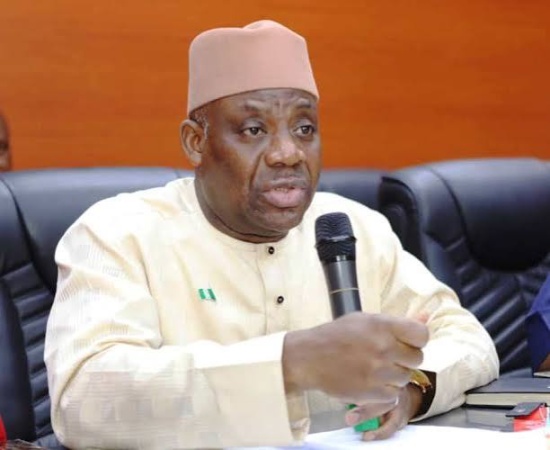
Education Minister, Dr Maruf Alausa
From cutting household budgets and tapping cooperative savings to taking extra jobs and moving children to cheaper schools, families across the country are struggling to meet rising education costs
For many Nigerian parents, the return to school after the long vacation is no longer simply a period of excitement as children prepare to reunite with classmates and resume learning.
It has become a season of anxiety, calculations and difficult financial decisions.
Across the country, parents are grappling with rising school fees and the increasing cost of textbooks, uniforms, shoes, bags, lunch boxes and other requirements for resumption.
Some parents are already transferring their children to public schools as private education becomes increasingly unaffordable.
In Benue, some families are considering moving their children to schools closer to home to cut transportation costs, while in Kano, parents are reducing household spending and contemplating transfers to cheaper schools.
In Lagos, parents are contending not only with higher school fees but also sharp increases in the prices of everyday school items.
But beneath the different coping strategies is a common concern: how to give children the education their parents believe they deserve without being pushed further into financial hardship.
‘It’s not easy, but they have to go to school’
In Abuja, Bassey Madefree, a father of four, said the rising cost of education had placed additional pressure on his family.
His youngest child is about to begin school, while his other children are also preparing to resume.
Madefree said the school had increased its fees, forcing him to spread payments over several months.
“I have four kids. The last one is just about to start school. The current school has increased the fees, but before I even got the new fees, I had paid some money and I will pay the rest in instalments over the next two months,” he said.
Despite the financial pressure, he said his children were excited about returning to school.
“Now, I’m preparing to buy their school needs. It’s not easy, but they have to go to school. That’s the sacrifice we have to make for them to get educated,” he said.
For Abraham Ada, another parent in Abuja, the cost of starting a new session has become so burdensome that it feels like enrolling his children in school all over again.
“I can say that this new term is like re-enrolling your kids in school. The fees are double. The other things the kids need must be provided. I also have to buy new books for them,” he said.
Yet, Ada said parents could not afford to abandon their children’s education.
“It’s not easy, but we have to educate our children just like our parents did for us. It’s the only legacy we can give them,” he said.
Single-income families under pressure
Samuel Mary, a single mother of two, said the beginning of the academic year was always a difficult period because of the expenses that came with resumption.
“First term is usually not easy for us, especially single mothers, because school fees are on the high side, including books and other items needed for resumption,” she said.
Mary is facing additional expenses this year because both children are changing schools.
“For me, it’s really hard because my children are changing schools. The boy is going to SS1, while the girl is going to JS1,” she said.
For Mrs Adetunji, a teacher and mother, preparations for the new school year began months ago.
She said she had also been forced to consider another source of income to supplement her salary.
“I have to source for another small business to do for income. I started buying my kids’ back-to-school items since April because my firstborn is going to secondary school while the baby is going to Primary 2,” she said.
Olakunle Ojo, another parent, said he had saved towards his children’s school fees but had to fall back on cooperative savings after the school increased its charges.
“I had been saving for school fees before I got the increase from the school. At that point, I had to fall back on my cooperative savings to complete the payments,” he said.
Ojo, however, said he understood the position of school proprietors.
“I understand the increase from the school because they have to meet up with their own challenges in school,” he said.
Bayelsa: Parents move children to public schools
In Bayelsa State, the rising cost of private education has already forced some families to make a difficult choice between affordability and preference.
Some parents in Yenagoa have withdrawn their children from private nursery schools and enrolled them in public primary schools, while some pupils who attended private secondary schools last term have also moved to government schools.
A parent in the Biogbolo area of Yenagoa, Francis Ewo, said repeated increases in fees eventually made the private school his children attended unaffordable.
According to him, the school had increased its fees by about 10 percent every term until the latest increase became difficult for him to sustain.
He subsequently withdrew his children and enrolled them in public schools.
“I will not kill myself with fees I can’t afford comfortably in the private school for my children,” Ewo said.
said his decision was also informed by his belief that children could still receive quality education in public schools.
“During our days, we attended government school. There were not many nursery or private schools, and we still became what God wanted us to become,” he said.
“I desire the best of education for my children, and I believe they can get that in the public schools. After all, public schools even have more qualified teachers. My salary as a civil servant cannot afford the kind of fees they are demanding in private schools,” he added.
But not every parent is comfortable with the idea of moving children to public schools.
Mrs Tamara Thankgod said she was struggling to cope with private school fees but remained reluctant to withdraw her children because of concerns about overcrowding in public schools.
“I believe children deserve the best education and a good learning environment. My problem is that public schools are crowded. The population is too much, and that is why I’m not always comfortable with my children in public schools,” she said.
She appealed to private school owners to reconsider frequent fee increases and additional charges.
“The situation of increasing fees every term should stop. All other sundry fees should stop. If not, people may not send their children to private schools again,” she said.
Schools blame rising cost of operation
Private school operators, however, insist that they are also victims of the economic pressures confronting households.
A proprietor of a private nursery school in Yenagoa, who declined to be named, said increases in school fees had become necessary because the cost of running schools had risen sharply.
“This increment is not for us; it’s for the good of the children. They need a conducive environment to learn. They need constant power while in school to run fans for ventilation,” he said.
He said the school had to depend on generators because of inadequate electricity supply in the area.
“How much is the price of fuel now? To run the generator,” he asked.
According to him, the cost of teachers’ salaries, teaching materials and other operational expenses had also increased.
“We pay teachers and other staff every month. We buy teaching materials, which are all costly now. You can’t compare their prices to what we used to buy a few years ago,” he said.
“These are the things that cause an increase in fees. It is not done to discourage parents; it is the economic situation in Nigeria that caused it.”
In an attempt to ease the burden on parents, the school has stopped making textbook purchases through the school compulsory.
“We even stopped selling textbooks in the school to help parents cope with the situation. Parents can now buy textbooks outside the school for their children. It’s not compulsory here anymore,” he said.
The school, he added, provides textbooks in its library for pupils whose parents cannot afford to buy them.
Kano families cut household spending
In Kano, the pressure is taking a different form as families prepare for schools to resume.
Several private schools have increased fees, citing inflation and rising operational costs.
Malam Ibrahim Bawa, a civil servant with four children in school, said his family had been forced to reduce household expenditure to meet the new school charges.
“We have reduced our food budget and postponed some family needs just to ensure the children return to school,” he said.
Bawa said he was also considering transferring one of his children from a private school to a public school to reduce the financial burden.
For Aminu Rabiu, a petty trader, even paying the increased fees has become a major challenge.
“I sell vegetables in the market, and business has been slow. The school fees have gone up, and I don’t know how to pay. I may have to borrow from friends or relatives,” he said.
Although the cost has become difficult to bear, Rabiu said he was reluctant to transfer his children to public schools because of concerns about the quality of education.
Another parent, Musa Maijama’a, a commercial driver, said he was determined to keep his children in their current school despite the increase.
“Education is the only inheritance I can give them. I will work extra hours to raise the money,” he said.
The experiences of the parents reflect the difficult choices families are being forced to make as education costs rise faster than many household incomes.
Benue parents count transport costs
In Benue State, particularly Makurdi, transportation costs have become another major factor influencing parents’ school choices.
Some parents are considering withdrawing their children from schools far from their homes and enrolling them in nearby institutions to reduce transport expenses.
Parents told our correspondent that increased transport fares, school bus charges and school fees had combined to make resumption increasingly expensive.
pupils and students are already trekking to school, while some parents are looking for schools within walking distance of their homes.
George Elijah said the new school term had heightened his financial anxiety.
“The economic situation is biting higher. We have been notified of an increase in the school fees. I’m worried,” he said.
Monica Ediga, who has three children in secondary schools, said she was considering transferring them because of the rising cost of transportation and school fees.
“Some schools have stopped the bus service while others have hiked their transportation. But most parents like me are now mulling the idea of withdrawing our children to schools closer to home.
“My children will be able to trek to their new school close to the house. I’m really considering the hike in transportation and school fees,” she said.
For Attah Ede, the latest increase has significantly altered his family’s education budget.
He said the fees for his four children had risen from N225,600 previously to N387,400 this term.
Ede said the increase had become too expensive for his family, adding that some schools were giving parents limited time to settle their bills or risk having their children denied access to classes.
He described the situation as “hopeless and helpless” and called for government intervention to cushion the impact of rising education and transportation costs on families.
Niger: Rising school costs squeeze parents
In Niger State, rising operational costs have pushed some private schools to increase tuition and other charges, while parents are also struggling with higher textbook and feeding expenses.
A parent whose children attend El-Bethel Academy, Minna, said fees for nursery pupils had increased from N18,500 to N21,500, while textbook prices had also risen.
A private school proprietor said schools were facing increased costs from licensing, ground rent, fuel, printing materials and other expenses.
“Every year you must renew your licence fees. This year it cost N900,000. This does not include ground rent, which charge is based on the type of school you operate. For instance, if you operate only nursery and primary schools, the charge differs from those who have secondary schools.
“Cost of fuel is another challenge. It cost more now to even conduct examinations because of rising cost of printing materials. So, any school that does not increase school fees is making a big sacrifice,” he said.
However, not all schools in the state have increased tuition fees.
Mohammed Hassan Sonmaji, a parent, said his children’s school had retained its fees but that the rising prices of textbooks and food had still left families struggling to cope.
“Prices of things have continued to increase while salary remains the same,” he said, explaining that he was struggling to adjust his household spending to his income.
The situation, he said, had made it increasingly difficult for parents to meet education expenses alongside other essential household needs.
Kaduna parents turn to public schools
In Kaduna, rising school fees, textbook costs and other expenses are also forcing families to reconsider their choice of schools.
A resident of Kaduna metropolis, Babangida Muhammad Agaie, said the back-to-school period had become increasingly difficult because parents had to contend with school fees, uniforms, books and other expenses at a time of rising living costs.
He said some schools had increased their fees for the new term, further worsening the financial pressure on parents.
According to him, while some parents had managed to keep their children in their current schools, others had been forced to move them to public schools because they could no longer afford private school fees.
“As for me, my children are still where they are, but there are other parents who are removing their children and enrolling them in public schools.
“This is because of the economic situation. Even though you cannot blame school management for increasing their fees because they also employ teachers whom they have to pay salaries.
“But parents are the ones at the receiving end. This is why we are not finding things easy when it comes to educating our children. This is just the truth, but we have no option but to try to educate the children,” he said.
For Bello Idris, a provision shop owner along Character Road, Tudun Wada, the immediate challenge is meeting the combined cost of school fees and books.
“The situation is really worrying us, honestly, because at the moment I am facing serious challenges regarding school fees and the cost of books.
“Even the owner of the school my children attend has agreed to allow me to pay the school fees and the cost of books in instalments, but I have not been able to pay anything yet.
“We have not even started talking about the other items needed for their return to school. But despite these challenges, we have to make efforts to educate the children because education is the only legacy one can give to them,” he said.
Idris said he would prefer public schools if they could provide education comparable to private institutions.
“If the public schools are up to standard, I see no reason why I should send my children to private schools under this economic hardship. But since we don’t have a choice, we just have to enrol them in private schools.
“If not, I would be happy to enrol them in public schools,” he said.
Meanwhile, a civil servant, Usman Abubakar, said school expenses had become a major concern among workers, many of whom had already exhausted their August salaries.
“Most of my colleagues’ central discussion is this issue because most of us have already spent our salaries, which means we don’t have money to pay school fees, buy uniforms or books for our children.
“So, for me, I have decided to pay for the books, pending my next salary, when I will settle the school fees.
“Already, some of my colleagues have no choice but to borrow from financial institutions because they don’t have money to settle their children’s fees.
“We are not finding it easy as civil servants in Kaduna because we have already collected our salaries,” he said.
Lagos parents battle cost of essentials
In Lagos, parents are facing increases in school fees alongside sharp rises in the prices of basic items required for their children’s return to school.
Gabriel Chibuzor, a parent, said his child’s school fees had increased by about seven per cent compared with the previous session, attributing the adjustment to the prevailing economic situation.
“The amount we paid last season is quite different to this season because of the economy. The increments of the school fees is just like, let me say 7% of the last season but we are trying to work towards it because we understand how it is because all the teachers are also parents too and they need to take something home and they did a parents meeting and we just tried to conclude with them so we accepted to pay.
“We just pray to God to bless us so we parents can move forward to give our children better education,” he said.
However, Chibuzor said the rising prices of school bags, lunch boxes and food flasks had created additional pressure.
He said he had been unable to purchase a lunch box and food flask after discovering that their prices were beyond his budget.
“I went to the market to buy a bag for my child because the last time I bought it it was different but this time, it increased but I didn’t have options, so I had to buy it. But the only major thing that is bothering my mind and baffling me is that the lunch box and food flask are very costly because when I went to the market and the price I thought I will meet it, I didn’t meet it, but I can’t afford it so I had to go back home to work on my assignment because it’s very costly,” he said.
He said he had managed to purchase the necessary stationery but planned to buy the remaining items later.
“The stationery, I have gotten everything. The only challenge is the food flask and lunch box but I’ve told the person that I will need to work towards it so maybe next week, I’ll get it,” he said.
Another parent, Saheed Bakari, said his children’s school fees had risen by between 10 and 15 per cent, while the cost of school materials had also increased.
“The school fees have increased in the school. Let me say from 10 to 15 percent. I haven’t gone to the market to get them but I already checked the prices online and it has increased. Like the school sandals, before it was N10,000 but now it’s N15,000 and the cost of the exercise books and test books have increased,” he said.
Segun Olajide said his children’s school fees had increased by about 20 per cent, although he said he was prepared for the new session.
“I am perfectly prepared for it. The school fees have increased like 20 percent,” he said.
Olajide added that his children’s school provided books and other learning materials as part of the fees paid.
“Once we pay their school fees, the book and other items are among them,” he said.
For Mrs Akpan, the increase was even more significant, with her children’s school fees rising by 100 per cent.
“I am preparing because the school already gave us a new bill when they closed last term and an increase had been effected. It is 100 percent. For the stationeries I usually buy them in bulk so they still have them,” she said.
The price of keeping children in school
Across the seven states covered by our correspondents, the details vary, but the pressure on families is remarkably similar.
Parents are cutting food budgets, drawing on cooperative savings, starting side businesses, working longer hours, borrowing money and moving children to cheaper or closer schools.
Some are paying school fees in instalments. Others are prioritising books and uniforms while postponing the purchase of items they cannot immediately afford.
For families with more than one child, the burden is even heavier, particularly when children are entering new classes or changing schools and require new books, uniforms and other materials.
The choices being made by parents reveal how rising education costs are reshaping household finances.
For some, private education is becoming a luxury they can no longer comfortably afford. For others, public schools remain an uncomfortable alternative because of concerns about overcrowding, infrastructure and learning conditions.
The increasing cost of transportation is also becoming a major consideration, particularly for families whose children attend schools far from home.
Meanwhile, private school proprietors argue that they are themselves under pressure from rising salaries, fuel, electricity, teaching materials, rent, licensing and other operating expenses.
That leaves parents and school operators caught in the same economic squeeze, with each side struggling to absorb costs that have continued to rise.
Yet, despite the pressure, few parents are willing to give up on their children’s education.
They continue to make sacrifices because they see schooling not merely as another household expense, but as an investment in their children’s future. (Weekend Trust)