ADAD
ADAD
Updating your news feed...
NEWS EXPRESS is Nigeria’s leading online newspaper. Published by Africa’s international award-winning journalist, Mr. Isaac Umunna, NEWS EXPRESS is Nigeria’s first truly professional online daily newspaper. It is published from Lagos, Nigeria’s economic and media hub, and has a provision for occasional special print editions. Thanks to our vast network of sources and dedicated team of professional journalists and contributors spread across Nigeria and overseas, NEWS EXPRESS has become synonymous with newsbreaks and exclusive stories from around the world.


.webp)

.webp)








Loading banners
Loading banners...

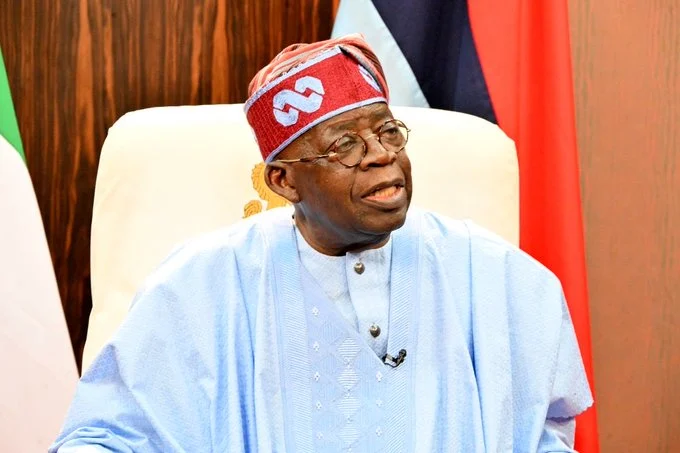
President Bola Ahmed Tinubu has warned that military action alone cannot bring lasting peace to the North-Central region, urging stakeholders to address the underlying social, economic, and environmental factors fuelling insecurity.
Tinubu also called for stronger collaboration among governments, security agencies, traditional and religious institutions, communities, youths, women, development partners, and the private sector to tackle insecurity and restore stability across the region.
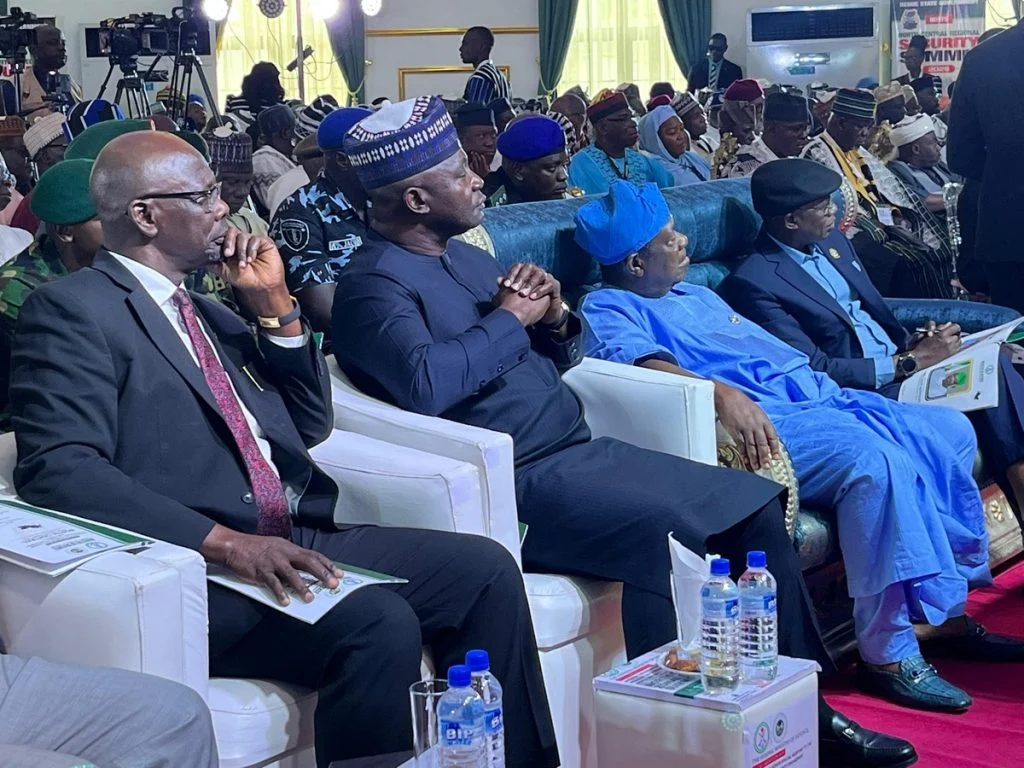
The president spoke on Monday at the 2026 North Central Regional Security Summit in Makurdi, Benue State, where he was represented by the Secretary to the Government of the Federation (SGF), Senator George Akume.
Mr. Yomi Odunuga, who is the Special Adviser to the SGF on Media and Publicity, made this known in a statement, noting that the summit, organized by the Ministry of Defense in collaboration with the Office of the Senior Special Assistant to the President on Community Engagement, North Central, was themed “Collaborative Approaches to Strengthening Security and Regional Stability.”
Tinubu said insecurity in the North Central had continued to evolve beyond the capacity of any single security agency, government, or community to tackle in isolation.
According to him, criminal elements move across state and local government boundaries, making collaboration and intelligence sharing critical to containing the threat.
“No single agency, no single tier of government, and no single community can secure this region acting alone.
“Insecurity does not respect state boundaries or agency mandates. Criminals move freely across local government areas while our responses are too often slowed by rivalry, duplication and the withholding of information. That must end.”
The President said his administration had strengthened the national security architecture through improved coordination among the Armed Forces, Nigeria Police Force, and intelligence services, while also acquiring new platforms and advanced capabilities for the military.
He said the government was equally rebuilding Nigeria’s indigenous defense industry through the Defense Industries Corporation of Nigeria (DICON) Act and improving the welfare of security personnel to enhance their effectiveness.
Tinubu commended the military and other security agencies for what he described as significant gains against terrorists and criminal elements, including the neutralisation of terrorist commanders, surrender of thousands of fighters, rescue of captives, and restoration of normalcy to several communities.
He, however, stressed that military operations could only suppress violence without addressing the grievances and conditions that sustain it.
“Military action alone will not deliver lasting peace to the North Central. Force can suppress violence; it cannot resolve the grievances that produce it.”
He identified competition over land and water, climate change, desertification, unresolved land-use disputes, weak local dispute-resolution mechanisms and the proliferation of illicit weapons as major factors contributing to violent conflicts in the region.
Tinubu said the Federal Government would therefore continue to combine kinetic operations with developmental interventions.
He cited the government’s plan to transition from open grazing to modern, settled livestock production through the Ministry of Livestock Development, saying the policy was designed to protect farmlands, improve pastoral livelihoods and address a major trigger of farmer-herder conflicts.
He also highlighted the Reclaiming the Ungoverned Space for Economic Benefits Programme of the Ministry of Defence, which he said would deploy the experience of retired military personnel towards securing and revitalising communities recovering from violence.
According to him, investments in irrigation, mechanised agriculture, rural roads and access to credit under the Renewed Hope Agenda would help transform the region’s vulnerabilities into economic opportunities.
The President tasked traditional and religious leaders with taking a more active role in preventing conflicts, saying their proximity to the grassroots placed them in a unique position to detect threats before they escalate.
“I ask you to be our first line of early warning and our most trusted voice of reconciliation,” he told the traditional and religious leaders.
He urged them to reject inflammatory rhetoric regardless of its source, warning that Nigeria had suffered from careless statements exploiting ethnic, religious and other differences.
Tinubu also called on communities to provide timely intelligence to security agencies and stop shielding criminals on the basis of kinship or sentiment.
“Security begins with you. I call on every citizen to share information with the security agencies, to refuse to shield criminality out of kinship or sentiment,” he said.
The President further called for greater involvement of women and youths in peace-building efforts.
He described women as some of the most effective peacebuilders in communities and assured youths that his administration would continue to expand economic opportunities capable of discouraging their recruitment into criminal and violent groups.
“Your energy is this region’s greatest asset. This administration is committed to expanding the opportunities that make a rifle a far less attractive prospect than a livelihood,” he told young people.
Tinubu also urged development partners and the private sector to increase investment in the North Central, stressing that economic development and security were mutually reinforcing.
“Peace and investment reinforce one another. Every factory built, every farm expanded and every young person employed in this region is a contribution to its security,” he said.
Tinubu demands action plan
The President warned participants against producing another communiqué that would eventually be abandoned, insisting that the summit must generate practical recommendations with clear responsibilities, timelines and measurable outcomes.
He directed the Minister of Defence, General Christopher Gwabin Musa (retd.), to transmit the outcomes of the summit to him and report on the implementation of its recommendations.
“We will be judged not by the quality of our deliberations here, but by whether a farmer in this region sleeps more soundly a year from now,” Tinubu said.
He commended the Ministry of Defence and the Office of the Senior Special Assistant to the President on Community Engagement, North Central, for convening the summit, describing it as part of his administration’s strategy of building national security from the communities upwards.
The Makurdi summit is the second in a series of regional security engagements initiated by the Ministry of Defence, following the South-East Regional Security Summit held in Umuahia, Abia State, on July 30, 2026.
Tinubu urged governors, ministers, service chiefs, traditional and religious leaders, civil society organisations, women, youths and private-sector representatives attending the summit to engage candidly and develop practical solutions to the region’s security challenges.
He thereafter declared the 2026 North Central Regional Security Summit open. (This Day)