ADAD
ADAD
Updating your news feed...
NEWS EXPRESS is Nigeria’s leading online newspaper. Published by Africa’s international award-winning journalist, Mr. Isaac Umunna, NEWS EXPRESS is Nigeria’s first truly professional online daily newspaper. It is published from Lagos, Nigeria’s economic and media hub, and has a provision for occasional special print editions. Thanks to our vast network of sources and dedicated team of professional journalists and contributors spread across Nigeria and overseas, NEWS EXPRESS has become synonymous with newsbreaks and exclusive stories from around the world.




















Loading banners
Loading banners...

Forest guards
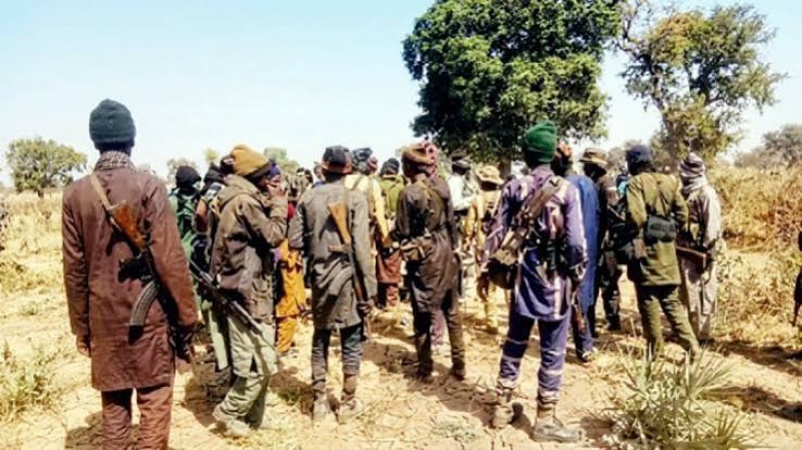
When, in May 2025, the President Bola Tinubu Administration launched the Presidential Forest Guards Initiative under the supervision of the Office of the National Security Adviser (ONSA), it was received with hope by many. However, a good portion of the populace was skeptical and adopted a wait-and-see attitude.
The forest guards initiative under the name, Nigeria Forest Security Service, which is a coordinated Federal-State security intervention aimed at reclaiming Nigeria’s forests from criminal exploitation, thereby deny terrorists, bandits, kidnappers, and other criminal groups sanctuary in the forests and other hard-to-reach terrains. It is another layer of the country’s strategic security architecture under which armed and specialised personnel would be deployed to the 1,129 forests and game reserves across the country, to reclaim them from criminal exploitation. The forest guards are supposed to flush out bandits, kidnappers, and insurgents, secure ungoverned rural spaces, and protect natural assets.
Then 7000 cadets drawn from seven frontline states severely challenged by insurgency, namely, Borno, Sokoto, Yobe, Adamawa, Niger, Kwara, and Kebbi States were recruited into the scheme and were given accelerated, intensive training for three months.
On its website, the Federal Ministry of Information and National Orientation in a statement signed by Rabiu Ibrahim, the Special Assistant (Media) to the Minister, gave further explanation.
It said: “The training programme was deliberately intensive, structured, and demanding, designed to transform loyal and committed Nigerians into agile, disciplined, and capable field operatives. The curriculum integrated environmental conservation principles with advanced security competencies, ensuring a balanced, professional, and mission-ready force.
“Trainees underwent extensive physical and mental conditioning, including endurance exercises, obstacle-crossing drills, and long-range patrol simulations to prepare them for sustained forest operations. They were also trained in tactical field-craft, including movement techniques, enemy-contact drills, ambush response, rescue operations, and coordinated offensive actions.”
On December 27, 2025, the cadets graduated and were deployed. The training programme recorded a 98.2 per cent completion rate. A total of 81 trainees were disqualified on disciplinary grounds, while two trainees passed away due to pre-existing medical conditions.
Speaking at their graduation, the National Security Adviser, Nuhu Ribadu, described the initiative as a decisive step toward restoring state authority and protecting vulnerable communities.
“These Forest Guards are not just uniformed personnel. They are first responders, community protectors, and a critical layer of Nigeria’s security architecture. They will hold ground, gather intelligence, and support security agencies in reclaiming territories previously overtaken by criminal elements.”
Below, correspondents in states present situation reports…
BENUE
Long before the takeoff of the Federal Government’s forest guards initiative, Benue State Government, under Governor Hyacinth Alia had intensified efforts to tackle insecurity, including herdsmen attacks, banditry, kidnapping, and other criminalities across the state.
The Special Adviser to Governor Alia on Security and Internal Affairs, Chief Joseph Har, speaking with Sunday Sun, said one major step taken by the government was the establishment of the Benue State Civil Protection Guards (CPG), a 5,000-man security outfit designed to complement other conventional security agencies in the field. Har said these operatives have been on ground and have aided in the arrests of suspects and rescuing troubled community members, the last being the arrest of two suspected kidnappers and rescue of a female trader on August 14, 2026.
The government also launched a Joint Security Task Force known as Operation Anyam Nyor and provided security agencies with 100 Hilux patrol vehicles and 600 motorcycles to improve mobility and rapid response to security threats.
Just recently, the state, through the local government chairmen also provided motorcycles to traditional rulers in the local governments to improve their mobility and response to their people, especially in times of distress.
Har also noted that Governor Alia’s administration has continued to work closely with the military, police, Operation Whirl Stroke, and other security agencies to strengthen intelligence gathering, conduct joint patrols, and secure vulnerable communities, while also pledging full support to the newly established 5th Division based in the state to ensure that sundry crimes are nipped in the bud.
He said several security operations have yielded results and led to the rescue of kidnapped victims, recovery of weapons, and increased pressure on criminal groups operating in parts of the state.
Despite these measures, security challenges have continued to fester with attacks and killings still being witnessed in some local governments including Ukum, Katsina Ala, Guma, Otukpo, among others.
When contacted, the Director General of Homeland Security, retired Air Commodore Jacob Gbamwuan declined comments on the Benue Forest Guard and directed our correspondent to speak with the Governor’s Chief Press Secretary (CPS), Tersoo Kula, who could not be reached at the time of filing this report.
However, a member of the security outfit, Amb. Peter Jov, clarified that its official name is the Nigerian Forest Security Service (NFSS), not “Forest Guards,” stressing that the latter has no clear defined organisational structure.
He said the NFSS has personnel across Nigeria and has operated independently for about 10 years.
According to him, while the Federal Government is currently working to integrate the organisation into the national security architecture and has opened salary structures for its personnel, NFSS members have not yet started receiving government salaries.
Jov confirmed that its personnel are already operating in the field, although they have historically done so independently, he added that arrangements are ongoing to formally integrate them into the national security system.
Jov said: “Our organisation is not called the Forest Guards. It is called the Nigerian Forest Security Service (NFSS). There is a difference. The term “Forest Guards” does not have a defined structure. You cannot find a proper structure with positions such as commander and others under that name. Our organisation is recognised across the country. We have personnel across Nigeria.
“So, if I answer questions specifically regarding “Forest Guards,” I may be misleading you because that is not the official name of our organisation. The term “Forest Guards” is becoming popular, but we are not sure where that name is coming from or where it is heading.
“We are not yet on the Federal Government payroll. They are making arrangements for that. We have not started receiving salaries. They are still working on it.
Asked if they have been deployed to the field Jov said: “Yes and no. We have been operating on our own for a number of years. We have been doing this for about 10 years. Now that the Federal Government is making arrangements to fully integrate us into the national security architecture, they have opened up salary structures for us. We have been properly informed about it, but we have not started collecting salaries yet.”
Jov also confirmed that its personnel from Benue State have been sent to Abuja where they were trained on intelligence gathering and inter-agency collaboration amongst others.
OGUN
In Ogun State, Sunday Sun gathered that the Nigeria Forest Security Service (NFSS) has yet to become operational. According to a source working inside the J4 Forest Reserve in Ogbere, Ijebu East Local Government Area of the state, the NFSS has constructed its operations base in the forest reserve, but the personnel are yet to be deployed to locations across Ogun.
Meanwhile, the Amotekun Corps, Vigilante Service of Nigeria and So-Safe Corps, have been collaborating with the Nigeria Police to ensure security across the state, including the forests.
Also, the Hunters Association of Nigeria in the state has been of great assistance to the police in ensuring forests in the state are rid of criminals. In August 2025, the Police Command in Ogun State trained members of the association in tactical and modern security operations.
At the one-day training held at the Ogun Police Command Headquarters at Eleweran, Abeokuta, the then Commissioner of Police, Lanre Ogunlowo, emphasised that the training was organized to make the hunters in the state to be conversant with basic security techniques capable of enhancing their operations.
While stressing that security is a business of everybody, the former CP noted that the police command would continue to engage with non-conventional security outfits with a view to strengthening and enhancing community policing.
Sunday Sun further gathered that the recent joint security initiative between Lagos and Ogun states tagged, “Operation Kosaye”, has helped a great deal in the ability of Ogun to swiftly deal with insecurity situations, particularly banditry and kidnapping.
It was also discovered that the dispatch of a police surveillance chopper to the state by the Inspector General of Police, has equally assisted in decelerating criminal activities in the state.
For instance, four students of the Gateway ICT Polytechnic, Saapade that were recently kidnapped, were safely rescued unscathed with the aerial support provided by the chopper.
Governor Dapo Abiodun who briefed newsmen after the kidnapped students were rescued noted that it was achieved through a coordinated operation involving the Nigeria Police Force, the Armed Forces, the Department of State Services (DSS), the Nigeria Security and Civil Defence Corps (NSCDC), the Ogun State Security Network Agency (Amotekun Corps), local vigilantes and hunters.
Abiodun, who said that Ogun would not be a safe haven for criminals in the state, revealed that the operation against kidnappers, bandits and terrorists received a significant boost after the Inspector-General of Police, Mr. Olatunji Disu, approved the deployment of a police helicopter for aerial surveillance, a move that proved crucial to the successful rescue of the students.
He revealed that the recent joint security initiatives, particularly Operation Kò S’Áyé, have demonstrated the effectiveness of intelligence sharing, inter-agency collaboration and sustained operational pressure against criminal elements.
KADUNA
There is a renewed resolve by the Kaduna State government to tackle terrorism, banditry, kidnapping and other forms of criminality in the state, through a combination of conventional security operations, community-based intelligence gathering and the deployment of specially trained forest guards to vulnerable rural areas.
At the centre of the latest initiative is the training of more than 1,000 armed forest guards under the Presidential Forest Guards Initiative.
The six-week training began in June at the Police College, Kaduna, with the guards expected to be deployed to security flashpoints after completing their training.
Officials said the recruits were largely drawn from communities familiar with the affected terrain and forests.
According to the government, the guards are to monitor the forests, gather intelligence, detect suspicious movements and work with the military, police, Department of State Services (DSS) and other conventional security agencies.
The areas identified for deployment include some of the state’s major insecurity flashpoints, particularly Birnin Gwari, Giwa, Kagarko, Kachia, Kajuru, Chikun and Igabi local government areas.
Governor Uba Sani has said the initiative create conducive conditions for farmers and rural communities to return to their livelihoods.
Notwithstanding the good intentions of the Federal Government to create the centrally controlled NFSS, questions have been raised about the exact relationship between the presidential forest guards and Kaduna State’s community security structure, under which it has started training 2,000 operatives of the Kaduna State Vigilance Service (KADVS).
Of this number, 1,000 operatives are being trained to serve as state forest guards, while another 1,000 would be deployed for community policing, intelligence gathering and crime prevention.
The state-appointed forest guards would be deployed to vulnerable forest belts and difficult terrains.
Whereas the federal government is funding the NFSS operatives, state government will foot the bill for the state-controlled forest guard.
For Kaduna residents living in areas repeatedly affected by banditry and kidnapping, the ultimate test will be whether the new security architecture translates into safer communities, access to farms and roads, and a sustained reduction in attacks.
Despite the deployment of both federal and federal forest guards, questions still remain over the precise chain of command and the long-term funding arrangements for the different categories of forest guards.
ANAMBRA
The administration of Governor Charles Soludo of Anambra State has built a layered security structure involving Agunechemba, the police and other federal security agencies, community-based intelligence. Increasingly, operatives of the Nigeria Forest Security Service (NFSS) are being used for forest protection.
Under the state’s 2025 Homeland Security Law, Agunechemba was established as a security outfit operating at state, local government and community levels, with specific responsibilities that include tackling kidnapping, banditry, robbery and other violent crimes. There is also evidence of active forest operations.
In July 2026, Agunechemba conducted a major bush-combing operation in Enugwu-Ukwu, searching forest areas for suspected kidnappers and bandits and screening people found operating in the bush.
What’s happening with the forest guards is where the story gets interesting. The NFSS has been incorporated into Anambra’s security thinking for some time. In January 2025, Governor Soludo was said to have approved training for NFSS operatives as part of Operation Udo Ga-Achi.
More recently, in July 2026, the Anambra State Ministry of Environment reportedly signed a Memorandum of Understanding (MoU) with the NFSS to strengthen forest protection, combat environmental crimes and improve management of the State’s forest resources.
The NFSS also met with the Anambra Police Command in July 2026, though not confirmed by the police authorities, to strengthen cooperation. The police said the NFSS was ready to work with the police and other security agencies to improve security in the state.
On how the forest guards are being deployed, available evidence suggests a forest-focused deployment, rather than using them simply as another conventional police force. The advantage they have is their knowledge of forest terrain and remote areas.
In Anambra State, this is particularly relevant to areas where criminals have historically used bushes and forests as hideouts. In the same manner, the State’s Agunechemba units are conducting actual forest and bush-combing operations. For example, the July Enugwu-Ukwu operation involved Central and Unit operatives moving through several kilometres of difficult forest terrain to locate suspected criminal hideouts.
The broader security architecture also includes police patrols, intelligence-led operations, stop-and-search and joint security engagements.
The state is also pursuing stronger military presence: in late July 2026, Deputy Governor Onyekachukwu Ibezim said the process of establishing a Brigade Headquarters in Awka and a Battalion in Ihiala was underway.
Regarding funding of the forest guards, Anambra State Government is believed to have funded and trained NFSS personnel, including the claim of the Governor’s approval for their training in January 2025.
However, there is no credible official document stating the current monthly salary, allowance of the NFSS forest guards in Anambra or clearly establishing that the state government is currently paying their regular salaries has been found.
There is also an Anambra State budget document containing a “Forest Guards” budget line under the Forestry Department, but that alone does not establish that the current NFSS personnel operating under the 2026 MoU are paid from that line.
A clarification on the true position regarding the funding of the NFSS Command could not be obtained from the Ministries of Environment and Finance, the NFSS command or the Governor’s security office.
However, available evidence points to a partnership model between Agunechemba and NFSS.
OSUN
Osun State government says it is leveraging security agencies to tackle terrorism, banditry, kidnapping, and other criminal activities across the state.
Special Adviser to Governor Ademola Adeleke on Security, Samuel Ojo, whose principal is still basking in the euphoria of his re-election for a second term, clarified that the state does not currently operate a forest guard outfit.
According to him, the state government relies heavily on a collaborative effort involving the police, the army, and other formal security agencies to combat crime.
Ojo maintained that Osun has been performing exceptionally well in maintaining law and order and curbing criminality within its borders.
ABIA
Abia State has not adopted the forest guard initiative. What is in place is the Homeland Security Outfit established by the previous administration in the state.
Before now banditry, kidnapping for ransom and other violent crimes were reported in the state on daily basis, especially within the Isuikwuato/Lokpanta axis of the state.
Governor Otti, on assumption of office, tackled these crimes headlong by strengthening the state’s security with the establishment of Operation Crush, a security outfit comprising the military and sister security agencies.
The state is responsible for funding the security outfit which covers provision of equipment and payment of monthly stipends as a way of motivation. Operation Crush succeeded dismantling the criminal gang operating within the Isuikwuato/Lokpanta corridor.
Again, the state government banned commercial motorcyclists from operating in three cities of the state, which include Umuahia, Aba and Ohafia.
Giving explanations for the ban, Commissioner for Information, Okey Kanu, said the policy was part of the government’s ongoing efforts to strengthen security in the state, noting that it considered the safety and security of Abia residents more paramount than the temporary inconveniences the policy would cause.
When he addressed the audience the South East Regional Security Summit 2026 held recently and organised by the Federal Ministry of Defence in collaboration with the Senior Special Assistant to the President on Community Engagement (South-East), Governor Otti reaffirmed his administration’s unflinching commitment to achieving adequate security in Abia.
His words: “We have established that more often than not, crime is driven by economic considerations. So, what we have simply done is to make it too costly for any intelligent mind to consider.
“By incentivising security agents, investing in surveillance technology, and public enlightenment, we have simply made crime and criminality unprofitable in most parts of this region.”
OYO
The Oyo State Government has stepped up measures to tackle terrorism, banditry, kidnapping and other forms of criminality across the state, with the deployment of aircraft for aerial surveillance and strengthened support for security agencies and community-based security structures.
The Chief Press Secretary to the Oyo State Governor, Dr Sulaimon Olanrewaju, disclosed this while speaking on the government’s efforts to strengthen security and prevent criminal activities, particularly in forested areas of the state.
According to him, the state government has already engaged two aircraft to monitor different parts of Oyo State and support security operations.
“We have already employed two aircraft to monitor every part of the state and to support our ground people,” Olanrewaju said.
He explained that the aerial surveillance would enable security authorities to monitor developments across the state and respond swiftly to emerging threats.
The CPS also said the government had equipped and continued to support its security personnel, while providing logistics and other resources required for effective operations.
He added that the state government was supporting all security agencies operating in Oyo State, including the military, Navy and Air Force.
According to him, the government had provided security agencies with about 500 vehicles over the past seven years, in addition to other forms of logistical support.
Olanrewaju said the government had also institutionalised regular security meetings at various levels to ensure that intelligence and security concerns were promptly identified and addressed.
“At the state level, the state government holds security meetings every month. At the local government level, we have security meetings involving the DPO and all officers and commands at that level every month,” he said.
He added that community security meetings had also been established to “cascade security issues down to the lowest level in the state.”
On the deployment and activities of forest guards, the CPS said the government’s security architecture had been strengthened to ensure that forests and other previously difficult-to-monitor areas were not left unattended.
He noted that security forces had continued periodic operations in areas considered vulnerable to criminal activities, including the Old Oyo National Park.
According to him, military personnel had been conducting quarterly operations to comb the area even before the recent security incident in Oriire Local Government Area.
“Quarterly, before this development, our military people combed the whole of Oyo North and Old Oyo Park, every quarter. And we keep doing that now,” he said.
Olanrewaju stressed that the recent measures were not introduced solely as a reaction to the Oriire incident, noting that the government had already ordered the acquisition of the surveillance aircraft before the incident occurred.
He said the enhanced security architecture had given the state greater capacity to monitor its territory, particularly its vast forest areas.
“We know that it’s a wide expanse of land, and every part of the state is monitored. Now I can assure you that there is no ungoverned space in the state,” the CPS said.
The government, he maintained, would continue to strengthen collaboration among security agencies, local governments and communities to sustain the relative peace in Oyo State and prevent criminal elements from establishing operational bases in the state. (The Sun)