Updating your news feed...

NEWS EXPRESS is Nigeria’s leading online newspaper. Published by Africa’s international award-winning journalist, Mr. Isaac Umunna, NEWS EXPRESS is Nigeria’s first truly professional online daily newspaper. It is published from Lagos, Nigeria’s economic and media hub, and has a provision for occasional special print editions. Thanks to our vast network of sources and dedicated team of professional journalists and contributors spread across Nigeria and overseas, NEWS EXPRESS has become synonymous with newsbreaks and exclusive stories from around the world.

























Loading banners
Loading banners...


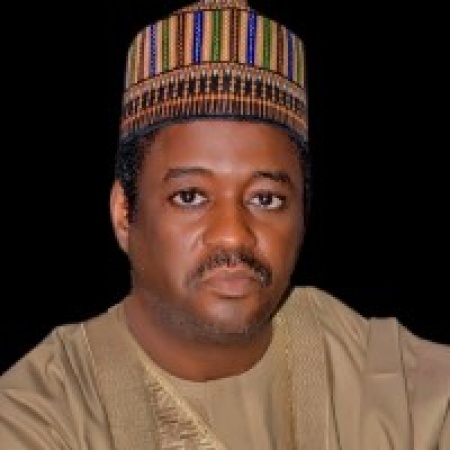
NUPRC CEO Oritsemeyiwa Eyesan during the panel session
Mrs Oritsemeyiwa Eyesan, Commission Chief Executive of the Nigerian Upstream Petroleum Regulatory Commission (NUPRC) has warned that the country could face a new constraint if investment accelerates faster than the development of the technical workforce required to execute complex upstream projects.
Eyesan gave the warning on Thursday during the “Setting the Agenda” panel on Local Content & Human Capital under PIA 2021 & NOGICD, held on the second day of the Oil and Gas Trainers Association of Nigeria (OGTAN) Human Capacity Development Conference and Expo at the Petroleum Training Institute, Effurun, Delta State.
She said that Nigeria’s annual oil and gas investment, which stood at about $24 billion in 2014, had dropped to roughly $2 billion by 2023, Eyesan said that the figure represents a decline of more than 90 per cent over the period.
According to her, the prolonged investment contraction did not only affect capital spending and exploration activity but also triggered a corresponding erosion of human capital.
She said that geoscientist were among the first professionals to leave the industry when companies began to cut budgets.
The CCE emphasised that petroleum engineers were subsequently affected as the downturn deepened.
She said that some engineers were made redundant while others were increasingly restricted to maintenance functions as operators moved from expansion to survival.
Eyesan, however, said the industry was moving in the positive direction, with renewed investment and project development creating an urgent requirement for a new generation of highly specialised professionals.
She said that the shift was particularly significant following President Bola Tinubu’s Deep Offshore Oil and Gas Projects Incentives (Tax Remission) Order, 2026.
According to her, the Order was signed on August 6, providing production tax credits for qualifying deep offshore project developments.
Eyesan added that the Order was designed to improve the economics of projects reaching Final Investment Decision (FID) within the specified window.
She had previously identified the skills deficit as a major consequence of the prolonged reduction in exploration activity, particularly affecting geologists.
Eyesan said that the renewed investment following the Petroleum Industry Act and business-oriented initiatives of the Tinubu administration was beginning to revive exploration, but warned that human capacity remained a major challenge.
The NUPRC boss said Nigeria could no longer prepare oil and gas professionals using curricula designed primarily for an earlier generation of petroleum operations.
She identified digitalised operations, advanced geoscience, digital twins and digital drilling technologies among the competencies that should now form part of the industry’s core workforce development strategy.
The CCE said that the transformation was significant because modern upstream projects increasingly depended on the ability to integrate subsurface data, real-time field information, automation, modelling and advanced analytics into investment and operational decisions.
According to her, for Nigeria, the implication is that training institutions, operators, regulators and academia must move beyond simply replacing workers lost during the downturn.
She said that they must build a workforce capable of operating the digital oilfield of the next investment cycle.
“Training curricula need to evolve. Nigeria is still behind where it needed to be in developing the competencies required by a rapidly changing industry,” she said.
She said that Nigeria’s workforce must become more commercially oriented if the country was to capture greater value from the next wave of oil and gas investment.
Eyesan explained that technical professionals increasingly needed to understand the commercial consequences of their decisions, while commercial professionals need sufficient technical understanding to operate effectively within increasingly complex energy projects.
She called for a fundamental change on how Nigeria approaches human capacity development, stressing that rather than training people only for existing vacancies, industry must forecast the skills it will require several years ahead and begin building those competencies before the demand become serious.
While placing human capital at the centre of the next phase of local content development, Eyesan noted that local participation could be sustained by regulation alone if the requisite competencies were not available.
Eyesan urged operators, regulators and training institutions to work more closely with universities and other academic institutions to establish a clear pathway for closing the existing skills gap.
She, however, said that the objective should be a coordinated talent pipeline capable of anticipating changes in upstream technology, project development, energy markets and operational practices.