ADAD
ADAD
Updating your news feed...
NEWS EXPRESS is Nigeria’s leading online newspaper. Published by Africa’s international award-winning journalist, Mr. Isaac Umunna, NEWS EXPRESS is Nigeria’s first truly professional online daily newspaper. It is published from Lagos, Nigeria’s economic and media hub, and has a provision for occasional special print editions. Thanks to our vast network of sources and dedicated team of professional journalists and contributors spread across Nigeria and overseas, NEWS EXPRESS has become synonymous with newsbreaks and exclusive stories from around the world.
.webp)










.webp)













.webp)
Loading banners
Loading banners...

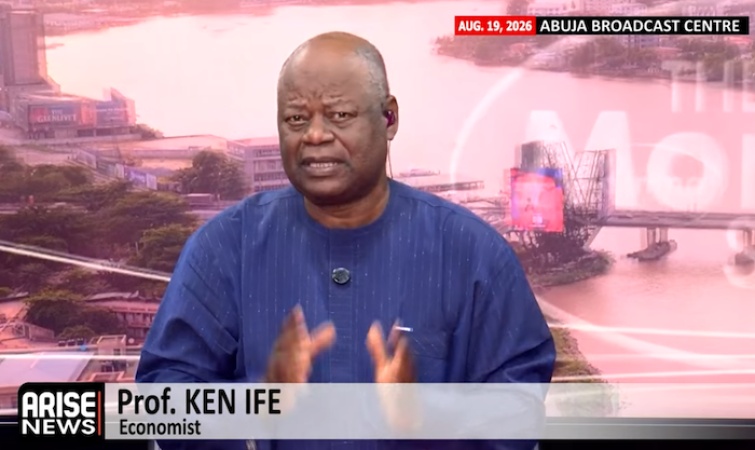
Prof. Ken Ife warns that Nigeria’s concentrated stock market could trigger investor exits and contagion if dominant sectors face major shocks.
Professor Ken Ife, an economist, has warned that the concentration of Nigeria’s stock market in a small number of companies could expose the equities market to systemic risks and trigger investor exits if dominant sectors come under pressure.
Speaking during an interview on ARISE News on Wednesday, Ife said the Nigerian Exchange Limited had performed well but warned that the structure of the market required attention.
“I think we have to congratulate the NGA because they’ve done well. And to even raking the number one in the world in what they’ve done.
“But there are systemic risks that we have to consider. And there’s also macroeconomic misalignment that we need to consider as well.”
Ife said Nigeria’s stock market was less diversified than those of South Africa and Egypt, noting that the number of listed companies and the sectors represented differed significantly.
“The number of companies that are listed in the Nigerian stock market is about 148 to 150. It’s probably 150. For South Africa, it’s about 200 to 430. For Egypt, there are actually 100 more companies than us. It’s about 250 companies.”
He said the concentration of the Nigerian market in domestic conglomerates meant that only a limited portion of the economy was represented on the exchange.
“Now, the challenge that we have is that when you have the preponderance of your stock market, being the top tier with these companies, then first of all, they don’t reflect the GDP of our country. It’s only about 10 to 15% of the sectors that are actually being represented.”
According to Ife, the concentration creates a systemic risk because a shock affecting the dominant sectors could spread across the market.
“And there’s a big systemic risk there too, that if you have any attack on the sector that are being represented, look at what happened in 2008, when we have American subprime mortgage crisis. The banks went for a meltdown. Our banks were under attack.”
He warned that such concentration could also undermine investor confidence and prompt investors to leave the Nigerian market.
“So that over concentration could cause problems. And then you can actually force people to start exiting our markets simply because of that fear of contagion. But if you are balanced, then you have a better chance of dealing with this. So that’s part of the challenge.”
Ife also said the limited proportion of shares made available by some domestic conglomerates could affect how investors assess the market.
“But there’s also one issue too, because if you look at those domestic conglomerates, it’s only a small proportion of their shares that they bring out to the market. Yeah, foreign portfolio investment go for those. Now what happens? Then one thing could trigger their exit.”
He added that the concentration could make it difficult to obtain a broad valuation of the Nigerian equities market.
“And secondly, in terms of valuation of shares, you don’t get a good view of the valuation because it is top-heavy and it’s concentrated and it’s only a small proportion of their listings. So you’ve always got that challenge.”
Ife said Nigeria needed to encourage investment across more sectors to reduce the risks associated with market concentration.
“So there are quite some things that bother me on the macroeconomic fronts that we need to make sure we incentivise investment to move across the sector. So those are some of my views on this(Arise News)