ADAD
ADADUpdating your news feed...

NEWS EXPRESS is Nigeria’s leading online newspaper. Published by Africa’s international award-winning journalist, Mr. Isaac Umunna, NEWS EXPRESS is Nigeria’s first truly professional online daily newspaper. It is published from Lagos, Nigeria’s economic and media hub, and has a provision for occasional special print editions. Thanks to our vast network of sources and dedicated team of professional journalists and contributors spread across Nigeria and overseas, NEWS EXPRESS has become synonymous with newsbreaks and exclusive stories from around the world.

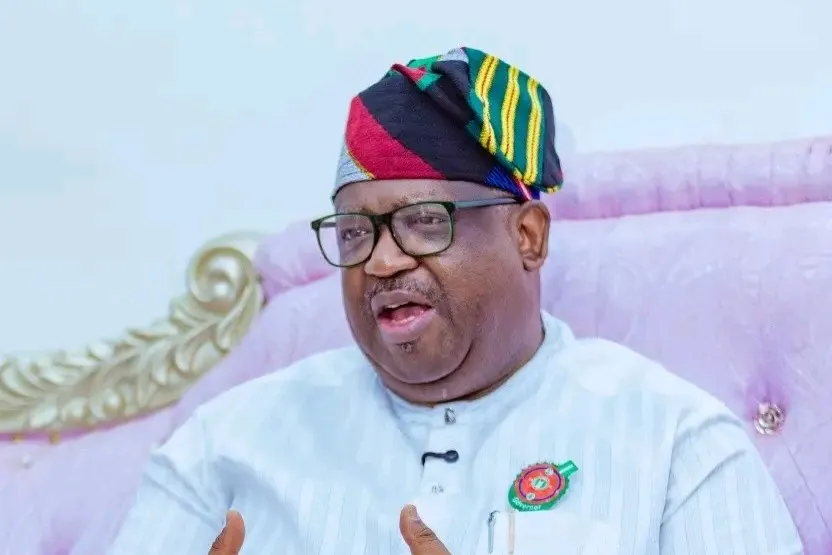

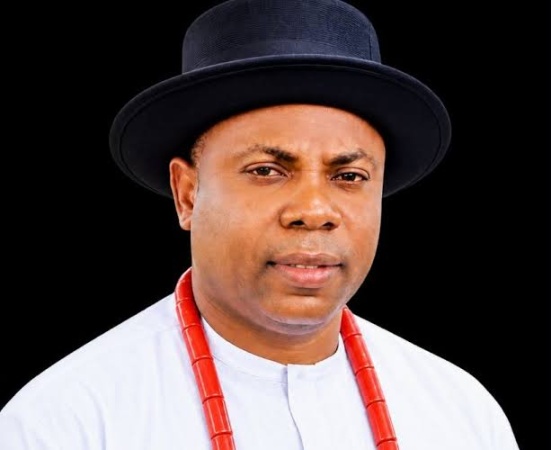


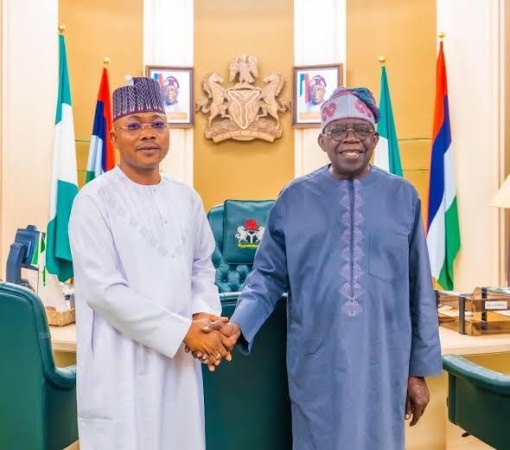








Adeleke, Oyebamiji
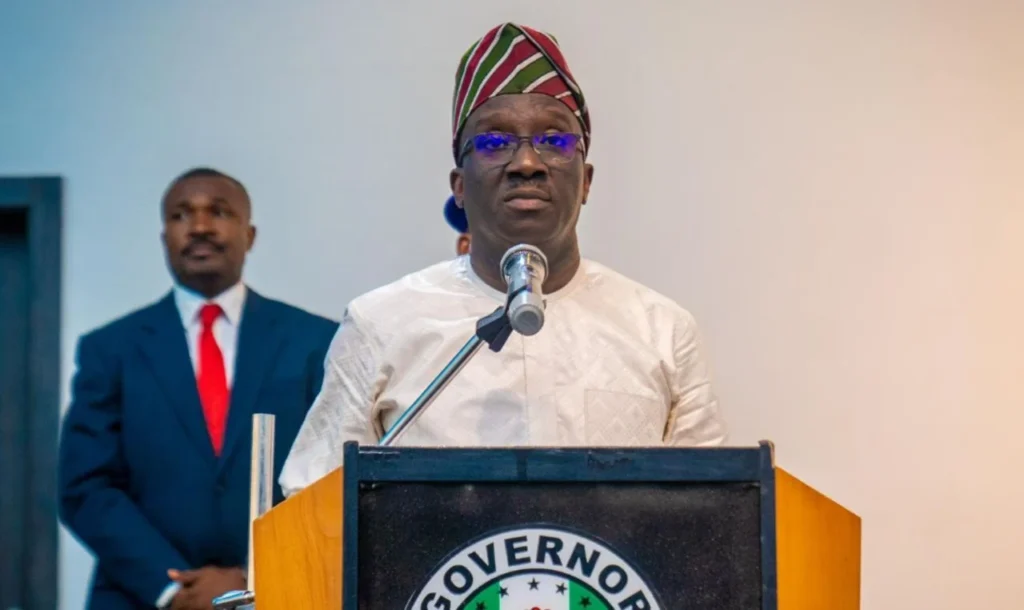
The 2026 Osun governorship election has produced a result that is bigger than a routine second-term victory: Governor Ademola Adeleke has defeated the All Progressives Congress (APC) candidate, Bola Oyebamiji, and demonstrated that Osun remains one of Nigeria’s most fiercely competitive political battlegrounds.
Adeleke, running on the platform of the Accord Party after leaving the Peoples Democratic Party (PDP), polled 511,067 votes, against Oyebamiji’s 444,815, giving the incumbent a winning margin of 66,252 votes. The Independent National Electoral Commission (INEC) declared Adeleke winner after the results from all 30 local government areas were collated.
The headline of discussion in Nigeria political landscape therefore, is simple: Adeleke survives. But the deeper story is how he survived and what the result says about Nigerian politics ahead of 2027.
A victory against the federal tide. On paper, the APC had formidable advantages. Its candidate, Oyebamiji, benefited from the machinery of the governing party at the centre and the political weight of President Bola Tinubu. The APC also had the opportunity to turn Osun into a referendum on the performance of Adeleke’s administration.
Yet the federal advantage did not translate into victory. That matters. Osun has traditionally been an intensely competitive state where party labels alone rarely guarantee victory.
The 2026 Osun election again demonstrated that local political structures, candidate popularity, incumbency and voter sentiment can overpower the attraction of federal power.
Oyebamiji was not a lightweight challenger. He had strong political connections and the backing of former Governor Gboyega Oyetola, while the APC entered the contest determined to reclaim a state it regarded as strategically important.
Earlier assessments had identified the race as essentially a two-horse contest, with Adeleke’s incumbency facing the organisational strength of the APC. But on election day, Adeleke built the more effective coalition.
The 19-LGA question
Perhaps the clearest explanation for the result is the geographical spread of Adeleke’s support.
The incumbent carried 19 of Osun’s 30 local government areas, while Oyebamiji won 11. That is important because it shows that Adeleke’s victory was not simply the product of one overwhelming pocket of support.
The governor had to accumulate votes across different parts of the state, while the APC candidate was unable to turn victories in its strongholds into a statewide majority.
This is one of the central lessons of Osun politics: winning the loudest political territories is not necessarily the same thing as winning the state.
The final numbers reinforce that point. Adeleke’s 511,067 votes amounted to a clear lead over Oyebamiji, while ADC candidate Najeem Salaam finished far behind the two front-runners with 17,180 votes.
Adeleke’s incumbency finally paid dividends. Adeleke’s first-term campaign was effectively a referendum on his record.
His administration consistently pointed to road construction and rehabilitation, workers’ welfare, education, healthcare and social interventions as evidence that Osun had moved in the right direction since he took office in November 2022.
Opposition parties, however, challenged that narrative and accused the administration of weaknesses in areas including education, healthcare and financial management.
The election suggests that, whatever the criticisms, a substantial section of the electorate accepted the governor argument for continuity. That is politically significant.
Adeleke’s first victory in 2022 was achieved after a bitter contest with Oyetola. His second-term victory shows that he has moved from being an insurgent candidate to becoming an established political force in Osun.
The dancing governor has become a two-term governor. That is a considerable transformation. The bigger shock: Accord has defeated APC.
There is another layer to the result that should not be missed. Adeleke did not win under the PDP banner through which he originally became governor.
He won on the platform of Accord. That makes the victory particularly uncomfortable for the PDP, while simultaneously raising questions about the traditional importance of party structures in Nigerian elections.
The PDP’s failure to field a candidate in Osun had already radically altered the political landscape. INEC’s final candidate list confirmed that 14 political parties were participating, but the practical contest was dominated by Accord, APC and ADC.
Adeleke has therefore demonstrated something Nigerian politicians understand very well: in a personality-driven electoral environment, the candidate can sometimes become bigger than the party.
That lesson will not be lost on politicians preparing for 2027.
APC’s defeat is not the same as political collapse. It would, however, be a mistake for the APC to read the result as evidence that it has become irrelevant in Osun.
Far from it. Oyebamiji’s 444,815 votes show that the APC possesses a substantial electoral base in the state. The party won 11 LGAs and came within 66,252 votes of defeating a sitting governor. That is not a political wipeout. It is a warning.
The APC demonstrated that it can mount a serious statewide challenge. What it could not do was convert that strength into the broader coalition required for victory.
For the party, the post-election question will be brutally simple: where did the additional votes needed for victory disappear?
Was it candidate selection? Internal cohesion? The strength of Adeleke’s personal network? Voter perception of federal performance? Or the APC’s inability to translate its national political dominance into local enthusiasm? Those questions matter well beyond Osun.
The real winner may be the 2027 political strategist. Osun is an off-cycle election, but its consequences are national.
The election has become an early laboratory for the strategies that may dominate the 2027 general elections.
The APC will study the result for clues about the limits of federal incumbency.
Opposition politicians will study it for evidence that a popular incumbent can survive against a powerful ruling party even after changing platforms.
And political consultants will focus on something even more basic: turnout.
Before the election, Osun’s registered electorate had grown dramatically, from about 1.96 million in 2022 to roughly 2.34 million in 2026 an increase of nearly 20 per cent.
Analysts had also identified younger and first-time voters as a potentially decisive demographic.
Yet turnout remained below half of registered voters. That is both an opportunity and a warning.
The politicians who can mobilise voters without relying primarily on intimidation, inducement or fear may possess a major advantage in future elections.
But the election was not without troubling signs
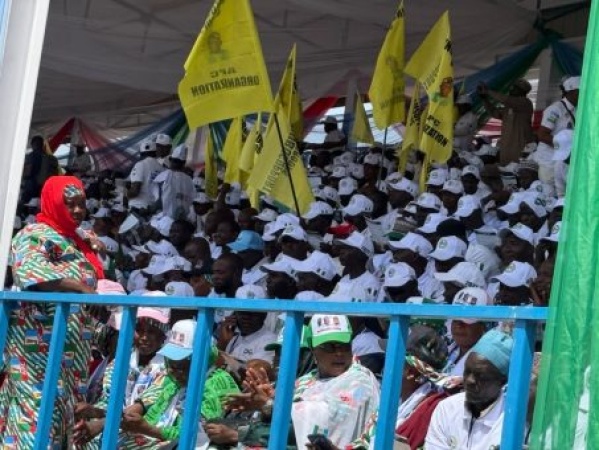
The victory should not obscure the problems surrounding the contest. There were reports of violence, intimidation and disruption at some polling locations.
In Ejigbo, for example, INEC materials were reportedly destroyed and voters fled a polling unit after an attack.
Other incidents, including reports of gunfire around a collation centre in Osogbo, raised concerns about the security environment.
There were also allegations of vote buying. Some residents alleged that political parties offered cash to voters, while fears of intimidation contributed to concerns about voter participation.
These incidents are a reminder that Nigeria’s electoral progress remains uneven.
Technology can improve transparency, thousands of polling-unit results were uploaded to INEC’s IReV portal during the process, but technology cannot by itself prevent violence, inducement or political intimidation.
The credibility of an election ultimately depends on what happens before, during and after the vote.
What Adeleke must do now. The campaign is over.
The dancing, rallies, accusations and counter-accusations must give way to governance.
Adeleke’s second term will be judged more harshly than his first because the excuse of being a new governor is gone. He now has a clear mandate and four years of experience.
The expectations will be higher on infrastructure, jobs, education, healthcare, workers’ welfare and the management of the state’s finances.
Most importantly, Adeleke must resist the temptation to interpret victory as a licence for political triumphalism.
His 511,067 votes are a mandate, but they are not the entire electorate.
A second-term governor has an opportunity to turn a competitive electoral victory into a broader political reconciliation.
And what next for Oyebamiji?
For Oyebamiji and the APC, the result should trigger introspection rather than recrimination.
The party was competitive enough to win 11 LGAs and collect nearly 445,000 votes. That means the foundation for a future comeback remains intact.
But APC strategists must determine why the party could not break through in the decisive areas.
They must also consider whether an overly nationalised campaign can defeat a locally popular incumbent.
Osun has repeatedly shown that its voters are capable of making independent calculations.
The final verdict
The 2026 Osun election has produced three immediate conclusions.
First, Adeleke is no longer an electoral experiment. He is now a two-term governor.
Second, the APC remains a formidable force but has not yet solved the Osun puzzle.
Third, the result is an important signal ahead of 2027: Nigerian voters may still reward incumbents on the basis of local performance, personality and political organisation, even when the opposing party controls the federal government.
The deeper significance of Osun is therefore not merely that Adeleke won.
It is that the federal machine came to Osun, confronted a determined incumbent, and discovered that state-level politics still has its own logic.
That may be the most important message from the Living Spring to Nigeria’s political class.
For Adeleke, the celebration can begin.
For the APC, the post-mortem has already begun.
And for 2027, the political calculations have just become considerably more complicated. (BusinessDay)