Updating your news feed...

NEWS EXPRESS is Nigeria’s leading online newspaper. Published by Africa’s international award-winning journalist, Mr. Isaac Umunna, NEWS EXPRESS is Nigeria’s first truly professional online daily newspaper. It is published from Lagos, Nigeria’s economic and media hub, and has a provision for occasional special print editions. Thanks to our vast network of sources and dedicated team of professional journalists and contributors spread across Nigeria and overseas, NEWS EXPRESS has become synonymous with newsbreaks and exclusive stories from around the world.
























Loading banners
Loading banners...


Nearly half of Nigerian households experienced a major economic setback in the past year, including job losses, business closures or difficulties finding employment, according to a new report by SBM Intelligence.
The report, titled “Six Zones, One Crisis: What Nigerians Say About Jobs, Skills and the Risk of Leaving,” was based on an in-person survey of 1,180 respondents across 21 cities and Nigeria’s six geopolitical zones between July 7 and 18, 2026. It found that 45.3% of households had experienced at least one major employment-related shock in the previous 12 months.
The findings showed that Nigeria’s employment crisis varies considerably across regions. The Southeast recorded the highest level of economic hardship, with 66.5% of respondents reporting a job loss, business closure or inability to find work.
The Northcentral followed at 61.3%, while the South-South recorded 50.3%. The Northeast stood at 40.4%, the Southwest at 32.7%, and the Northwest recorded the lowest rate at 21.5%.
SBM Intelligence said the high level of economic shocks in the Southeast was linked to poor infrastructure, limited access to capital and security challenges, including disruptions caused by sit-at-home orders.
However, the organisation cautioned that the relatively low figure in the Northwest should not necessarily be interpreted as evidence of a healthier labour market. It noted that subsistence agriculture may be helping some households survive despite weaknesses in formal employment.
The report also found that Nigerians face different barriers to employment depending on their location. Low wages were identified as the biggest challenge in the Southeast, where 24.8% of respondents cited poor pay, and in the South-South, where 21.1% gave the same response.
In the Northwest, lack of skills was the leading obstacle, cited by 26.8% of respondents, while 22.9% in the Northeast identified skills shortages as a major barrier.
In the Southwest, poor infrastructure was the biggest employment constraint at 21%, closely followed by limited access to capital at 20%. Credit access was also a major concern in the Northcentral, where 21% of respondents identified it as a barrier to employment and business development. Meanwhile, discrimination based on age, ethnicity, gender and personal connections was a significant concern for young people in the South-South.
The difficult labour market is also encouraging Nigerians to consider relocating in search of better opportunities. The survey found that 79.1% of respondents would either definitely move or consider relocating to another geopolitical zone for a good job. About 21.2% said they would definitely relocate, while 57.9% said they would consider it depending on the circumstances. Only 20.9% preferred to remain in their current zone.
The South-South recorded the highest willingness to relocate at 92.6%, followed by the Southwest at 86.3% and the Southeast at 75.7%. The Northwest recorded 69.3%, the Northcentral 68.9%, and the Northeast 59.6%. SBM Intelligence described the South-South as particularly vulnerable to labour migration, noting that oil production has not translated into sufficient employment opportunities and that the region’s non-oil economy remains underdeveloped.
Digital skills emerged as the most popular training option, with 52.7% of respondents selecting it as their first choice. Interest was highest in the Southeast at 71.4%. Technology and ICT were also viewed as having the greatest potential to create jobs nationally, followed by agriculture and agro-processing. Construction trades were the most preferred option only in the Northeast.
SBM Intelligence recommended increased investment in inter-regional economic corridors, stronger digital-skills programmes, improved access to credit for small businesses and a national vocational qualification system. It also called for better labour-market data and measures to reduce nepotism in recruitment. The organisation further urged the government to simplify credit programmes so that informal businesses and self-employed Nigerians can benefit more effectively.
Economic analyst and former Chairman of the National Association of Small and Medium Enterprises (NASME), Prof. Adebayo Adams in a chat with our correspondent described the report as a reflection of the country’s current economic reality, warning that rising unemployment, insecurity and the cost-of-living crisis are pushing more households into survival mode.
The expert said the reported loss of jobs and income should not be viewed in isolation, stressing that many Nigerians had also lost business opportunities and other sources of livelihood over the past year.
The expert said the impact was particularly severe in regions affected by insecurity and displacement.
“These figures reflect the reality that nobody can really defend away,” the expert said, noting that the situation had become especially difficult for small businesses and low-income households.
He linked the rising economic pressure to unemployment, internal migration and the growing number of Nigerians struggling to maintain adequate incomes.
According to him, the movement of people from one region to another in search of jobs and better economic opportunities has increased pressure on urban centres, while households are increasingly relying on whatever resources they have to survive.
The expert also pointed to growing withdrawals from retirement savings as another indication of the severity of the economic strain.
He said thousands of unemployed contributors were increasingly turning to their pension savings to meet immediate needs as food prices, transportation costs and other living expenses continued to rise.
“Everybody is now planning for survival. It has gotten to that level where everybody just wants to survive,” he said.
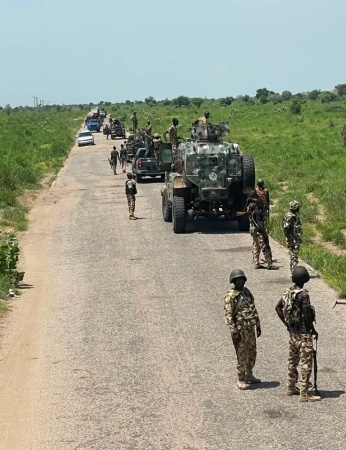
The expert identified insecurity as one of the major factors behind the deterioration in household welfare, particularly in parts of northern Nigeria.
He explained that when farmers cannot safely access their farms, food production declines, while the additional costs associated with insecurity are eventually reflected in food prices.
“People are no longer going to farm. It is a function of demand and supply,” he said, adding that farmers in some affected areas had also been forced to pay money to criminal groups before accessing their livelihoods.
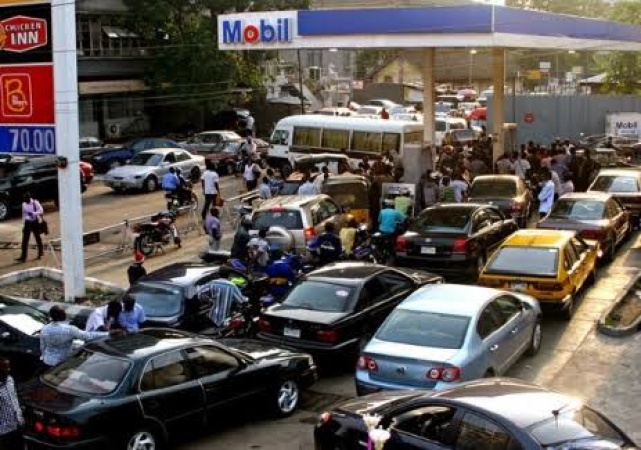
He said, “Anything that affects the oil price will definitely affect the cost of living. So the masses are suffering. The issue at hand now is for the government to look into it and return some of these subsidies. If the government fails to return the subsidy, then there would be a problem. Government must be able to subsidise the fuel, and must be able to come up with other incentives.” (Daily Trust)