Updating your news feed...

NEWS EXPRESS is Nigeria’s leading online newspaper. Published by Africa’s international award-winning journalist, Mr. Isaac Umunna, NEWS EXPRESS is Nigeria’s first truly professional online daily newspaper. It is published from Lagos, Nigeria’s economic and media hub, and has a provision for occasional special print editions. Thanks to our vast network of sources and dedicated team of professional journalists and contributors spread across Nigeria and overseas, NEWS EXPRESS has become synonymous with newsbreaks and exclusive stories from around the world.








Loading banners
Loading banners...

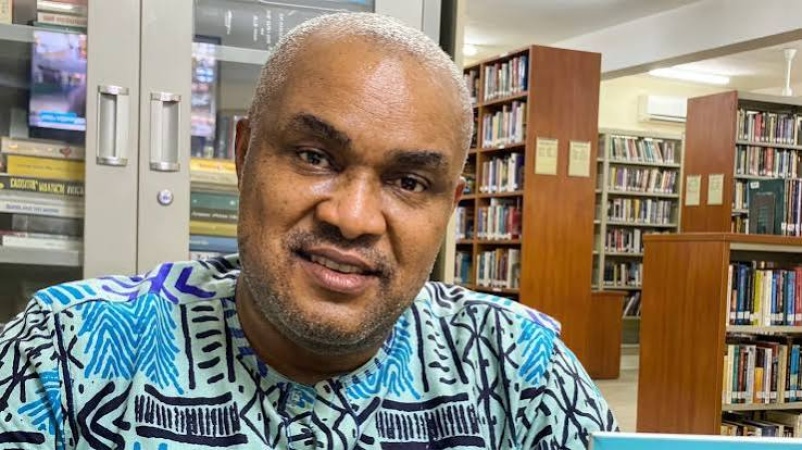
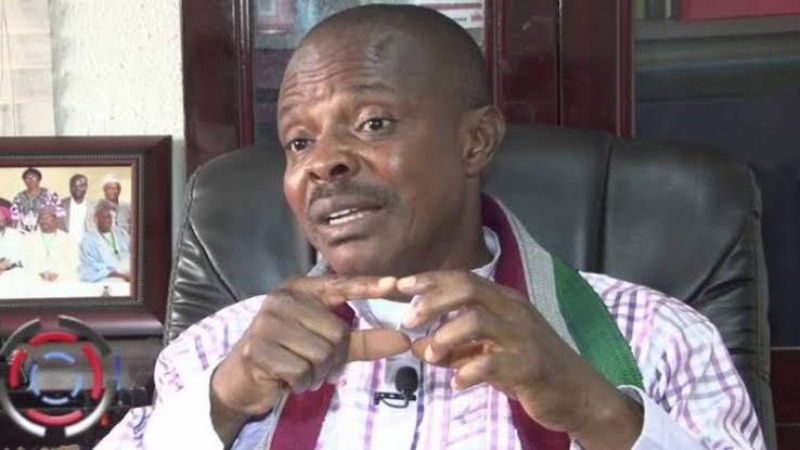
HURIWA National Coordinator, Comrade Emmanuel Onwubiko
The Human Rights Writers Association of Nigeria (HURIWA) has expressed profound outrage over reports that the Economic and Financial Crimes Commission (EFCC) has frozen an Osun State Government account barely ten days before the August 15 governorship election, describing the development as one that raises grave constitutional, legal and democratic concerns.
The civil rights group said that if the reported action was carried out without a valid court order or other clear legal authority, it would represent a disturbing abuse of governmental power and an unacceptable encroachment on the constitutional autonomy of a federating state.
HURIWA noted that the timing of the reported account restriction—coming in the heat of an election campaign and reportedly affecting an account used for the payment of workers’ salaries—is bound to provoke legitimate public concern about whether coercive state institutions are being deployed in a manner capable of disrupting governance and undermining confidence in the electoral process.
According to HURIWA in a media statement endorsed by the National Coordinator, Comrade Emmanuel Nnadozie Onwubiko, democracy cannot flourish where institutions vested with enormous coercive powers are perceived as acting in ways that could tilt the political playing field or create avoidable hardship for citizens.
“It is unacceptable that any action by a federal agency should create the impression that governance in a federating state can be crippled on the eve of an election without the highest standards of transparency, legality and accountability. Such perceptions, if left unanswered, erode public confidence in democratic institutions and the rule of law.”
HURIWA stated that anti-corruption agencies derive their legitimacy from strict fidelity to the Constitution and due process, not from the exercise of raw power.
“The EFCC must remain an impartial law enforcement institution. It must never conduct itself in a manner that gives room for allegations that it is serving political interests rather than the cause of justice.
The credibility painstakingly built by any anti-corruption institution can be undermined if its actions appear selective, opaque or politically timed.”
The association said it was particularly disturbed by the cumulative effect of recent political developments in Osun State, adding that every institution of government has a constitutional duty to avoid actions that could heighten political tension or diminish public trust in the fairness of the democratic process.
HURIWA stressed that investigations into allegations of financial crimes are legitimate where supported by evidence, but such investigations must be conducted strictly within the limits of the law and in a manner that does not unnecessarily paralyse governance or inflict collateral hardship on innocent workers and citizens.
The association argued that any restriction on public funds should be subjected to rigorous judicial scrutiny and accompanied by full disclosure of the legal basis for such action.
“It is not enough to invoke anti-corruption. The Constitution demands legality, proportionality and accountability. Nigerians deserve to know whether this reported action was authorised by a competent court, the statutory provisions relied upon and the public interest considerations that informed such a consequential decision.”
HURIWA therefore called on the EFCC to immediately issue a comprehensive public statement clarifying the facts surrounding the reported freezing of the account, including the legal authority under which it acted and the safeguards put in place to ensure that essential government services are not disrupted.
The Rights group equally urged the Independent National Electoral Commission (INEC), the judiciary, the Nigerian Bar Association, the National Human Rights Commission, civil society organisations and both domestic and international election observers to remain vigilant in safeguarding the integrity of the forthcoming governorship election.
According to HURIWA, democracy is not protected by rhetoric but by institutions that exercise restraint, respect constitutional boundaries and remain demonstrably independent of partisan political contests.
The association further warned that the fight against corruption must never become entangled with electoral politics, because once law enforcement agencies are widely perceived as partisan, both democracy and genuine anti-corruption efforts suffer irreparable damage.
“The Constitution does not permit the use of public institutions as instruments of political intimidation. Every Nigerian, regardless of political affiliation, has an interest in ensuring that federal agencies remain independent, professional and faithful to the rule of law. Today’s precedent in one state could become tomorrow’s threat to every other state if constitutional safeguards are ignored.”
HURIWA called on President Bola Ahmed Tinubu to reaffirm his administration’s commitment to constitutionalism by ensuring that every federal agency operates strictly within its statutory mandate and without creating any appearance of political interference in the electoral process.
Finally, HURIWA demanded that if the reported restriction cannot be justified by clear legal authority and due process, it should be lifted immediately in the interest of justice, constitutional governance, democratic stability and the protection of public confidence in Nigeria’s institutions