Updating your news feed...

NEWS EXPRESS is Nigeria’s leading online newspaper. Published by Africa’s international award-winning journalist, Mr. Isaac Umunna, NEWS EXPRESS is Nigeria’s first truly professional online daily newspaper. It is published from Lagos, Nigeria’s economic and media hub, and has a provision for occasional special print editions. Thanks to our vast network of sources and dedicated team of professional journalists and contributors spread across Nigeria and overseas, NEWS EXPRESS has become synonymous with newsbreaks and exclusive stories from around the world.










Loading banners
Loading banners...

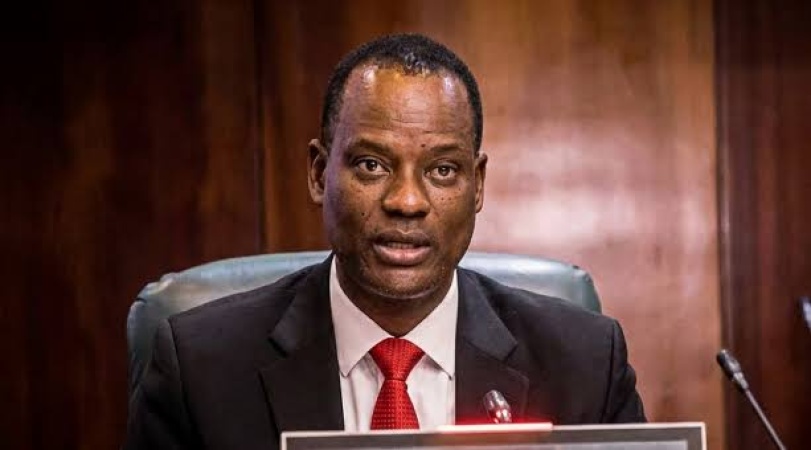
Minister of Finance and Coordinating Minister of the Economy, Taiwo Oyedele
The Federal Government, and organised labour yesterday, disagreed over the use of savings from the removal of fuel subsidy, with government, explaining how the savings were used to finance Ways and Means, service foreign debt, increased federal workers’ salaries, students’ loans, among others.
But labour rejected the claims, accusing government of being “economical with the truth” and demanding verifiable evidence to support the assertion.
Minister of Finance and Coordinating Minister of the Economy, Mr. Taiwo Oyedele disclosed this at the ongoing 7th Africa Emerging Markets Forum, in Abuja.
He promised to provide Nigerians with details of what the savings were used for, in the coming days.
He said: “There was a question about the subsidy savings, where has it gone to?
“I have heard this question so many times, and guess what? It’s a valid question. The combined impact of the subsidy on fuel, as well as, I like to call it subsidy on FX was about five per cent of GDP, so you remove both, you save money.
“But saving money wasn’t the primary objective, it was eliminating the distortion and corruption in the system, which is more fundamental. But the money saving is also important.
“So, where has the money gone to? And in a few days, you will see the detailed analysis because we believe that we owe a duty to explain what we do to the Nigerian people. That’s what transparency looks like. But in the meantime, I can give you some of the highlights.
“Many Nigerians will simply compare the past with the present and conclude that the reform is not working for them. Some would even say it’s a bad reform.
“What we don’t normally compare, or the question we usually don’t ask, is what would have been if the reforms were not carried out, counter-factual.
“Now, before the reforms, we were printing money to spend, interest rates was about eight per cent. Minimum wage was N30,000.
“If you just think about those three, those are big numbers. If you stop printing, the spending doesn’t disappear. You need to finance the money you were printing before.
“That was part of where the savings went, because the reforms induce higher prices. Interest rate went up, so instead of paying eight per cent on our debt, we’re paying as high as 24 per cent. When you need to service debts, you don’t debate it whether you need to pay. You can’t negotiate it. You pay, and you pay on time.
“Minimum wage went up from N30,000 to N70,000, that almost doubled the wage bill of the government.
“In addition to other important spendings such as the NELFUND, over 1.5 million students receive not only their tuition but stipends on a monthly basis.
“And if you think that’s not important enough, what it actually means is that about over a million households, the parents no longer have to save, borrow, and be stressed just to pay the tuition. Now they can deploy those resources into their small businesses, and to take your other important basic needs, so this is significant.
“So, what we need to do is we’ll provide a detailed explanation of how much we saved and how the money has been spent.”
Why we still borrow
The Minister also explained that the Federal Government still had to borrow despite meeting its revenue targets because revenue targets usually don’t meet expenditure targets.
He said: “The other question people tend to ask along with this is, why do you keep borrowing after you said you’ve exceeded revenue, and I tried to explain this recently, that if you have a budget to spend 10, and you have a target of revenue of six, you need to borrow four.
“If you collect revenue of seven, you have exceeded your revenue target because it was six you were hoping to collect, but it doesn’t change the fact that you still need to borrow three.
“So, this is how exceeding revenue target can coexist with borrowing. And as a matter of fact, there’s nothing wrong with borrowing, provided you apply it productively for every one naira and every $1 that we borrow.”
Oyedele promised value for every borrowing, saying, “we must add more value than the cost of the borrowing.”
You’re economical with the truth, Labour tells FG
However, the Nigeria Civil Service Union, NCSU, the Joint National Public Service Negotiating Council, JNPSNC (Trade Union Side), and a senior official of the Nigeria Labour Congress, NLC, challenged Mr. Oyedele, to provide a full account of the subsidy savings and explain how they were utilised.
General Secretary of NCSU and National Secretary of the JNPSNC (Trade Union Side), Olowoyo Gbenga, dismissed the minister’s claims, describing it as a consequence of what he called unprecedented poor budget implementation in the public service.
According to him, the Federal Government is simultaneously implementing the 2024, 2025 and 2026 budgets, a situation he said has muddled fiscal policy and led to unjustifiable explanations.
Questioned the minister’s claims that savings from fuel subsidy removal were used to service debt and fund workers’ salary increases, asking “what happened to personnel costs already provided for in the 2024, 2025 and 2026 budgets being implemented at the same time?” .
Gbenga said political office holders had turned public servants across the three tiers of government into scapegoats, resulting in what he described as growing insensitivity to the welfare of Nigerian workers.
He challenged the minister to substantiate his claims with empirical evidence.
He also urged the minister to disclose the total amount realised from removal of fuel subsidy since the current administration announced that “fuel subsidy is gone.
“Nigerian workers will not allow themselves to be fooled again,” he said.
He further questioned the claim that workers’ salaries had been increased, asking: “Which salary increment?”
According to him, the Federal Government is yet to implement the 40 per cent peculiar allowance tied to the new national minimum wage, despite a circular directing that it should take effect from May 1, 2026.
He added that the two-month wage award also remains unpaid, describing the delay as “a punishment” for Nigerian workers.
NLC concurs
Corroborating, a senior official of NLC, who spoke on condition of anonymity, also faulted the minister’s claims.
According to him, “The minister is only trying to shift the blame. It is merely a public relations gimmick when everyone knows the state of the government’s debt burden. He is being economical with the truth. Mr. Oyedele, as an economist, knows that what he said is not verifiable. He should provide verifiable facts and data to back up his claims.”
On subsidy proceeds, the labour official said: “The revenue generated from fuel subsidy removal in the first month was over N3 trillion. He should show Nigerians the corresponding increase in workers’ salaries. The government should find other explanations for what happened to the money realised from subsidy removal between 2023 and July 2026. Is he finding it difficult to admit that the funds were mismanaged?”
Alleging misuse of the funds, he said: “The government frittered away money on frivolities, including the purchase of presidential aircraft, yachts and other luxury items.”
The official dismissed the minister’s explanation, saying: “It is voodoo economics for the minister to make such claims. He knows he does not have the facts because he only joined the government a few months ago. He does not have the details and is simply talking for the sake of talking. (Vanguard)