Updating your news feed...
NEWS EXPRESS is Nigeria’s leading online newspaper. Published by Africa’s international award-winning journalist, Mr. Isaac Umunna, NEWS EXPRESS is Nigeria’s first truly professional online daily newspaper. It is published from Lagos, Nigeria’s economic and media hub, and has a provision for occasional special print editions. Thanks to our vast network of sources and dedicated team of professional journalists and contributors spread across Nigeria and overseas, NEWS EXPRESS has become synonymous with newsbreaks and exclusive stories from around the world.
Loading banners
Loading banners...

Terrorists
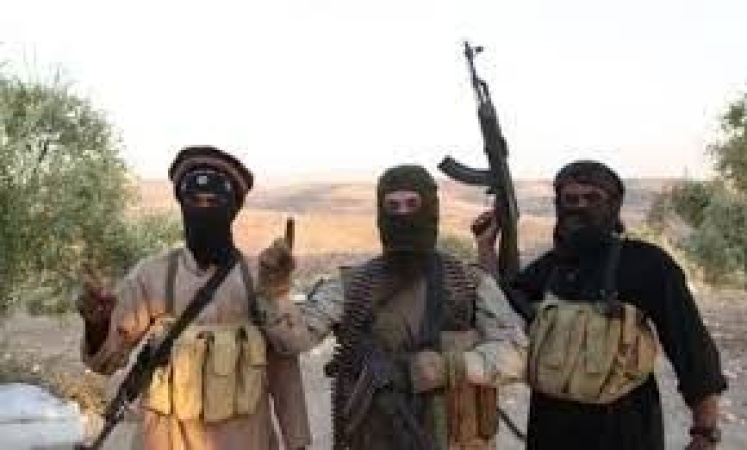
No fewer than 16 foreign terrorists and other suspects in Nigeria have been arrested by the military and other security agencies in separate operations across the country In 14 months, Sunday PUNCH can report.
The foreigners, some of whom have been convicted and sentenced to death for terrorism, include Pakistanis, Chadians and Nigeriens, according to military sources and media reports compiled by our correspondents.
They were arrested in separate operations across the North-East and North-Central parts of the country between May 2025 and July 2026.
The arrests have reinforced reports that foreigners have been playing active roles in the security crisis bedevilling Nigeria.
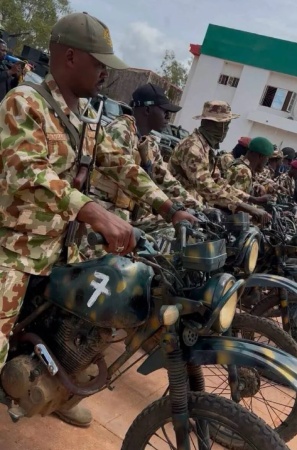
On July 12, troops of Operation Hadin Kai disclosed that a Palestinian Arab identified as Abu Ishaq, said to be ISWAP’s overall trainer; a Moroccan Arab identified as Abu Thaiba, assessed as a medical doctor serving within the terrorist network; and another Arab operative whose identity is yet to be established, were among the terrorists who planned a thwarted infiltration into Cross Kauwa, Kukawa Local Government Area of Borno State.
In the thwarted attack, the military said it killed many high-profile terrorists, including a Syrian national and an ISWAP commander, Aliyu Zabarmari, while another foreign fighter described as an Arab mercenary remained missing.
Sunday PUNCH gathered that on July 19, troops of the 115 Task Force Battalion apprehended an alleged foreign spy, Abubakar Zen, who claimed to be a citizen of the Niger Republic, at Mallam Fatori in Abadam LGA of Borno State.
A military source at the Defence Headquarters told one of our correspondents that another suspected foreign terrorist fighter and illegal immigrant in Borno, whose name was withheld, was also arrested by the troops.
The military also announced the arrest of two foreign jihadists accused of providing advanced training, drone logistics and technological support to local terrorist cells on July 20.
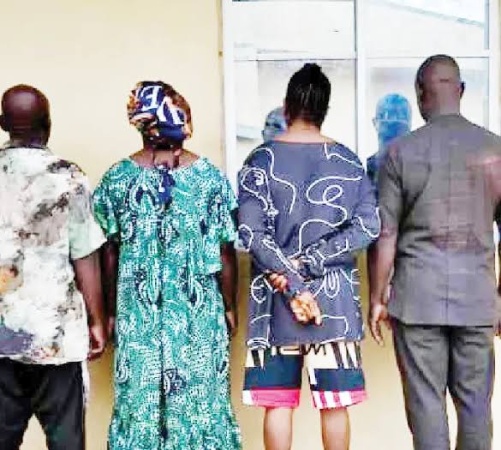
Similarly, troops, in conjunction with operatives of the Department of State Services, arrested three Chadian nationals, Bilal Muhammed Umar, Bashir Muhammed and Muhammed Maigari Abubakar, in Gombe State while they were allegedly in possession of components used for improvised explosive devices.
In May 2025, troops of Operation Hadin Kai arrested four Pakistani nationals in the North-East over allegations of trafficking arms and operating training camps for insurgent groups.
Security agencies, including the Department of State Services, also arrested five foreigners in Plateau State between May 15 and 20, 2025.
The suspects comprised three foreign Fulani migrants and two Chadian nationals.
On June 24, a High Court in Sokoto State sentenced three men, including a Nigerien national, Yusuf Muhammad, also known as Sallau, to death by hanging after convicting them of terrorism and arms proliferation.
The latest arrests have raised questions about the extent to which foreign operatives have infiltrated terrorist networks operating in Nigeria and whether international intelligence agencies have been formally engaged in tracking them.
Military sources told Sunday PUNCH on Friday that the discovery of foreign operatives linked to terrorist groups had heightened the need for closer intelligence cooperation among countries in the Lake Chad Basin.
The sources, however, declined to disclose whether the identified Palestinian and Moroccan nationals had been placed on international watchlists or whether formal requests had been made to their countries of origin to assist in tracing them.
They also declined to comment on whether INTERPOL or other international counterterrorism agencies had been formally enlisted in the manhunt, citing the sensitivity of ongoing intelligence and operational efforts.
However, one of the military officers said the presence of foreign nationals within terrorist networks operating in the region was not entirely new, but that the discovery of individuals with specialised expertise underscored the changing nature of the insurgency.
He added that terrorist groups were increasingly exploiting porous borders, difficult terrain and weak state presence to move personnel, weapons, funds and expertise across national boundaries.
But the Director, Defence Media Operations, Maj. Gen. Micheal Onoja, declined to comment on Friday when asked about the total number of foreign terrorists arrested in the country and the plan to apprehend other foreign criminals providing support for terror groups in the country.
“Nothing much to it. No comments for now,” he said.
When contacted for comment on the porous borders, the spokesperson for the Nigeria Immigration Service, Akinlabi Akinlabi, said the agency was working closely with the military and other security agencies to strengthen border security and prevent the movement of terrorists and other irregular migrants into the country.
He said the country’s geographical location, sharing borders with the Benin Republic, Niger, Chad and Cameroon, naturally placed considerable pressure on Nigeria’s borders and created the need for sustained surveillance and inter-agency cooperation.
Akinlabi noted that the NIS had put several measures in place to secure the country’s borders, including intensified patrols and the deployment of technology to monitor and deter irregular migration.
“We collaborate with the military all the time. Nigeria is surrounded by other countries; Benin, Niger, Chad and Cameroon. Naturally, that will put pressure on our borders. That is geography, and the same applies to other countries,” he said.
Commenting on the matter, a retired millitary officer, Abiodun Shobaye, told Sunday PUNCH that the reported presence of foreign combat trainers and medical specialists suggested that the insurgency might increasingly be drawing on expertise from outside the region.
He said the criminal elements were strengthening the capacity of local terrorist cells to survive military pressure and adapt to new counterterrorism strategies, adding that the challenge now extends beyond tracking individual fighters.
“The military needs to identify the financial networks, recruitment channels, training structures, supply routes, communication systems and international connections that enable foreign operatives to enter the region and provide support to terrorist organisations.
“The development has also renewed calls for stronger intelligence-sharing between Nigeria and countries whose nationals are suspected of supporting terrorist operations in the country,” he said.
Similarly, a public policy analyst and security expert, Musa Buko, told Sunday PUNCH that the discovery of foreign terrorist trainers in Nigeria pointed to a worrying development in the evolution of terrorist operations in the country.
He said the presence of the operatives should not be treated as an isolated development.
Buko expressed concern over the possibility of foreign specialists enhancing the ability of terrorist groups to manufacture explosives, deploy drones and conduct sophisticated combat operations.
“To address these problems, the Federal Government should, as a matter of urgency, construct military-grade border fences along Nigeria’s international borders. This should be complemented by high-end technological surveillance systems to ensure early detection of threats,” he said.
Also, the Chief Executive Officer of Stallion Securities, Musa Abdullahi, said the deployment of advanced military drones by terrorists had significantly altered the security landscape.
Abdullahi described Nigeria’s northern borders as particularly vulnerable because of the vast territories shared with Niger, Chad, Cameroon and the Benin Republic.
He said the shortage of human and technological resources required to effectively monitor the borders had created opportunities for smuggling, illegal migration and transnational criminal networks.
“Since we do not have enough human and technological assets to effectively manage these complex borders, it becomes a free highway for smuggling and trans-border criminality,” he added.
The security expert noted that many border communities in northern Nigeria lacked basic infrastructure, making them vulnerable to recruitment, criminal exploitation and the movement of terrorists.
However, Hamzat argued that the central challenge was not simply the existence of porous borders but the ability of terrorist networks to establish operational infrastructure within the region.
He said the focus should be on dismantling the entire support structure of ISIS-linked organisations rather than pursuing only individual field operatives.
“The priority should be comprehensive intelligence-driven operations to identify their infrastructure, operational capabilities and strategy, irrespective of their nationality, and uproot it.
“Focusing on just one or two field operators won’t do much. We must uproot ISIS terror infrastructure, which has already been installed in West Africa,” he said.
According to him, foreign terrorist networks have become increasingly comfortable operating in remote areas where state presence and security resistance remain weak.
“The issue of the porous border is not the major issue because you can’t identify a terrorist simply by looking. But we must make Nigeria and West Africa unliveable for foreign terrorist networks,” he said.
Hamzat said the environment currently offered terrorists several advantages, including weak intelligence systems, inadequate air power and limited resistance in rural areas. (Sunday PUNCH)