
Updating your news feed...
NEWS EXPRESS is Nigeria’s leading online newspaper. Published by Africa’s international award-winning journalist, Mr. Isaac Umunna, NEWS EXPRESS is Nigeria’s first truly professional online daily newspaper. It is published from Lagos, Nigeria’s economic and media hub, and has a provision for occasional special print editions. Thanks to our vast network of sources and dedicated team of professional journalists and contributors spread across Nigeria and overseas, NEWS EXPRESS has become synonymous with newsbreaks and exclusive stories from around the world.





















Loading banners
Loading banners...

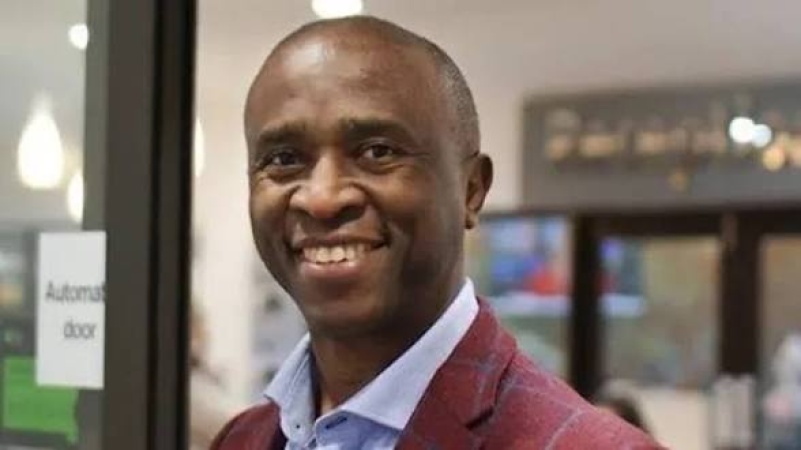
A Nigerian plastic surgeon who took a sabbatical in the United Arab Emirates has won an unfair dismissal claim against his former NHS Trust.
Augustine Akali, a product of the University of Ibadan, worked for Hull University Teaching Hospitals NHS Trust for 17 years, and at the time of his sabbatical focused on reconstructive breast microsurgery.
In early 2023 he applied for a job in Abu Dhabi at SEHA, the UAE’s largest healthcare network. He was offered the role on a monthly salary equivalent to £21,000, tax-free, on a renewable two-year contract.
Akali decided that he wanted to apply for an employment break from his NHS trust, an option available to consultants if they satisfied certain criteria.
One of the permissible reasons for applying for such a break was “to work abroad gaining skills and experience which will benefit the trust”.
The conditions added that employees were not supposed to use the scheme “primarily for pecuniary benefit”, or “where an individual has the opportunity to earn significantly more than their current level of income”.
“If the employment break is to undertake training, study or gain skills/experience which will benefit the trust and you receive payment… this is permitted provided it is declared.”
Akali told the tribunal that he had discussed using the time in the UAE to develop services in microsurgical reconstruction where none existed, and eventually so he could do more work in developing countries, especially in Africa.
In a meeting with his medical director, Mr Vize, he stated he would need to work in the Middle East to fund his work in Africa. Vize was “broadly supportive” of his plans, and he was told that he should submit an application for the sabbatical to his line manager.
However, there was some confusion over who needed to approve the sabbatical and whether he had been given “verbal approval” to take the break. Akali received confirmation of the job offer in Abu Dhabi in December 2023 and had still not received a formal response about his career break application by 5 January 2024.
He accepted the job offer and was due to start work on 1 April, and informed the person he thought was his line manager that he expected a one-year sabbatical to commence on 6 April.
Because the formal application had been sent to a non-clinical manager but discussions had been had with his clinical superiors, there was further confusion over approvals, and whether Akali had in fact resigned in order to take the post.
He emailed the Trust on 1 April stating that, “having been led to believe that my application for sabbatical leave was approved, I proceeded with my plans .. and further notified the Trust of my departure date but received no communication that there was a problem.
“It was only in February that Mr Kotwal [his clinical lead] requested my resignation.. that I heard through the grapevine that my sabbatical application had not been approved. I immediately appealed the decision only to be met with silence.”
Akali commenced early conciliation on 3 July 2024, which prompted the Trust to respond that – having heard nothing more from him after enquiring about his absence – he was treated as having resigned. His P45 was issued soon after.
Employment Judge Miller said: “Once the claimant found out about the employment break not being granted, he was vociferous in appeal. He did not engage with all the steps to facilitate the employment break but he did take such steps as he considered appropriate at the time.”
The tribunal found that Akali had responded to questions from the Trust and vented his frustrations at how he had been treated, rather than having resigned.
“In my view on an objective reading that is the context for the sentence ‘I cannot reasonably be expected to suspend my life for an indefinite period’ and consequently in my judgment this email does not amount to a resignation,” the judge added.
The tribunal ruled that the trust chose the “mistaken belief” that Akali had resigned rather than something that was “obviously a conduct issue”. Had he explicitly been dismissed for reasons of conduct, this would likely have been fair.
However, he added: “Both parties have failed in significant ways in the way this matter has been addressed”.
While the judge decided that Akali had been unfairly dismissed, but determined that it was just and equitable to reduce the claimant’s award by 100%.
Separate claims for breach of contract and failure to give notice were dismissed. (Adapted from a report by Personnel Today)




