Updating your news feed...
NEWS EXPRESS is Nigeria’s leading online newspaper. Published by Africa’s international award-winning journalist, Mr. Isaac Umunna, NEWS EXPRESS is Nigeria’s first truly professional online daily newspaper. It is published from Lagos, Nigeria’s economic and media hub, and has a provision for occasional special print editions. Thanks to our vast network of sources and dedicated team of professional journalists and contributors spread across Nigeria and overseas, NEWS EXPRESS has become synonymous with newsbreaks and exclusive stories from around the world.









Loading banners
Loading banners...


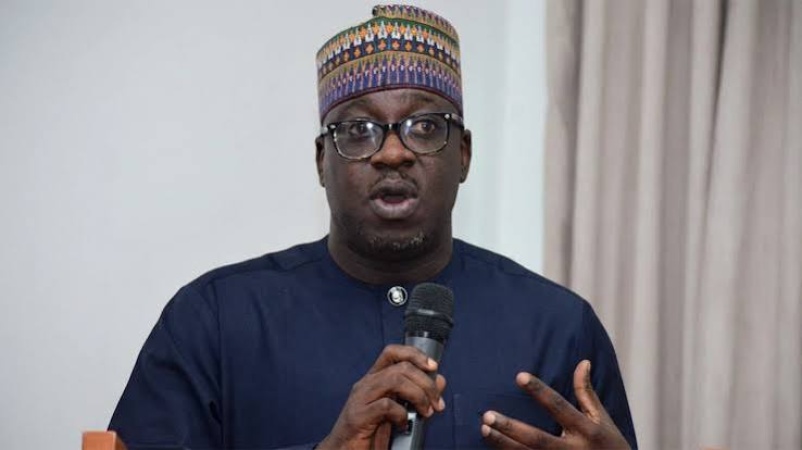
LAWMA MD, Dr Muyiwa Gbadegesin
The Lagos Waste Management Authority (LAWMA) is laying the foundation for a future in which dumpsites play a progressively diminishing role in waste management by expanding resource recovery, investing in modern waste processing infrastructure, intensifying environmental education and strengthening stakeholder collaboration across the waste value chain.
The Managing Director/Chief Executive Officer of LAWMA, Dr. Muyiwa Gbadegesin, made this known while speaking during the weekend edition of Traffic Radio’s Talk Time programme, where he said the Authority’s long-term strategy was driven by the recognition that dumpsites were never designed to serve as permanent solutions for managing municipal waste in a rapidly expanding megacity like Lagos.
He explained that every disposal facility had a finite operational lifespan, making it imperative to reduce the volume of waste sent to landfill sites while developing sustainable alternatives capable of recovering value from waste.
Dr. Gbadegesin stated that LAWMA was deliberately shifting its operational focus from waste disposal to resource management by ensuring that a greater proportion of municipal waste was recovered, recycled or treated before reaching landfill sites.
He disclosed that the Authority was expanding investments in Material Recovery Facilities (MRFs), Transfer Loading Stations (TLSs), biodigesters, composting facilities and other waste processing infrastructure to improve resource recovery and significantly reduce the quantity of waste requiring final disposal.
According to him, every tonne of waste diverted from dumpsites not only extended the operational lifespan of existing disposal facilities but also created opportunities for wealth creation, industrial development and environmental sustainability.
The LAWMA boss noted that the Authority was deepening waste sorting and recycling initiatives to ensure that recyclable and organic waste were separated and returned to productive use rather than disposed of as mixed waste.
He stressed that sustainable waste management could not be achieved through infrastructure alone, adding that public education and behaviour change remained central to LAWMA’s long-term strategy.
Dr. Gbadegesin disclosed that LAWMA Academy had become the Authority’s institutional platform for environmental education and advocacy, equipping residents, schools, markets, estates, institutions and community groups with the knowledge and skills required to embrace responsible waste management practices.
He added that the Academy was also fostering collaboration with academic institutions, development partners, professional bodies and the private sector to encourage research, innovation and practical solutions capable of advancing the circular economy in Lagos.
The Managing Director emphasised that the most sustainable waste was the waste that never reached a dumpsite, noting that every item recovered through recycling, composting or other resource recovery initiatives reduced pressure on landfill facilities while contributing to a cleaner environment.
He urged residents to embrace waste sorting at source, patronise only assigned Private Sector Participants (PSPs) and actively support recycling initiatives as public participation is indispensable to achieving a more sustainable waste management system.
He reaffirmed LAWMA's commitment to preparing Lagos for a future in which waste is increasingly recovered, recycled and converted into valuable resources, with dumpsites evolving into facilities of last resort within an integrated, resilient and sustainable waste management system.