ADAD
ADAD
Updating your news feed...
NEWS EXPRESS is Nigeria’s leading online newspaper. Published by Africa’s international award-winning journalist, Mr. Isaac Umunna, NEWS EXPRESS is Nigeria’s first truly professional online daily newspaper. It is published from Lagos, Nigeria’s economic and media hub, and has a provision for occasional special print editions. Thanks to our vast network of sources and dedicated team of professional journalists and contributors spread across Nigeria and overseas, NEWS EXPRESS has become synonymous with newsbreaks and exclusive stories from around the world.









Loading banners
Loading banners...

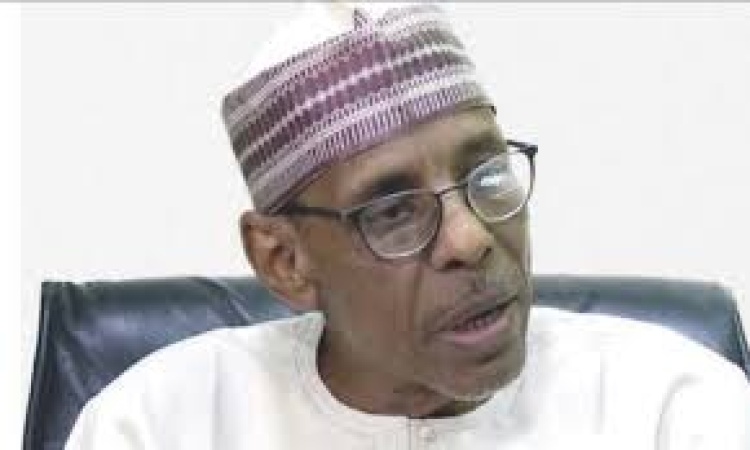
Dr Hakeem Baba-Ahmed
Former Special Adviser on Political Matters to Vice President Kashim Shettima, Dr. Hakeem Baba-Ahmed, has revealed how he spent about ₦175 million to secure the release of his nephew from kidnappers, saying Nigerians who fall victim to abduction are often left to fend for themselves.
Baba-Ahmed made the revelation during an interview on Trust TV’s Politics Today, parts of which later circulated widely on social media platform X.
Recounting the ordeal, he said his nephew, who is the son of his late sister, was kidnapped alongside three other persons while returning from a farm near Kaduna on the road to Kachia.
According to him, the victims had lodged in a village facility for the night when armed bandits struck.
“They went to a farm they had hired and they used to go there and farm things. They were kidnapped just a few miles after Kaduna on the way to Kachia,” he said.
“They put up in this maybe house, maybe hotel in the village. In the night, bandits came. One of them tried to run away. They followed him, shot him dead, dragged his body back so that the other three can see what will happen if the other three try to run away.”
Baba-Ahmed said the remaining captives were taken into the forest, where they spent 36 days in captivity.
“They were taken just a few kilometres into the bush and they spent 36 days there,” he said.
The former presidential aide noted that the abduction occurred while he was serving in the Presidency, yet efforts to secure the victims’ release through official channels yielded little success.
“At that time, I was the Special Adviser to the President. I was working in the Villa. There was hardly anybody I didn’t speak to,” he said.
He explained that family members remained in daily contact with both the kidnappers and the victims throughout the period of captivity.
“For those 37 days, every single day, we spoke with the bandits and we spoke with our nephew and the two other people. Every day we conversed. Every day they would tell us their condition. We would negotiate.”
According to him, the kidnappers had detailed information about their victims and their families.
“The very day they picked him up, they said, ‘You are Ismail Sahabi? Your uncle is a Special Adviser to the President. He lives in the Villa. He’s a big man. He works in the Villa, so we’re going to get a lot of money’.”
Baba-Ahmed disclosed that the kidnappers initially demanded ₦25 million alongside motorcycles, drugs, rice and other supplies.
“First time they said give us ₦25 million. We thought okay. We looked around for ₦25 million and they wanted three motorcycles and a lot of drugs, medication, rice and all sorts of things, and we sent it to them,” he said.
Despite providing security agencies with information on the kidnappers’ location, he said no rescue operation materialised.
“People say, ‘Give us the coordinates’. And it was easy to get the coordinates. Yes, we gave them all the coordinates.”
He added that by the time the captives were freed, the family had spent nearly ₦175 million.
“We spent all in all, between the first day they were kidnapped and when they were released, close to ₦175 million.”
Providing a breakdown, Baba-Ahmed said about ₦120 million was paid directly in cash through three separate deliveries.
“This ₦175 million was made up of about ₦120 million in cash in three batches. People took the money. We sent people to them and they gave us directions.”
In one instance, he claimed those delivering ransom money encountered military personnel who unknowingly directed them towards the kidnappers.
“One of the three times they took money, they even ran into some military people who said, ‘You are going in the wrong direction. This is the way to go’.”
Describing the criminal network behind the kidnappings, Baba-Ahmed said his nephew told the family that those holding them were merely foot soldiers working for more powerful figures.
“When our nephew was released and we asked him what they did with all that money, he said if money got to them by 6pm, by 9pm a whole bunch of their seniors would come and take everything away.”
“He told us they said, ‘We are just safe keepers. There are bosses, and they have bosses, and they have bosses’. This is an industry.”
Asked why he eventually agreed to pay such a huge ransom, Baba-Ahmed said he feared the captives would be killed.
“I begged. I begged them because I didn’t believe that those people would let them go, in spite of the fact that we were giving them everything.”
“When he was released, I could barely recognise him. He still lives with injuries. He was malnourished.”
The former presidential aide said the kidnappers threatened to execute the victims unless a final payment was made.
“The very last money we sent, close to ₦100 million, was because they said this is the last demand we make and we want it within 48 hours or we’ll kill these people.”
“My nephew said they will kill us.”
Baba-Ahmed expressed frustration over the inability of security agencies to rescue the victims despite repeated appeals.
“What did the security people tell you? They said, ‘We are trying to rescue them’. Thirty-seven days, and they kept saying, ‘We are trying our best’.”
He argued that kidnapping in Nigeria has evolved into a sophisticated criminal enterprise supported by extensive networks.
“There is a system behind this. This is not just riffraff Fulani people.”
“I think there is a whole organisation. There is a huge, very tight network of these people. They have intelligence, they have access to weapons, they have access to communities.”
According to him, the scale and organisation of kidnapping operations suggest the involvement of a far-reaching criminal structure that continues to thrive despite government efforts to combat insecurity. (The Sun, excluding headline)