Updating your news feed...
NEWS EXPRESS is Nigeria’s leading online newspaper. Published by Africa’s international award-winning journalist, Mr. Isaac Umunna, NEWS EXPRESS is Nigeria’s first truly professional online daily newspaper. It is published from Lagos, Nigeria’s economic and media hub, and has a provision for occasional special print editions. Thanks to our vast network of sources and dedicated team of professional journalists and contributors spread across Nigeria and overseas, NEWS EXPRESS has become synonymous with newsbreaks and exclusive stories from around the world.






















Loading banners
Loading banners...

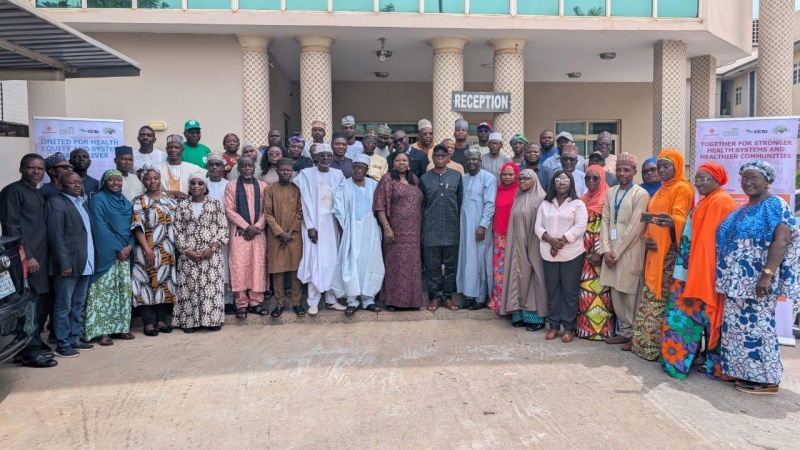
A cross section of participants
By GARBA MUHAMMAD
Kaduna State Government has commenced the process of domesticating the National Ward Development Committee (WDC) Operational Guideline to strengthen community participation, accountability and primary healthcare service delivery across the state.
The exercise, organised by the Kaduna State Primary Health Care Board (KSPHCB) in collaboration with the EngenderHealth-led consortium and other partners, is taking place during a three-day stakeholders’ co-creation workshop in Kaduna.
Participants at the meeting included officials of the National Primary Health Care Development Agency (NPHCDA), BudgIT, World Health Organisation (WHO), UNICEF, Gates Foundation, Nigeria Health Watch, Clinton Health Access Initiative (CHAI), Kaduna State Ministry of Health, Society for Family Health (SFH), chairmen of Kaduna South and Jema’a local government areas, Maternal Accountability Mechanism in Kaduna Initiative (KADMAM), Kaduna Health Advocacy and Media Alliance (KADHAMA), other civil society organisations, traditional and religious leaders, academics, healthcare implementers and community representatives.
Speaking at the opening, the Executive Secretary of KSPHCB, Prof. Bello Jamoh, described Ward Development Committees as critical platforms for community participation in primary healthcare.
Jamoh, who was represented by the Director of Community Health Services, Hajiya Nafisa Musa Isah, said the committees had contributed significantly to immunisation campaigns, malaria and maternal health interventions, accountability and strengthening relationships between health facilities and communities.
According to him, changing realities in the health sector made it necessary to further define the roles of WDCs, strengthen their capacity and establish a more structured operational framework.
“The workshop presents an opportunity for stakeholders to review the national guideline and adapt it to the realities of Kaduna State in order to strengthen community ownership, improve accountability and enhance service delivery at ward level,” he said.
Declaring the workshop open on behalf of the Commissioner for Health, Hajiya Umma Ahmad, Dr Danga Sule Emmanuel described the initiative as timely, noting that community participation remains central to sustainable healthcare delivery.
He stressed the need for stronger structures that would promote accountability and community ownership of healthcare programmes.
A lead facilitator at the workshop, Prof. Clara Ejembi, identified governance, operational and systemic issues as some of the major challenges affecting the functionality of Ward Development Committees.
She said Kaduna State’s experiences over the years showed the need to adapt the national guideline to local realities and emerging challenges.
Also speaking, Chairman of Kaduna South Local Government Area and ALGON chairman in the state, Hon. Rilwan Hussain, said properly constituted Ward Development Committees were essential for effective community participation.
He said assessments conducted in some communities showed that some committee members lacked the credibility and influence required to mobilise residents for healthcare interventions.
According to him, local authorities subsequently reconstituted some committees through inclusive consultations involving councillors, religious leaders and community stakeholders.
“We discovered that investments by government and development partners could not achieve maximum impact without strong community structures,” he said.
Delivering a goodwill message on behalf of KADMAM and KADHAMA, Co-Chairman Garba Muhammad commended KSPHCB, the EngenderHealth-led consortium and other partners for convening the meeting.
He described the initiative as timely and strategic, saying a context-specific guideline would strengthen accountability, community ownership and primary healthcare delivery in the state.
Similarly, Chairman of the Health Sector Reform Coalition (HSRC), Dr Muhammed Lecky, said one of the recommendations from a recent National Stakeholders’ Engagement Meeting was for Kaduna State to domesticate the National WDC Operational Guideline.
Participants at the meeting also stressed the need to address demand-side barriers affecting healthcare utilisation, noting that WDCs remained vital in community sensitisation and mobilisation.
The workshop is expected to produce a Kaduna State-specific WDC guideline aimed at strengthening governance structures, accountability, stakeholder coordination and community participation in primary healthcare delivery.