ADAD
ADADUpdating your news feed...

NEWS EXPRESS is Nigeria’s leading online newspaper. Published by Africa’s international award-winning journalist, Mr. Isaac Umunna, NEWS EXPRESS is Nigeria’s first truly professional online daily newspaper. It is published from Lagos, Nigeria’s economic and media hub, and has a provision for occasional special print editions. Thanks to our vast network of sources and dedicated team of professional journalists and contributors spread across Nigeria and overseas, NEWS EXPRESS has become synonymous with newsbreaks and exclusive stories from around the world.











Loading banners
Loading banners...

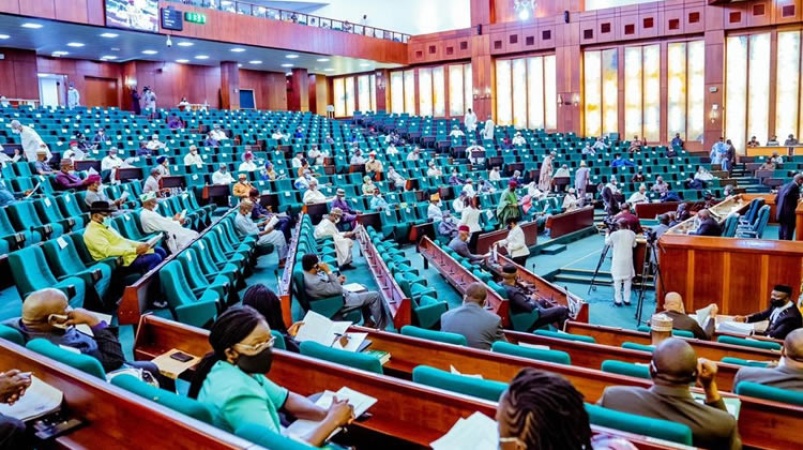
Members of the House of Reps during plenary
The contest over who becomes the next Minority Leader of the House of Representatives has drawn in opposition parties, the House leadership and some elements in the presidency, generating one of the most charged political controversies to emerge from the National Assembly since the inauguration of the 10th Assembly in 2023.
Leaders of the Peoples Democratic Party (PDP), the African Democratic Congress (ADC) and the Nigeria Democratic Congress (NDC), have stated that the choice of Minority Leader is the exclusive preserve of the opposition caucus and that no external party, including the presidency or the House leadership, has any role in determining that outcome.
Their position has hardened following the decision by the Speaker of the House of Representatives, Tajudeen Abbas, last Thursday to convene an meeting with opposition lawmakers rather than read a duly submitted nomination letter on the floor of the House, a step opposition parties have described as a departure from established parliamentary practice.
The vacancy was created when Kingsley Chinda, who represents Obio/Akpor Federal Constituency in Rivers State on the platform of the PDP, defected to the ruling All Progressives Congress (APC) and subsequently emerged as the party’s governorship candidate in Rivers State.
Following his exit, Ikenga Imo Ugochinyere, who represents Ideato North and Ideato South Federal Constituency in Imo State on the platform of the Action Peoples Party (APP), secured the endorsement of 61 of the 81 opposition lawmakers, drawn from the PDP, the Labour Party, the NNPP, the ADC and the NDC.
The signed nomination was formally submitted to the Speaker ahead of an expected announcement at plenary.
The House leadership, however, has rejected claims of any interference. Akin Rotimi, Chairman of the Committee on Media and Public Affairs, told Daily Sun that the leadership had no role in determining the outcome of the minority leadership selection and that suggestions to the contrary were inaccurate.
“The choice of Minority Leader is a matter for the opposition parties and their members in the House to determine, in line with the House Rules and parliamentary tradition. The House Leadership has no role in determining who emerges to fill any of the three vacancies in the Minority Leadership, and suggestions to the contrary are simply inaccurate.”
Rotimi also denied that the presidency had applied any pressure on the House leadership over the matter. “I am not aware of any pressure from the Presidency regarding any individual or aspirant for Minority Leadership. The process remains one for the opposition caucus to manage in accordance with established parliamentary practice.”
On the Speaker’s decision to hold a meeting with opposition lawmakers rather than read the nomination letter on the floor, Rotimi said the conduct was in keeping with the Speaker’s responsibilities as presiding officer.
“The Speaker’s engagement with members across party lines is neither unusual nor extraordinary. It is part of his responsibility as Presiding Officer to maintain open channels of communication and ensure the smooth functioning of the House,” he said, adding that the strength of the House lay in constructive engagement and adherence to democratic processes rather than speculation about political alignments.
Opposition party leaders have maintained a different position. They told Daily Sun that the Speaker’s refusal to read a formally submitted and properly signed nomination letter on the floor of the House was inconsistent with the provisions of the House Standing Orders, particularly Order 7, Rule 7, which they say empowers minority members to elect their own leadership and obliges the Speaker to acknowledge that decision once it is communicated. Legal and parliamentary options are, according to sources, being actively explored.
“The choice of Minority Leader is the business of the opposition caucus alone. We will exercise that right and we will do so without seeking anyone’s permission,” a senior PDP leader told Daily Sun
Sources within the opposition caucus told Daily Sun that the controversy is being further shaped by the expectation that a significant number of APC lawmakers who lost their party’s return tickets at the recently concluded primaries will formally join the opposition bloc in the coming weeks.
The fallout from the primaries has left dozens of incumbent lawmakers politically adrift. The Electoral Act 2026, which restricts cross-party movement after membership registers have been submitted, has narrowed their immediate options, but sources across multiple states confirmed that discussions with opposition parties are under way and that formal defections are anticipated.
Opposition leaders say the anticipated expansion of the minority caucus is among the factors behind the reluctance of some quarters to allow a freely chosen and independently minded Minority Leader to emerge at this time.
“Every lawmaker that moves from the APC to the opposition changes the arithmetic of this House. A stronger opposition, under independent leadership, will have both the numbers and the will to scrutinise executive business far more rigorously than has been the case in this assembly,” a senior opposition figure said.
The executive business at stake is specific. Pending constitutional amendment bills, including the proposed state policing framework, require the support of at least two thirds of members in both chambers of the National Assembly.
Presidential loan requests also require legislative approval under the Constitution. Sources say both categories of business would become considerably more difficult to advance if the opposition caucus grows in size and cohesion under an assertive leadership.
The session that was expected to produce a new Minority Leader last Thursday was disrupted when Hon. Philip Agbese, the House Deputy Spokesman representing Ado/Okpokwu/Ogbadibo Federal Constituency in Benue State on the Labour Party platform, rose on a matter of personal privilege and alleged that his signature had been forged on the nomination document endorsing Ugochinyere.
He told the House he had not met Ugochinyere since December 2025 and had not authorised the use of his name. He also denied reports that he and other listed lawmakers had each received $50,000 in exchange for their endorsement. “I have not received any amount of money from anybody and I will not do so. This is my integrity.”
Ugochinyere rejected the allegation, telling the House that Agbese had personally signed the form before several witnesses who were prepared to testify.
“Out of 81 opposition members, 61 have endorsed me. Some people may not be comfortable with it, but I did not expect desperation to reach this level,” he said.
The exchange triggered heated scenes on the floor of the House, with lawmakers on both sides joining in until the Speaker suspended proceedings and announced the closed-door meeting.
There are also questions being raised about whether Ugochinyere is the most appropriate candidate for the position by the standards of parliamentary convention. He is a first-term lawmaker and his party, the APP, holds only two seats in the House, making it one of the smallest opposition parties in the chamber.
A section of the opposition argues that convention requires the Minority Leader to emerge from the party with the largest opposition representation, a standard that would point to either the PDP, the Labour Party or the NDC.
The geographical argument has also been raised, with some lawmakers noting that the vacancy was created by a South South lawmaker and that convention points to the zone retaining the position.
Frederick Agbedi of the PDP, who represents Sagbama/Ekeremor Federal Constituency in Bayelsa State and chairs the PDP South South caucus in the House, has been cited in this regard.
Ugochinyere’s supporters counter that Order 7, Rule 7 of the House Standing Orders empowers the minority caucus collectively to determine its own leadership without regard to the party affiliation or size of any individual member, and that an endorsement of 61 signatures spanning multiple parties, geopolitical zones and religious backgrounds is a sufficient and legitimate basis for his emergence.
There is also the question of the political environment in which Ugochinyere operates. He is a lawmaker from Imo State who has been at odds with Governor Hope Uzodimma, the Chairman of the Progressive Governors’ Forum, whose administration has regarded Ugochinyere’s grassroots activities as a source of political opposition.
He also figures in the broader rivalry between Uzodimma and FCT Minister Nyesom Wike over political influence in the South East and South South ahead of the 2027 general elections.
Both men are understood to wield considerable influence with the presidency. Sources say their positions on Ugochinyere’s emergence have been a factor in the wider controversy. (The Sun)