
Updating your news feed...
NEWS EXPRESS is Nigeria’s leading online newspaper. Published by Africa’s international award-winning journalist, Mr. Isaac Umunna, NEWS EXPRESS is Nigeria’s first truly professional online daily newspaper. It is published from Lagos, Nigeria’s economic and media hub, and has a provision for occasional special print editions. Thanks to our vast network of sources and dedicated team of professional journalists and contributors spread across Nigeria and overseas, NEWS EXPRESS has become synonymous with newsbreaks and exclusive stories from around the world.





















Loading banners
Loading banners...

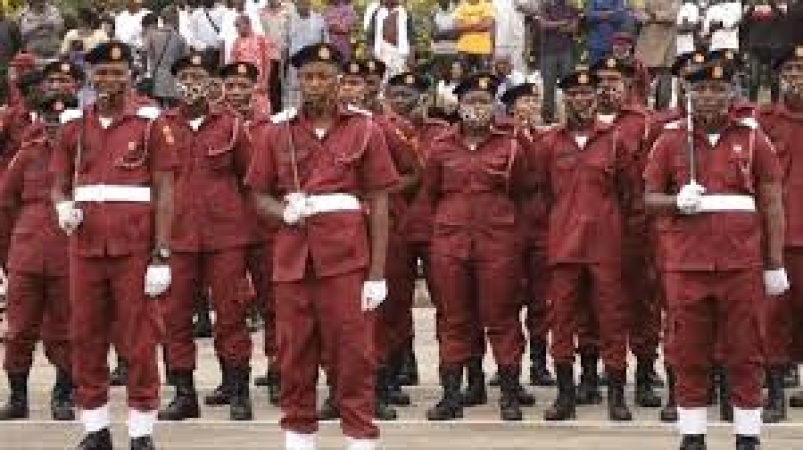
Operatives of the Amotekun Corps
Six years after its creation to combat rising insecurity in the South-West, the Western Nigeria Security Network, codenamed Amotekun, is facing growing scrutiny over its capacity to effectively tackle kidnapping, armed robbery and violent attacks across the region.
Established in 2020 by the six South-West governors, the outfit emerged amid concerns that federal security agencies lacked the manpower, local intelligence and territorial knowledge needed to police forests, highways and remote communities vulnerable to criminal attacks.
Amotekun was expected to fill that gap by deploying operatives familiar with the local terrain, language and culture. However, despite recording successes in intelligence gathering, arrests and rescue operations, stakeholders argue that the corps has fallen short of the high expectations that greeted its launch.
Meanwhile, fresh concerns over insecurity intensified in Oyo yesterday after gunmen abducted Busayo John-Paul, the younger sister of former Minister of Power, Adebayo Adelabu, alongside her twin sons while taking them to school in Ibadan.
The incident came hours after another armed gang attacked the Nigeria Immigration Service passport office in Ogbomoso, assaulted officers on duty and carted away a rifle, ammunition and other valuables.
Security experts identify legal limitations as one of Amotekun’s biggest challenges. Unlike the police and military, its operatives are barred from carrying sophisticated firearms, leaving them to confront kidnappers and bandits armed with AK-47 rifles and other advanced weapons with limited firepower.
Former commanders and security analysts have repeatedly argued that the corps cannot effectively confront heavily armed criminal gangs without changes to existing laws governing its operations. According to them, bravery alone cannot compensate for the disparity in weapons between operatives and criminals.
Funding is another major challenge. Across the South-West, concerns persist that state governments have not consistently provided the level of financial support required to sustain a modern security organisation. Operational vehicles, communication gadgets, protective gear and surveillance equipment remain inadequate in several states.
The shortage of manpower has also weakened the outfit’s effectiveness. With criminal activities spreading across forests, highways and border communities, many observers believe the number of personnel currently available is insufficient to adequately secure the region.
Although the Chairman of Afenifere Renewal Group (ARG), Wale Oshun, said it was not as if human resources were not in abundance, the governors must be ready to give what it takes to engage the numerous members of OPC, Agbekoya, the Igboho group, and several others.
One area where the corps faces particular difficulties is night operations. Most kidnappings and attacks occur under the cover of darkness, yet Amotekun lacks much of the technology required for effective nighttime surveillance. Experts point to the absence of night-vision devices, thermal cameras, drones and advanced communication systems as major limitations.
Poor road infrastructure and weak telecommunications networks in many rural communities further complicate operations. In some cases, operatives reportedly struggle to access difficult terrains or respond quickly to distress calls, especially at night.
Politics has also been identified as a factor undermining the outfit. Critics accuse some politicians of treating Amotekun as a political institution rather than a professional security agency. Allegations of politically influenced recruitment, leadership appointments and operational interference have surfaced in some states.
A former Amotekun Field Commander, who did not want his name mentioned, recently alleged that political influence, corruption and inadequate government commitment have weakened the organisation’s ability to respond effectively to growing security threats. He also warned against the infiltration of security structures by individuals with questionable backgrounds.
Another major concern is the lack of a coordinated regional security strategy.
While Amotekun operates across all six South-West states, security operations are often handled independently. As a result, criminals displaced from one state frequently relocate to neighbouring states where security pressure is lower.
This challenge was one of the reasons regional organisations such as the Development Agenda for Western Nigeria (DAWN) Commission advocated a unified South-West security architecture with intelligence-sharing mechanisms and coordinated forest surveillance operations.
Similarly, groups such as the Oodua People’s Congress (OPC), Agbekoya Farmers’ Association and Afenifere have consistently called for stronger support for Amotekun, including improved funding, enhanced intelligence gathering, modern surveillance technology and the eventual establishment of state police.
Traditional rulers have also urged governments to strengthen community intelligence networks, review anti-kidnapping laws and provide better welfare packages for operatives.
While many stakeholders continue to support the campaign for state police, they argue that waiting for constitutional amendments should not prevent immediate reforms. They insist that governors can still improve Amotekun’s effectiveness through better funding, recruitment, training, technology acquisition and regional collaboration.
For many observers, Amotekun’s biggest challenge is not a lack of public acceptance. Rather, it is the gap between the expectations that accompanied its creation and the resources, legal backing and political commitment required for it to function as an effective frontline security outfit.
Six years after its launch, the consensus among stakeholders is that Amotekun remains a necessary component of South-West’s security architecture. However, unless longstanding challenges are addressed, the outfit may continue to struggle to fulfil the promise that inspired its creation.
Experts speak challenges hobbling Amotekun’s operations
Security experts, academics, traditional rulers, civil society advocates and former Amotekun commanders argued that while the corps has become a critical layer in the region’s security architecture, it remains ill-equipped to confront heavily armed criminal groups responsible for kidnappings, killings and attacks on farming communities.
The concerns come amid rising incidents of abductions and violent attacks across Oyo, Ekiti, Ondo and other Southwest states, prompting renewed calls for state police and greater empowerment of Amotekun.
A Professor of Sociology and Criminology at the University of Ibadan, Prof. Oludayo Tade, described legal and operational limitations as some of the biggest obstacles confronting the corps.
According to him, Amotekun was created to complement conventional security agencies but lacks the manpower, equipment and legal authority needed to effectively combat armed criminals.
“Amotekun has limitations by law and by equipment. The corps does not have adequate manpower, but it can perform much better if properly equipped and empowered to gather actionable intelligence from communities,” he said.
Tade argued that one of the most critical challenges is the restriction on the type of weapons operatives can carry.
“They need the legal shackles removed so they can be trained and authorised to bear more sophisticated weapons. It is difficult to confront criminals carrying automatic rifles with personnel who are poorly armed,” he stated.
Beyond equipment, the don stressed the need for a coordinated regional security strategy across the Southwest.
According to him, security efforts by individual states are often undermined when neighbouring states fail to maintain similar levels of surveillance.
“What the Federal Government needs is a regional plan. One hundred forest guards in one state will not solve the problem if neighbouring states do not do the same. Criminals simply migrate to areas they consider less policed,” he said.
Tade urged South-West governors to strengthen intelligence gathering and surveillance systems while avoiding political considerations in matters affecting public safety.
Another academic, Prof Femi Ajayi, noted that Amotekun was established largely because conventional security agencies struggled to respond to emerging threats, including farmer-herder conflicts, kidnapping, cattle rustling, robbery and land grabbing.
He explained that although the outfit has helped improve local security responses, significant gaps remain in funding and logistics.
“Amotekun was expected to secure lives and property in collaboration with other security agencies. However, funding and logistics can still be improved substantially,” he said.
Ajayi noted that many rural communities continue to experience insecurity despite the presence of the corps, underscoring the need for additional resources and operational support.
National Coordinator of Fairaction Nigeria, Dr Tola Winjobi, described the recent abduction of teachers and pupils in Oyo State as evidence that insecurity is becoming more sophisticated than the capacity of local security outfits.
According to him, many Amotekun operatives display courage but are often placed at a disadvantage against heavily armed criminal gangs.
“Many of them are gallant, but bravery alone cannot confront criminals carrying sophisticated weapons,” he said.
Winjobi noted that the inability of Amotekun personnel to carry modern firearms remains one of the outfit’s biggest obstacles.
“They are largely restricted to Dane guns and other limited weapons, while terrorists and kidnappers deploy automatic rifles. One wonders how they are expected to confront such threats effectively,” he stated.
He also identified mobility as a major challenge.
While some state governments have procured vehicles for the corps, many have become unserviceable, and high fuel costs have reduced operational efficiency.
“Because of poor logistics and the condition of some patrol vehicles, they sometimes find it difficult to respond quickly to distress calls, particularly in difficult terrains,” he said.
Winjobi, however, acknowledged improvements in cooperation among security agencies, noting that Amotekun, the police, NSCDC and other agencies have jointly carried out several successful operations.
Nevertheless, he said occasional rivalry and struggles for superiority among security agencies still affect operational efficiency.
“Sometimes there are conflicts over authority and jurisdiction, although such incidents have reduced compared to the early years of the corps,” he said.
Human rights activist and lecturer, Dr Tunde Hamzat, blamed part of the security crisis on Nigeria’s porous borders and the infiltration of criminal elements into communities.
According to him, local security initiatives alone may not succeed without stronger national security reforms.
“Our borders are porous and there are infiltrators within the system. These realities continue to complicate security efforts at the local level,” he said.
In Ekiti State, security stakeholders maintained that Amotekun remains an important component of the state’s security framework but acknowledged that legal restrictions continue to affect its operations.
The Special Adviser to Governor Biodun Oyebanji on Security Matters, retired Brigadier-General Ebenezer Ogundana, said Amotekun complements federal security agencies by providing local intelligence and community-based information.
“The police and other federal agencies have limited knowledge of local communities. Amotekun helps bridge that gap through intelligence gathering and grassroots engagement,” he said.
However, Ogundana admitted that the corps remains constrained by existing laws regulating the use of firearms.
“We have to obtain federal clearance regarding the type of weapons that can be used. We are restricted to non-prohibited weapons and that affects operations in certain situations,” he stated.
He also acknowledged that manpower and funding remain challenges but argued that collaboration among various security agencies has helped reduce some of the gaps.
Traditional rulers have also joined calls for stronger security reforms.
The Chairman of the Ekiti State Council of Traditional Rulers and Ogoga of Ikere-Ekiti, Oba Adejimi Adu-Alagbado, called for an urgent review of laws dealing with kidnapping and violent crimes.
He also urged President Bola Tinubu to fast-track the creation of state police.
“Our people are not cowards, but their hands are tied because they cannot carry the same weapons as criminals. State police will strengthen local security architecture and improve response capacity,” the monarch said.
Public affairs analyst Bayo Olanipekun similarly argued that Amotekun, in its current form, lacks the capacity to adequately address growing insecurity.
According to him, governors are designated chief security officers of their states but lack direct control over conventional security agencies.
He maintained that state police would provide governors with greater operational authority and improve local security management.
The issue of political interference emerged strongly in comments by the pioneer Director-General and Field Commander of Osun Amotekun, Amitolu Shittu.
Shittu identified corruption and political influence as major factors weakening the outfit across the region.
According to him, many state governments have failed to provide adequate support since the administrations that originally established the corps left office.
He argued that while Oyo State has made considerable efforts in terms of logistics and manpower, political interference has affected operations in some states.
“Some politicians prefer using Amotekun personnel for political purposes rather than allowing them to focus on security responsibilities,” he alleged.
Shittu further claimed that corruption within sections of the leadership structure has undermined operational effectiveness.
He alleged that some commands have been infiltrated by political thugs, drug abusers, criminals and former convicts, thereby damaging professionalism and public confidence.
The former commander also criticised some state governments for failing to provide operational vehicles and modern equipment needed for effective policing of forests and rural communities.
His concerns were echoed by social affairs commentator Collins Chukwudi, who blamed strained relations between Amotekun and the police in some states for weakening public confidence.
According to him, tensions between both institutions have occasionally affected morale among operatives and reduced the effectiveness of security operations.
In Ondo State, where kidnapping and attacks on farming communities have intensified in recent years, stakeholders pointed to inadequate manpower and logistics as recurring challenges.
Communities across Akure North, Ose and parts of the Akoko axis have witnessed repeated attacks by armed groups, forcing many farmers to abandon their farms.
Traditional ruler and former Secretary to the Government of the Federation, Chief Olu Falae, lamented the economic consequences of the insecurity.
“People are afraid to go to their farms. Cocoa plantations and other agricultural activities are suffering because residents fear abduction,” he said.
The Commander of Ondo Amotekun, Adetunji Adeleye, acknowledged that the corps still faces operational challenges but maintained that recent interventions by the state government are improving morale and effectiveness.
According to him, the administration of Governor Lucky Aiyedatiwa has introduced welfare programmes, healthcare coverage and pension arrangements for operatives.
He also highlighted strong cooperation among Amotekun, the police, the military, the DSS and other agencies.
“We hold regular meetings, share intelligence and conduct joint operations. The level of cooperation is robust,” he said.
Adeleye added that public confidence remains one of the outfit’s greatest strengths because community members continue to provide valuable intelligence that supports security operations.
NLC threatens solidarity action over rising abductions, attacks on teachers
The Nigeria Labour Congress (NLC) has called on the government to secure the immediate release of abductees across the country, urging authorities to move beyond repeated assurances and condolence messages to concrete action against insecurity.
NLC President, Joe Ajaero, in a statement yesterday, warned that the congress would not hesitate to take solidarity action with teachers or any other group of workers if the government failed to address the country’s worsening security situation.
The labour congress expressed solidarity with the striking members of the Nigeria Union of Teachers (NUT) over recurring cases of abduction involving teachers, students and pupils.
According to the NLC, the nationwide action by teachers reflected their determination to protect themselves rather than “wait to be slaughtered to the last person.”
The congress said the strike also served as a strong reminder to governments at all levels to take the growing insecurity crisis more seriously.
The NLC commended the leadership of the NUT, led by Titus Amba, for what it described as a thoughtful response to the security challenges confronting teachers and other vulnerable workers.
It added that its sympathies remained with teachers, pupils, students and workers, particularly local government workers, doctors, nurses and other health personnel who frequently fall victim to attacks by bandits and criminal elements.
Atiku, Obi fault worsening insecurity, demand urgent action on abducted pupils
The presidential candidate of the African Democratic Congress (ADC) for the 2027 election, Atiku Abubakar, and the Presidential Candidate of the Nigeria Democratic Congress (NDC), Mr Peter Obi, have expressed concern over the worsening insecurity in the country, calling for urgent action to address the crisis and secure the release of abducted schoolchildren and teachers.
Atiku, in a statement issued yesterday, urged President Bola Tinubu to act decisively on the security situation, backing recent calls by the Christian Association of Nigeria (CAN) for a comprehensive overhaul of Nigeria’s security architecture.
He said the demands contained in the communiqué issued after CAN’s 2026 National Church Leaders Summit reflected concerns consistently raised by Nigerians and opposition figures over the state of insecurity across the country.
According to the former vice president, CAN’s call for enhanced intelligence gathering, stronger inter-agency collaboration, improved operational effectiveness and greater accountability in the fight against terrorism, banditry and violent crime aligned with his position on the Federal Government’s handling of security challenges.
Similarly, Obi appealed to abductors holding schoolchildren and teachers captive to release them immediately and allow them reunite with their families.
The former Anambra State governor said he was disturbed by images and reports showing the condition of some of the abducted children, describing the development as a painful reflection of Nigeria’s worsening insecurity.
Senate condemns Oyo school abductions, seeks immediate rescue of victims
The Senate yesterday condemned the abduction of schoolchildren, teachers and a toddler in Oriire Local Government Area of Oyo State, describing the attack as a threat to the nation’s future and collective security.
Lawmakers called for the immediate rescue of all victims still in captivity and urged the Federal Government to strengthen the Safe Schools Initiative through improved surveillance, intelligence-led operations and increased security deployment around vulnerable communities.
The resolutions followed a motion sponsored by Senator Abdulfatai Buhari (APC, Oyo Central), who raised concerns over the May 15 attack on Ahoro-Esiele and adjoining communities in Oriire Local Government Area.
Panic grips Akure schools over rumoured bandits’ attack
Parents and guardians stormed schools across Akure, the Ondo State capital, yesterday following rumours of planned attacks by kidnappers and bandits on schools within the metropolis.
The unverified reports, which surfaced during school hours, caused confusion and tension, forcing many parents to abandon their workplaces and rush to schools to withdraw their children.
Anxious parents were seen trooping into school premises and demanding to take their wards home immediately, while academic activities were disrupted in some schools as teachers struggled to calm the situation.
The rumours, which spread widely on social media, alleged that armed bandits had infiltrated some schools in Akure with plans to abduct pupils.
However, the Ondo State Government dismissed the reports, stating that no kidnapping incident occurred in any primary, secondary or tertiary institution in the state capital.
Oyo Assembly rejects negotiation with terrorists, renews call for state police
The Oyo State House of Assembly has rejected calls for negotiation with terrorists and kidnappers responsible for recent attacks in Oriire Local Government Area, urging the Federal Government to fast-track the establishment of state police to tackle growing insecurity across the country.
The assembly also called for intensified rescue operations to secure the release of victims abducted during recent attacks on schools and communities in the area.
The resolutions followed a motion of urgent public importance moved by the member representing Oriire State Constituency, Johnson Ogundele, shortly after the House resumed plenary yesterday from the Eid-el-Kabir recess.
Northern coalition accuses FG of double standards over Oyo, Borno abductions
The Coalition of Northern Groups (CNG) has accused the Federal Government of applying double standards in its response to recent school abductions in Oyo and Borno states.
The group, while condemning the abduction of schoolchildren and teachers in both states, described the incidents as evidence of worsening insecurity and the government’s inability to adequately protect citizens.
In a statement issued yesterday by its National Coordinator, Comrade Jamilu Aliyu Charanchi, the coalition expressed concern over what it described as selective outrage, unequal attention and discriminatory security responses to tragedies occurring in different parts of the country.
“While the Oyo incident received swift federal sympathy, high-level visits and urgent security assurances, the victims and communities in Borno have largely been abandoned to silence and neglect,” he said. (The Guardian)