ADAD
ADADUpdating your news feed...

NEWS EXPRESS is Nigeria’s leading online newspaper. Published by Africa’s international award-winning journalist, Mr. Isaac Umunna, NEWS EXPRESS is Nigeria’s first truly professional online daily newspaper. It is published from Lagos, Nigeria’s economic and media hub, and has a provision for occasional special print editions. Thanks to our vast network of sources and dedicated team of professional journalists and contributors spread across Nigeria and overseas, NEWS EXPRESS has become synonymous with newsbreaks and exclusive stories from around the world.















Loading banners
Loading banners...

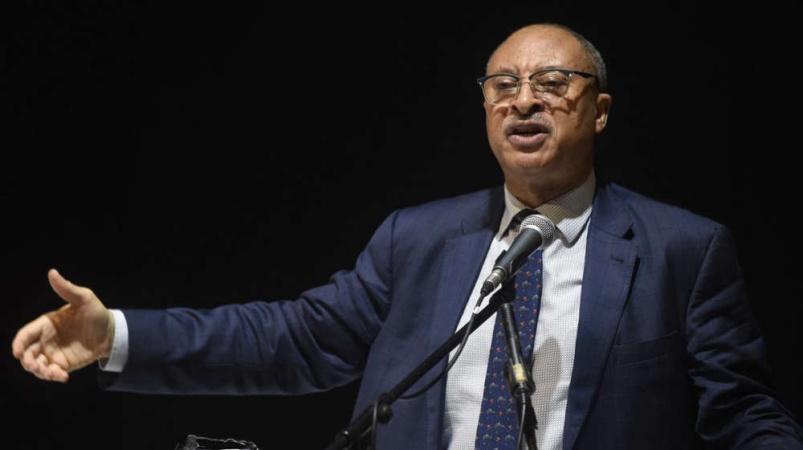
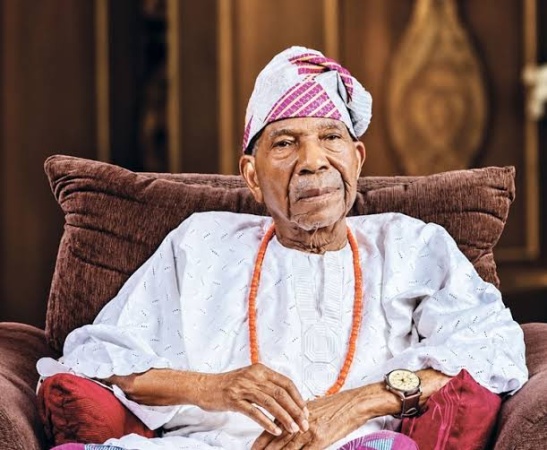
Political economist, Prof Pat Utomi
Academic and political economist, Pat Utomi, has said that former Labour Party presidential candidate, Peter Obi, made a strategic and timely decision in leaving the African Democratic Congress (ADC), describing the move as a necessary escape from what he called a compromised political process.
Speaking in an interview with ARISE NEWS on Monday, Utomi argued that recent controversies within the ADC reinforced concerns that the party’s internal processes were already tilted. According to him, political manoeuvring by influential actors has increasingly undermined the credibility of party primaries across Nigeria.
“With the benefit of hindsight… it was almost like a foregone conclusion that it would go in a particular direction. So it was a pretty smart move on his part,” he added.
Utomi said he was out of the country when Obi’s political realignment took place and was not aware of the plans in advance. He explained that he had initially advised political actors aligned with Obi to remain within the ADC and test their strength through internal competition.
“I was out of the country when the move took place. I wasn’t aware of the plans,” he said, adding that he had previously argued that staying within the party would have been the best way to challenge internal structures.
However, he noted that developments within the ADC suggested deeper issues with internal democracy, which, in his view, validated Obi’s decision to exit.
“But I was also quite aware of games that were being played… a very undemocratic kind of process being used to prevent a certain candidate from being on the ballot,” he said.
He further claimed that polling data at the time suggested Obi had strong chances of securing a party ticket if a transparent process had been allowed. Still, he insisted that power brokers often override such outcomes.
According to him, “party hierarchies and bosses” have reduced internal elections to what he described as a “make-believe democratic process.”
Utomi also used the interview to highlight broader concerns about Nigeria’s political system, arguing that it consistently suppresses talent while elevating recycled political actors who lack fresh ideas or meaningful performance records.
“What we have done is continue this process within the Big Tent to do a manifesto for Nigeria,” he said, explaining that the initiative would focus on identifying credible candidates across party lines based on competence and vision rather than party affiliation.
He added that the movement would support candidates willing to commit to governance reforms, regardless of political platform.
The scholar also criticised Nigeria’s political culture, saying it is overly driven by ambition for office rather than service. He argued that this mindset has weakened opposition politics and contributed to national stagnation.
“This obsession with power and public office is a disease,” he said, urging a fundamental shift in political attitudes.
On electoral reforms, Utomi clarified that proposals for live transmission of polling unit results originated from the Big Tent initiative, not the NDC, as previously reported in some quarters. He said the plan is still being developed as part of a broader effort to strengthen transparency through multiple independent monitoring channels.
He also urged stronger regulation of political defections, arguing that frequent party switching undermines accountability and weakens democratic institutions.
Despite his criticisms of the system, Utomi maintained that Nigeria still has the capacity for renewal if competent leadership is allowed to emerge through credible processes. (The Sun)