ADAD
ADADUpdating your news feed...

NEWS EXPRESS is Nigeria’s leading online newspaper. Published by Africa’s international award-winning journalist, Mr. Isaac Umunna, NEWS EXPRESS is Nigeria’s first truly professional online daily newspaper. It is published from Lagos, Nigeria’s economic and media hub, and has a provision for occasional special print editions. Thanks to our vast network of sources and dedicated team of professional journalists and contributors spread across Nigeria and overseas, NEWS EXPRESS has become synonymous with newsbreaks and exclusive stories from around the world.













Loading banners
Loading banners...


APC AND ADC LOGO
The perceived disorder in the African Democratic Congress (ADC) primaries has cut through months of “rescue Nigeria” rhetoric like a blade. For months, the party sold itself as a disciplined coalition platform, the antidote to Nigeria’s recycled political order. But within weeks of its presidential primary, it is displaying the same pathologies that have weakened Nigerian parties for decades: disputed delegate lists, parallel structures, and accusations of imposition before the first ballot is cast.
The problem isn’t just the choice of primary system. The ADC case exposes a deeper structural mismatch between coalition ambition and organisational capacity. Coalitions in Nigeria are easy to announce and hard to institutionalise. They form around personalities and grievances, not rules and structures. By failing to run free, fair, and credible primaries, the ADC might have failed the credibility test before it ever reaches the ballot.
Elections in Nigeria are often won or lost before voting day. If aspirants and members do not trust the process, no amount of messaging, money, or celebrity endorsements will mobilise them. A party that cannot manage its own house cannot convince voters it can manage the country.
This presents voters with a stark dilemma. They can stick with the incumbent All Progressives Congress (APC) they are allegedly dissatisfied with, or opt for an alternative that looks remarkably like the establishment in a different jersey. For a coalition built on the promise of change, that perception is fatal. Once voters conclude that all politicians are the same, turnout collapses and incumbency wins by default.
The coalition’s biggest weakness is ideological vagueness and its habit of absorbing the same establishment heavyweights it seeks to replace. There is no clear ADC doctrine on federalism, economy, security, or devolution that distinguishes it from APC or PDP. Without ideology, a party becomes a parking lot for ambitious individuals. Once those political gladiators walk in, the platform changes. What starts as a promise of grassroots democracy quickly becomes the usual script: elite bargains, parallel primaries, and court battles. For voters looking for a clean break, the line between alternative and establishment blurs instantly.
Cracks and widening fault lines
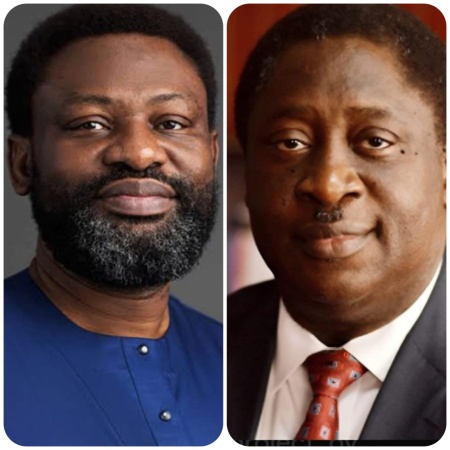
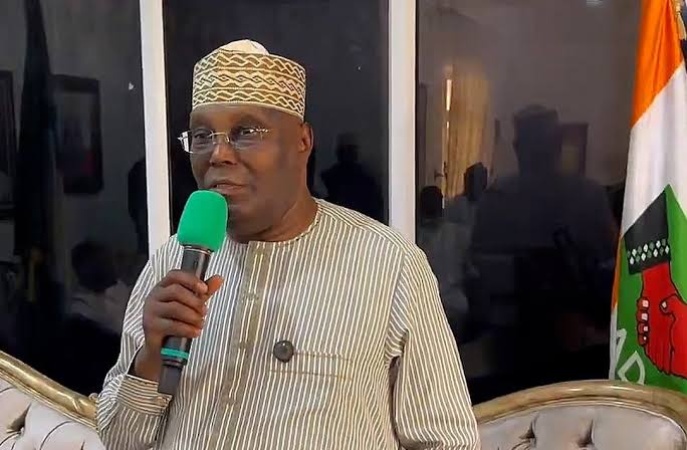
The ADC primaries ended in dispute after former Vice President Atiku Abubakar was declared the party’s presidential candidate. Former Rivers State Governor Rotimi Amaechi and veteran banker Mohammed Hayatu-Deen dismissed the outcome as an imposition.
Amaechi was blunt. He said: “The process bypassed internal consensus and handed the ticket to a predetermined candidate. This is not democracy, it is selection.” He argued that ward collation was manipulated and that delegates loyal to other aspirants were excluded from key venues.
Hayatu-Deen echoed the charge, warning that the party was repeating old mistakes. “If we rig our own primaries, how do we convince Nigerians we will not rig national elections? The ADC is losing its moral authority before it even begins,” he stated. He further accused the National Working Committee (NWC) of ignoring petitions and refusing to publish ward results for verification.
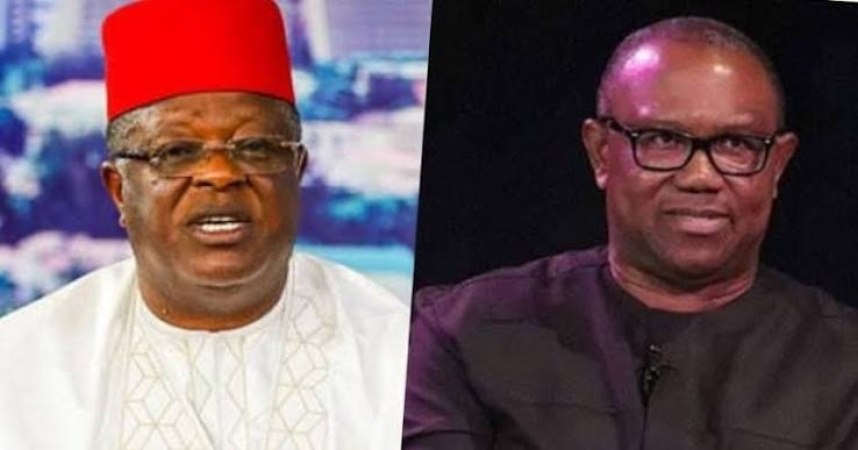
Prior to the primaries, Hayatu-Deen had urged members to prioritise unity, describing it as central to the ADC’s chances in 2027. But unity proved elusive. The party’s leadership crisis and multiple court cases had already forced Peter Obi and Rabiu Kwankwaso to defect to the Nigeria Democratic Congress (NDC) weeks earlier.
As ADC National Publicity Secretary, Bolaji Abdullahi put it, the defection was “a premeditated move, unrelated to the party’s internal wrangling.” Still, the damage to the coalition narrative was done. A platform meant to consolidate opposition energy is now fragmenting it.
The ADC now faces a critical crossroads. With parallel primaries reported in states like Ebonyi and widespread allegations of irregularities, the ADC’s challenge is no longer just confronting the ruling APC. It is surviving its own internal fractures. Parallel primaries are a red flag. They signal that state executives do not recognise the authority of the national leadership, and that factional loyalty outweighs party loyalty.
The main point of contention is how votes were collated across the 8,809 wards under the direct primary system. Both Amaechi and Hayatu-Deen have rejected the outcome, alleging vote-rigging and voter disenfranchisement. Without a transparent, verifiable collation mechanism at ward level, every result becomes contestable. The threat of protracted litigation looms large. If either aspirant heads to court over non-compliance with the Electoral Act, the ADC risks having its ticket tied up in legal limbo until the general election.
These irregularities compound an existing crisis between the National Working Committee and several state chairmen. For months, the NWC has struggled to assert control over state chapters, with some executives operating as independent fiefdoms. The party cannot run a cohesive national campaign when state executives are split between rival national leaders.
The primary was supposed to demonstrate superior democratic credentials compared to the ruling party. Instead, the leadership failed to transparently bridge the gap between state machinery and national leadership. That failure matters because credibility is the ADC’s only real currency.
Both Amaechi and Hayatu-Deen command significant political structures and resources. Dismissing their grievances could push them, and their loyalists, out of the party or into active anti-party activities. That would leave the ADC with a candidate but without the grassroots networks needed to mobilise votes.
The greatest casualty of this mismatch isn’t the political fortunes of any single aspirant; it is voter enthusiasm. When the rescue narrative buckles under factional infighting, it fuels the cynical belief that all politicians are the same. This drives the educated, reform-minded middle class and youth away from the polling booths entirely.
National Chairman, Senator David Mark, has acknowledged the process was not perfect. That admission is important, but acknowledgement without remedy is not enough. Atiku is now courting Amaechi and Hayatu-Deen, urging them to close ranks. He publicly stated that, “there are no losers in the contest”, and appealed for unity to build a stronger party ahead of the general elections.
The lesson for 2027 is clear. Coalitions can generate headlines and negotiate elite pacts, but they cannot substitute for party machinery. Until the ADC builds ward-to-state structures with clear rules, dispute mechanisms, and transparent delegate selection, its primaries will keep producing rumbles.
The next 30 days are decisive. Publishing ward results, resolving disputes through internal mechanisms, and reconciling with aggrieved aspirants are not optional. Without them, the rescue Nigeria slogan will remain a slogan.
Rumbles in APC despite incumbency
The ruling All Progressives Congress is facing the same test from a different angle. Holding federal power usually gives a party leverage to manage dissent, but APC’s primaries are still producing friction across several states because incumbency cannot paper over weak internal democracy.
Aggrieved aspirants in Bauchi, Delta, Kogi, Osun and Ondo accused the party of “imposing candidates, manipulating primary election results and violating internal democratic procedures.”
In Bauchi, mass defections followed the primaries. Senator Shehu Buba Umar, who lost the Bauchi South ticket, said: “APC has abandoned internal democracy. Delegates were bought, results were written, and the voices of grassroots members were silenced. I cannot stay in a party that punishes loyalty.”
Senator Samaila Kaila Dahuwa added: “This is not the APC we joined. The party has been hijacked by a few powerful interests who decide everything in Abuja without consulting the base.”
In Delta, Senator Ovie Omo-Age left after losing the Delta Central ticket to Senator Ede Dafinone. In his May 22, 2026 resignation letter he wrote: “I refuse to remain a sitting duck In a party where I can no longer advance my constituents’ interests. The primary was a charade and my people deserve better representation.” He has since moved to the NDC.
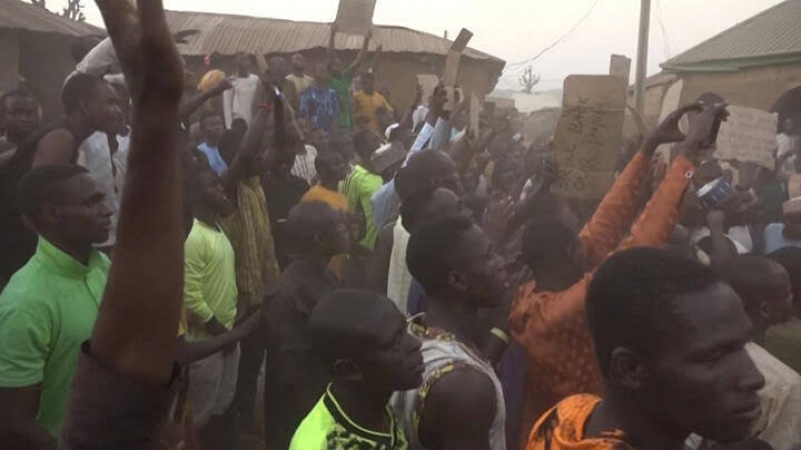
In Osun, APC members in Obokun LGA staged a protest at the Osogbo secretariat, alleging plots to replace primary winner Gbenga Falope with the runner-up. Protest leader Oyewole Oyebanji told reporters: “We voted, we won, but now they want to impose someone we rejected. If APC kills internal democracy in Osun, we will have no reason to campaign for the party in 2027.”
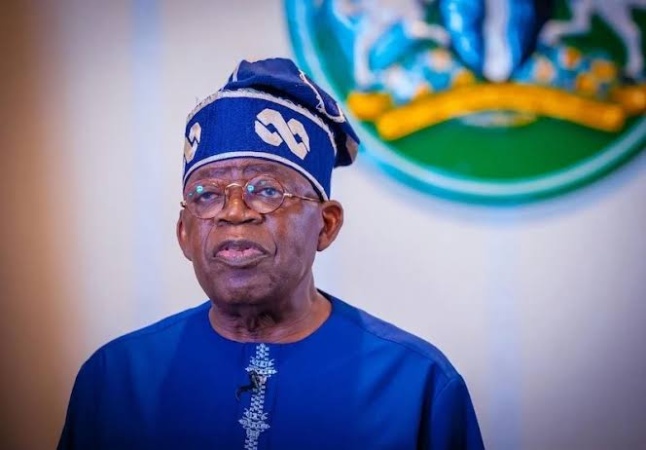
Even in Lagos, internal friction reached the President’s household. Iyaloja-General Folashade Tinubu-Ojo, the president’s daughter, challenged the party leadership over manipulated results: “We are ready to protest because we know they won this election. Their mandate should not be given to somebody else. Seye Oladejo won Mushin 2, Mutiu Oladeebo won Agege 2, Olotu Ojo won Ojokoro. Don’t turn the table against the people.”
When the President’s daughter is threatening protests, party cohesion is in crisis.
In Kogi Central, a petition alleged “widespread irregularities, violence, intimidation and manipulation of results” and claimed the election committee, “abandoned due process by isolating itself inside the Kogi Government House.”
The tension between consensus and direct primaries is evident. Party Organising Secretary Sulaiman Argungu said consensus remains the first option, but “where consensus is not mutually agreed upon by all concerned stakeholders and aspirants in any constituency, the party will proceed with a direct primary.”
Yet in Ondo, a group said “what happened in Ondo was not consensus… it was imposition.” Where elite consensus fails, protests and petitions follow.
NDC consolidates gains
The Nigeria Democratic Congress (NDC) faces an even more basic problem. Unlike the ADC and APC, the NDC lacks a functioning party structure across most states. That creates a vacuum where multiple factions claim control, and any primary outcome is immediately contested.
Within the NDC, the entry of Kwankwaso triggered a leadership dispute in Kano. Hon. Husaini Isah Mai Riga accused Kwankwaso of trying to “hijack the party structure and turn NDC into Kwankwasiyya 2.0.” The national leadership intervened, reaffirming Mai Riga as chairman while ceding 60 per cent of the leadership structure to Kwankwaso.
At the NDC’s convention, leaders zoned the 2027 ticket to the South and 2031 to the North. But analysts warn of a looming legal battle because zoning without internal consensus often breeds litigation.
Nevertheless, the political landscape has witnessed a massive wave of high-profile defections to the NDC. Driven by internal crises in the ADC, APC and NNPP, several heavyweights have migrated. They include Peter Obi, Rabiu Musa Kwankwaso, Victor Umeh, and Chief Peter Ameh. Senator Rufai Hanga, who defected from NNPP, said: “I left because NNPP became a one-man show. NDC offers room for collective leadership, though we must now prove it with our actions.”
In the House of Representatives, 17 lawmakers jointly dumped the ADC for the NDC. Afam Ogene of Ogbaru said: “ADC promised a new Nigeria but delivered old politics. We are joining NDC to test if a new platform can truly respect internal democracy.”
The NDC Is consolidating personnel but not yet structure. That works in the short term because defectors bring followership. But without ward offices, membership registers, and transparent rules, the NDC risks becoming a transit lounge for politicians fleeing crisis in other parties. If it cannot institutionalise quickly, it will inherit the same fractures it is exploiting in ADC and APC. (The Sun)