ADAD
ADAD
Updating your news feed...
NEWS EXPRESS is Nigeria’s leading online newspaper. Published by Africa’s international award-winning journalist, Mr. Isaac Umunna, NEWS EXPRESS is Nigeria’s first truly professional online daily newspaper. It is published from Lagos, Nigeria’s economic and media hub, and has a provision for occasional special print editions. Thanks to our vast network of sources and dedicated team of professional journalists and contributors spread across Nigeria and overseas, NEWS EXPRESS has become synonymous with newsbreaks and exclusive stories from around the world.
















Loading banners
Loading banners...

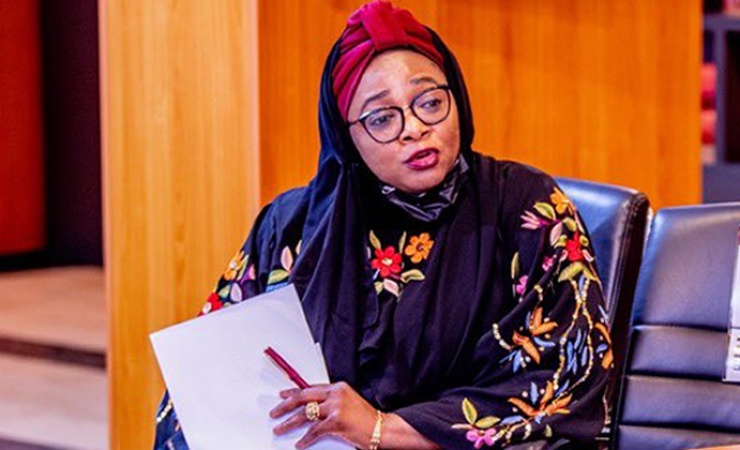
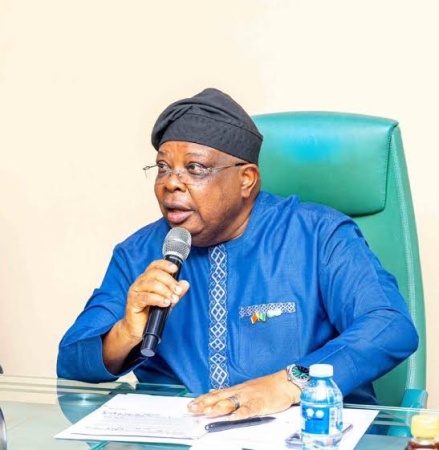
Minister of Women Affairs and Social Development, Imaan Sulaiman?Ibrahim
Federal Government has launched a sweeping push to protect and empower Nigeria’s children — with a special focus on adolescent girls — unveiling new policies and programmes aimed at ending child marriage, tackling gender‑based violence and deepening young people’s participation in national life.
Speaking at a High‑Level Inter‑Generational Dialogue themes “Her Voice, Her Power.” Held in Abuja to mark 2026 National Children’s Day, Minister of Women Affairs and Social Development, Imaan Sulaiman‑Ibrahim said the days when children’s voices were sidelined were over.
“In this new Nigeria, we are intentional about one principle: the voices of both our girls and our boys must not only be heard — they must influence outcomes,” the minister told development partners, civil society groups, international agencies and young delegates.
The minister said the government is stepping up action to close development gaps that leave millions of children, especially girls, vulnerable. She listed a series of national frameworks now in place or being fast‑tracked: the National Costed Action Plan on Ending Violence Against Children, the National Costed Action Plan on Ending Child Marriage, the Strategy for Ending Female Genital Mutilation, and an upcoming Menstrual Health and Hygiene Policy.
The minister also said the administration is accelerating the domestication of the Child Rights Act across all 36 states and intensifying enforcement of the Violence Against Persons (Prohibition) Act.
Highlighting the scale of the problem, the minister cited distressing figures: about 30 percent of Nigerian women aged 15 to 49 have suffered physical or sexual violence, and one in three girls is married before 18 — a rate that approaches 48 percent in some rural areas. She warned that child marriage and female genital mutilation erode national productivity and long‑term potential.
“When a girl is subjected to child marriage or violence, the nation loses productivity, potential, and long‑term economic value,” she said.
On education, the minister announced a major expansion in partnership with the World Bank’s AGILE project: targeted education and digital literacy programmes expected to reach more than 8.6 million girls across 18 states. The initiative is intended to prioritise girls in conflict‑affected and underserved areas where out‑of‑school rates remain highest.
To amplify youth voices, the ministry launched “FutureNow,” a national podcast that will give girls and boys a public platform to share experiences and shape policy debates. The minister said the project builds on youth‑led platforms such as the Yes Girl Podcast, which she described as a model for adolescent advocacy.
UNICEF’s country representative in Nigeria, Wafaa Saeed, in her solidarity remarks urged communities to back children’s ambitions. “When you give girls education, you set them up for progress. Their voices are not small. It is our collective responsibility to ensure ‘Her Voice, Her Power,’” she said.
The dialogue convened stakeholders from UNICEF, Save the Children, SOS Children’s Villages, government agencies, youth advocates and adolescent girls nationwide. The programme combined cultural performances with panel discussions on dismantling harmful norms, interactive sessions between girls and policymakers, and commitments from partners on protection and inclusion.
NID‑style interventions were also highlighted by the minister as part of a broader agenda of accountability and collaboration. She thanked President Bola Tinubu for creating an enabling environment for women‑and‑children policies and urged sustained collective action.
“When we invest in her voice and listen to their voices, we strengthen our collective national power. When we protect one child, we alter the trajectory of an entire generation,” she said.
Stakeholders closed the event with renewed pledges to push for safer schools, stronger legal protections and broader access to opportunities so every Nigerian child — especially girls — can be heard, protected and empowered. (Saturday Sun)