Updating your news feed...

NEWS EXPRESS is Nigeria’s leading online newspaper. Published by Africa’s international award-winning journalist, Mr. Isaac Umunna, NEWS EXPRESS is Nigeria’s first truly professional online daily newspaper. It is published from Lagos, Nigeria’s economic and media hub, and has a provision for occasional special print editions. Thanks to our vast network of sources and dedicated team of professional journalists and contributors spread across Nigeria and overseas, NEWS EXPRESS has become synonymous with newsbreaks and exclusive stories from around the world.













.webp)



Loading banners
Loading banners...


Lanre Ogundipe
By LANRE OGUNDIPE
In the ancient village of Abuja, there lived a cow so extraordinary that it defied logic and humbled imagination. The elders called it Prosperity. The villagers, with a mixture of reverence, fatigue, and quiet suspicion, called it the Sacred Cow.
This was no ordinary animal. It produced milk in quantities so vast that even the most confident storytellers struggled to exaggerate it without sounding dishonest. Every morning, the buckets overflowed. Every afternoon, the barns filled again. By evening, the milk pooled across the floors like a promise too generous to fail.
The elders proclaimed that this milk was enough to build roads across the kingdom, power every home, fund every hospital, and educate generations yet unborn. The cow, they said, had solved the future before the future even arrived.
But the future, as the villagers would learn, required management.
And so the Sacred Cow had caretakers.
These caretakers occupied a grand barn at the centre of the kingdom — a structure built with public wealth but governed with private confidence. It stood tall, guarded by procedures, decorated with policies, and surrounded by language so impressive that it discouraged ordinary curiosity.
Over time, the barn acquired many names.
At one point, it was proudly called the National Nectar Processing Chamber (NNPC) — a place where milk, according to the caretakers, was carefully measured, expertly managed, and faithfully distributed for the benefit of all.
But the villagers, who had learnt that names often travel faster than results, developed their own translations.
Some began to call it the National Nectar Preservation Committee, because the milk seemed to be preserved indefinitely within the barn. Others, less patient and more observant, referred to it as the Nigerian National Patrons of the Cow — a club where the milk was always available, just never in the village.
Still, the cow kept producing.
The cow produces.
The barn explains.
The village waits.
Season after season, the Sacred Cow delivered wealth that should have transformed the kingdom into a model of abundance. And yet something far more consistent than prosperity persisted.
The milk was plenty.
The village was thirsty.
The barns grew larger.
The expectations grew smaller.
The caretakers, however, remained confident.
They explained that the real problem was not the milk. The milk was flowing exactly as expected. The real issue, they said, was perception. The barn needed modernisation. The identity required repositioning. The name lacked the kind of global sophistication that would properly reflect the seriousness of their work.
And so, with admirable urgency and unquestioned authority, the caretakers summoned consultants, painters, and experts in appearance — and spent five billion shells simply to rename the barn and polish its signboard.
The villagers watched.
They did not protest.
They recognised the pattern.
When outcomes refuse to improve, presentation must.
Perhaps, they thought, a new name would finally convince the milk to travel.
It did not.
Instead, new numbers began to circulate - numbers so vast they sounded like bedtime stories told to distract restless children. A wandering accountant, whose only offence was arithmetic, whispered that the Sacred Cow had produced nearly two hundred and ten trillion cups of milk over recent seasons.
The villagers laughed.
Then they stopped laughing.
For if even a fraction of that milk existed, the kingdom would not look like this.
The clinics would not struggle to function.
The schools would not lean on broken hope.
The roads would not resemble memory rather than infrastructure.
Darkness would not arrive each evening with such disciplined certainty.
So the villagers began to ask questions again.
If the cow produces so much milk, where does it go?
If the barns are always full, why are the people always waiting?
If the system is working, why is the village not?
The caretakers responded with calm precision.
The milk, they said, is fully accounted for.
The systems are functioning efficiently.
The records are complete and verifiable.
The only difficulty, they explained gently, was that the accounting was too sophisticated for ordinary villagers to understand.
In Abuja, they added, everything is transparent.
It is just not visible.
And besides, they reassured everyone, corruption in the kingdom is now a thing of the past.
The villagers nodded politely.
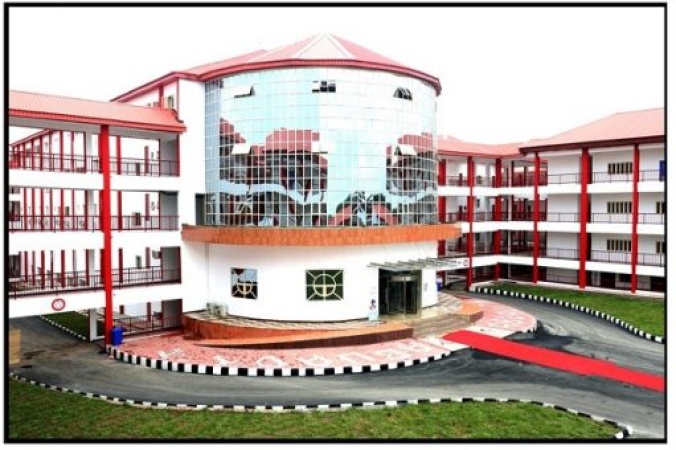
Then they looked again at the barn - the NNPC.
The milk was present in theory, accounted for in writing, and missing in reality.
No caretaker was questioned.
No bucket was traced.
No ledger was opened.
The cow continued to produce.
The barn continued to explain.
The village continued to wait.
Over time, the waiting itself became a system.
Children grew into adults waiting.
Projects began and ended in waiting.
Promises were announced, revised, and archived — all within waiting.
One evening, as the sun retreated and silence settled across the land, an old farmer rose to speak.
“The problem is not the cow,” he said.
The villagers leaned in, not because they were surprised, but because they were ready.
“The cow is honest,” he continued. “It produces without hesitation. It does not conceal. It does not negotiate. It does not organise meetings to explain its generosity.”
He paused.
Then he delivered the truth the village had long rehearsed in silence:
“It is the milking that has mastered politics.”
A murmur moved through the crowd, not of shock, but of confirmation.
For the villagers had finally understood what the barn had become.
Not a place of distribution — but a place of interpretation.
Where milk enters and explanation exits.
Where numbers rise and outcomes shrink.
Where accountability is announced but rarely encountered.
Within the NNPC, the milk is always complete.
It is only the village that remains incomplete.
Over time, something deeper and more durable took root.
The Sacred Cow was no longer just producing milk.
It was producing a system.
A system where abundance encourages comfort.
Where disappearance requires explanation, not consequence.
Where oversight exists, but mainly in documentation.
Where reform is announced more frequently than it is experienced.
Caretakers came and went, each promising change, each announcing transparency, each declaring that a new chapter had begun. Yet the rhythm never changed:
The cow produces.
The barn explains.
The village waits.
The cow was never the problem.
The problem was the quiet agreement, unspoken but effective; that the cow belonged to those who milked it.
But the Sacred Cow belongs to the people.
And until the villagers insist on counting the buckets, opening the ledgers, and following the milk beyond the barn, the miracle will continue — a cow that produces wealth while the nation produces explanations.
For a cow blessed with endless milk should build a future.
But in Abuja, the villagers have learned to distinguish between production and outcome.
The cow is working.
The village is waiting.
It is the barn that is efficient, efficient at turning milk into mystery, mystery into language,
and language into policy.
And in that efficiency lies the greatest paradox of all:
In a land where milk never stops flowing, it is scarcity that has mastered distribution.
•Ogundipe, Public Affairs Analyst, former President Nigeria and Africa Union of Journalists writes from Abuja.