Updating your news feed...

NEWS EXPRESS is Nigeria’s leading online newspaper. Published by Africa’s international award-winning journalist, Mr. Isaac Umunna, NEWS EXPRESS is Nigeria’s first truly professional online daily newspaper. It is published from Lagos, Nigeria’s economic and media hub, and has a provision for occasional special print editions. Thanks to our vast network of sources and dedicated team of professional journalists and contributors spread across Nigeria and overseas, NEWS EXPRESS has become synonymous with newsbreaks and exclusive stories from around the world.



Loading banners
Loading banners...

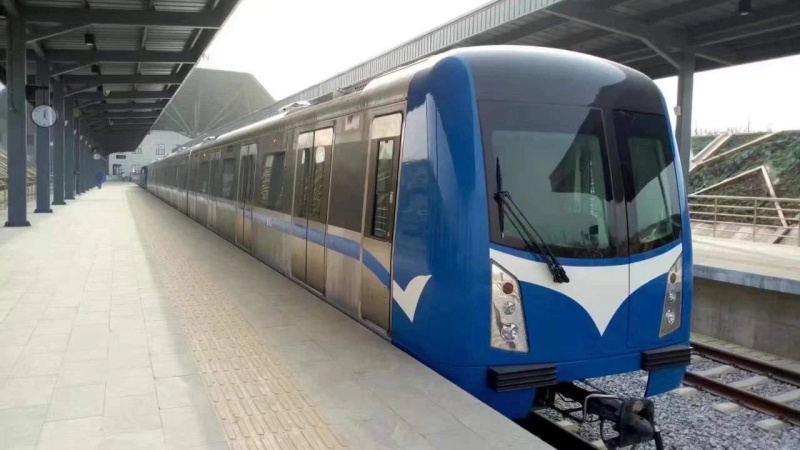
Abuja Rail Mass Transit
The Federal Government has formally inaugurated a multi-agency technical committee to review the $200 billion Integrated Gas, Power and High-Speed Rail Project, stating that the mega-deal must be thoroughly vetted to safeguard national interests, ensure financing credibility, and protect Nigeria from unforeseen liabilities.
The project, Nigeria’s flagship infrastructure initiative under President Bola Tinubu’s “Renewed Hope Agenda,” announced in August 2025, is intended to simultaneously upgrade energy supply, industrialise the gas sector, and transform national transport connectivity.
The project aims to break the cycle of poor power supply by directly linking Nigeria’s large gas reserves (over 200 trillion cubic feet proven) to power generation and rail electrification.
It is also designed to decongest road networks and reduce transport costs by shifting long-haul freight and passenger traffic to high-speed rail, with commercial speeds projected at around 200–250 km/h.
The Initiative further seeks to position Nigeria as a regional logistics and manufacturing hub by clustering industries along the rail-gas-power corridors.
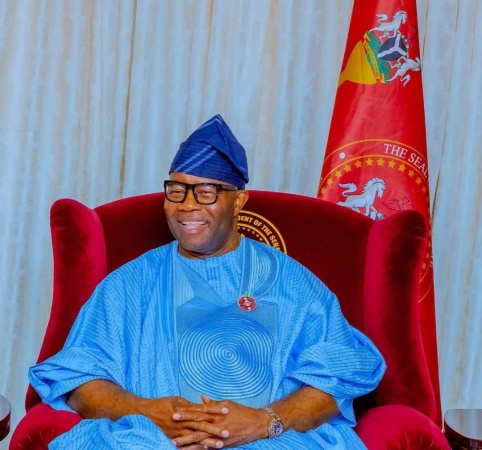
In his opening remarks on Thursday, the Secretary to the Government of the Federation (SGF), George Akume, stressed that the proposal, put forward by the De-Sadel (Nig.) Limited consortium in partnership with China Liancai Petroleum Investment Holdings Limited (Liancai Group), is “too large and too important” to be rushed.
Akume said the project, estimated at about $200 billion, is envisioned as a multi-phase programme integrating gas development, power generation and transmission, and the construction of a 4,000-kilometre high-speed rail network linking major economic corridors such as Lagos, Abuja, Kaduna, Kano, and Port Harcourt.
“These kinds of projects have the potential to transform Nigeria’s transport infrastructure, strengthen energy security, stimulate industrial growth and deepen national integration,” Akume stated. “But they must also be carefully evaluated to ensure they align with national priorities, are technically sound, financially viable, and fully compliant with Nigeria’s legal and regulatory frameworks.”
He disclosed that the Office of the Secretary to the Government of the Federation had received inputs from security, financial intelligence, and regulatory agencies, especially on the consortium’s financial support arrangements and the profile of the participating entities, hence the need for a coordinated technical review.
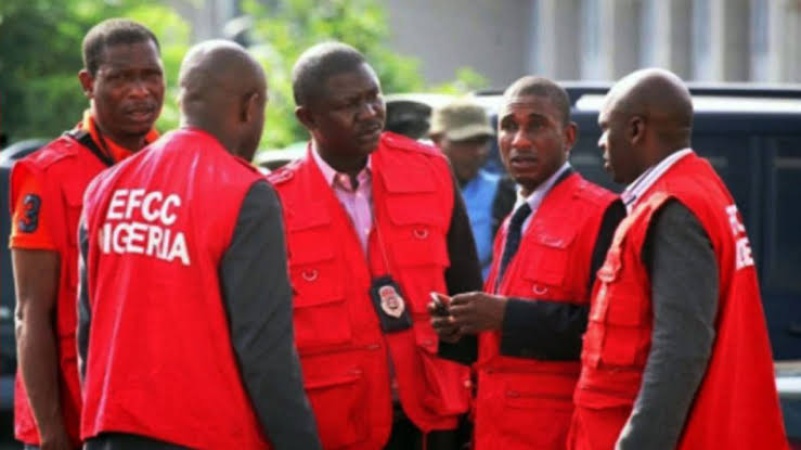
The Inter-agency Technical Committee is chaired by the Permanent Secretary of the Political & Economic Affairs Office, OSGF, and includes representation from the Federal Ministries of Transportation, Petroleum Resources, Finance, Justice, and Environment; the Central Bank of Nigeria (CBN); Nigeria Financial Intelligence Unit (NFIU); Economic and Financial Crimes Commission (EFCC); National Intelligence Agency (NIA); Office of the National Security Adviser (ONSA); Debt Management Office (DMO); and others.
The Committee’s terms of reference require it to verify proof of funds and assess financial, sovereign, and contingent-liability risks, as well as review the integrated oil and gas–rail financing model and any proposed oil and gas asset divestments. Members are also tasked with conducting technical and engineering, procurement, and construction (EPC) due diligence on China Liancai Petroleum Investment Holdings Limited and its proposed partners, China Railway Group Limited/China Railway Engineering Corporation, while ensuring compliance with Public-Private Partnership (PPP) guidelines, including risk allocation, environmental and social safeguards, and resettlement issues.
Akume urged committee members to “approach this assignment with the highest level of professionalism, objectivity and patriotism,” adding that “your collective expertise and institutional knowledge will be critical in ensuring that the Federal Government receives relevant recommendations that will guide appropriate decisions at the highest level.” He said the committee is expected to work diligently and submit its report within the timeframe that would be communicated by the Secretariat.
The SGF made it clear that the inauguration of the Technical Committee marks the beginning, not the conclusion, of the review process. Akume said the committee is expected to “carefully examine all relevant documentation, verify claims made by the project proponents, review the technical, financial, legal and environmental aspects of the proposal, and provide objective, evidence-based recommendations.”
He reiterated that the Federal Government treats infrastructure investment as a “catalyst for economic growth,” but insisted that it also has a duty to protect national interests through transparency, accountability, and rigorous due diligence, especially on large-scale foreign-linked proposals.
Managing Director/CEO of De-Sadel Nigeria Limited, Samuel Ukoh, gave an executive summary of the project, describing it as a “new foundation for infrastructure for this country,” and insisting that the initiative is “about the whole country, about Nigeria,” rather than a private commercial venture.
Ukoh explained that the first phase of the 4,000-kilometre network focuses on a 1,700-kilometre corridor linking Lagos, Abuja, Kano, and Port Harcourt, covering over 20 states. He said trains on this line would run at 350 kilometres per hour, translating into travel times such as Lagos to Abuja in about two hours and 30 minutes, Kaduna to Abuja in less than 30 minutes, Enugu to Abuja in about 35–40 minutes, and Benue to Abuja in under 30 minutes.
The structure of the high-speed rail, he said, would be built mainly on elevated bridges across key corridors, chosen because of Nigeria’s terrain and weather conditions.
Ukoh argued that building on bridges is faster than on the ground and that the same bridge structure would carry fibre-optic cables on one side and power transmission lines on the other, thereby integrating digital and energy infrastructure into the rail project.
“We are looking at over 2 million jobs through this project, we are looking at boosting the power sector, boosting the gas sector, and all of that,” Ukoh said. “The project benefits all of us in the world.”
Ukoh emphasised that without gas there can be no reliable power, and without power there can be no high-speed rail, describing gas as “the key raw material” for the entire ecosystem.
“Nigeria is blessed with more than abundance of resources that the whole world is looking for, which is gas,” he said. “The world knows that we have about 200 trillion cubic feet of gas. But the problem is not just having the gas, it is making it available.”
He noted that existing gas production is already committed and “not even enough to power our power plants,” which is why De-Sadel intends to invest alongside multinational oil companies to increase production rather than waiting five to six years to develop new fields.
“We want to get the gas from the source, to increase production for the benefit of the country and for the project,” Ukoh said. “In six months, we can increase production if we invest with the present multinational oil companies.”
In his executive summary, Ukoh told the committee that the government has, in the past two years, “run this project” through a series of approvals and regulatory milestones, including a conditional outline business case (OBC) approval, gas availability certification, environmental assessment, and letters of no objection.
He listed pending requirements as approval to farm-in and operational licences, right-of-way, draft concession agreement, negotiation of an updated OBC, and input from the Federal Government’s legal counsel, stating that these are the key issues the Technical Committee will now examine.
Ukoh added that his team recently submitted its proof of funds and concession agreement to the Federal Government and just concluded a final investment decision process in China, asserting that “we are almost at 90% completion of government systems, regulatory systems.” (The Sun)