Updating your news feed...

NEWS EXPRESS is Nigeria’s leading online newspaper. Published by Africa’s international award-winning journalist, Mr. Isaac Umunna, NEWS EXPRESS is Nigeria’s first truly professional online daily newspaper. It is published from Lagos, Nigeria’s economic and media hub, and has a provision for occasional special print editions. Thanks to our vast network of sources and dedicated team of professional journalists and contributors spread across Nigeria and overseas, NEWS EXPRESS has become synonymous with newsbreaks and exclusive stories from around the world.

























Loading banners
Loading banners...

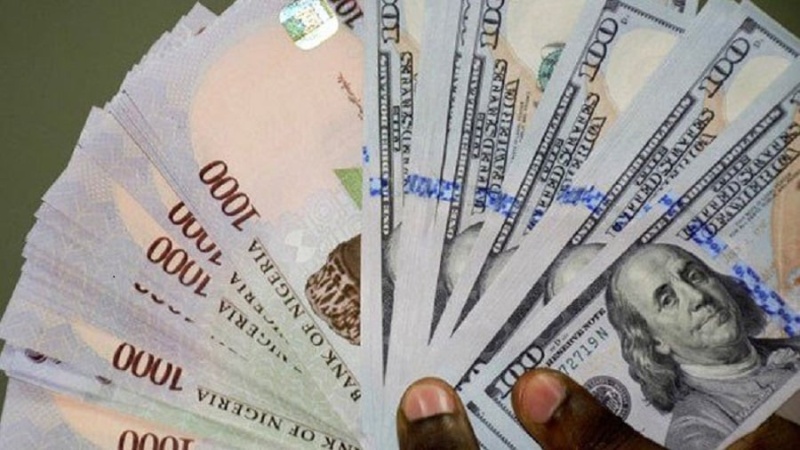
Nigeria’s foreign-exchange inflows rose for a third consecutive month in February, driven by strong offshore investor participation, even as the naira came under renewed pressure amid rising demand and declining external reserves.
Data from FMDQ showed total FX inflows into the market climbed 45 percent month on month to $4.4 billion, underscoring improving liquidity conditions. The increase was largely fueled by foreign portfolio investors seeking to take advantage of Nigeria’s high-yield environment, reinforcing the country’s appeal as a carry trade destination.
Offshore inflows rose 22 percent to $1.9 billion, accounting for about 44 percent of total inflows during the month. The sustained rise in foreign participation helped stabilise the currency for much of the period, despite underlying market pressures.
The Central Bank of Nigeria (CBN) also stepped up its market intervention, with FX sales surging 859 percent month on month to $326.1 million. While still relatively modest in scale, the increase signaled a more active stance by the regulator in response to growing demand pressures, largely attributed to increased import activity, according to analysts at Quest Merchant Bank.
Exporter inflows remained a key component of supply, contributing roughly 18 percent of total FX inflows. Receipts from exporters rose 35 percent to $783 million, while non-oil exporters recorded a 10 percent increase to $474 million. Inflows from individual local sources also surged 314 percent to $698 million, reflecting stronger domestic participation in the FX market.
However, longer-term foreign capital flows continued to lag. Foreign direct investment fell 21 percent month on month to $39.7 million, while inflows from foreign corporates declined 25 percent to $116.3 million. Analysts say structural challenges, including policy uncertainty, security risks and infrastructure deficits, remain key deterrents to sustained long-term investment.
“Unlike short-term portfolio flows, which are supported by elevated interest-rate differentials, long-term capital remains constrained by broader macroeconomic concerns,” analysts noted.
Despite the improved liquidity backdrop, the naira weakened sharply across markets, highlighting persistent demand pressures.
At the official window, the currency depreciated by N34.48 in a single session, or 2.48 percent, to close at N1,388.38 per dollar, compared with N1,353.90 recorded in the previous trading session before the public holiday, according to CBN data.
The pressure extended to the parallel market, where the naira fell by N15, or 1.06 percent, to N1,415 per dollar.
Analysts at Quest Merchant Bank said global factors are also shaping investor sentiment. The prolonged conflict in the Middle East has heightened risk aversion, reducing appetite for emerging-market assets.
They added that a de-escalation in geopolitical tensions, alongside Nigeria’s attractive yield environment, could help sustain offshore inflows and support the currency in the near term, though structural challenges remain a key overhang. (BusinessDay)