Updating your news feed...

NEWS EXPRESS is Nigeria’s leading online newspaper. Published by Africa’s international award-winning journalist, Mr. Isaac Umunna, NEWS EXPRESS is Nigeria’s first truly professional online daily newspaper. It is published from Lagos, Nigeria’s economic and media hub, and has a provision for occasional special print editions. Thanks to our vast network of sources and dedicated team of professional journalists and contributors spread across Nigeria and overseas, NEWS EXPRESS has become synonymous with newsbreaks and exclusive stories from around the world.


























Loading banners
Loading banners...

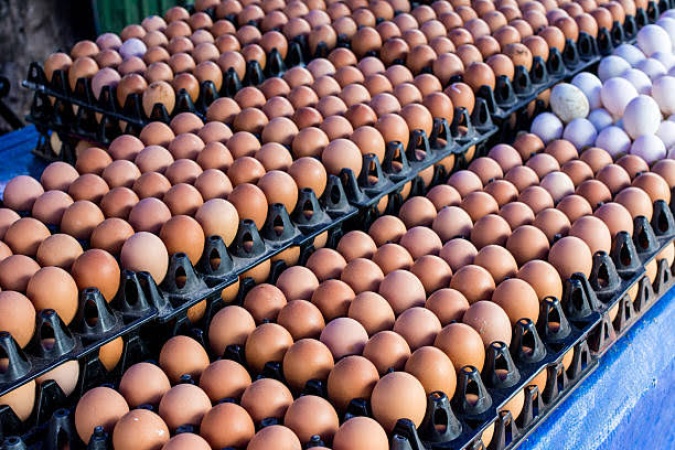
crates of eggs
Nigeria faces imminent egg shortages as day-old chick prices have surged 67 percent in three months, BusinessDay’s findings show.
Poultry farmers are struggling to restock and boost production amid months-long waits for pullets – young hens produced for egg laying. The scarcity has pushed the prices of day-old chicks to N3,000 from N1,800 in January 2026.
“There is a scarcity of pullets,” Dayo Gawati, managing director and chief executive officer, Fdot Farms Limited, said in response to questions.
Gawati attributed the scarcity to hatcheries’ inability to meet demand, as farmers who exited the business due to macroeconomic challenges over the last three years are now restocking amid lower feed costs.
“You cannot go into any hatchery to get pullets immediately because of the increased demand,” he said. “You have to wait for at least three months,” he noted, explaining that many farmers who exited the business are returning and restocking.
BusinessDay investigations show that a combination of factors is responsible for the scarcity of pullets in the country.
Taiwo Adeoye, former president of the Animal Science Association of Nigeria (ASAN), said from his Ogun State farm, that the cost of producing day-old chick has surged.
He added that hatcheries and breeders’ failure to stock-up the parent stock – hens and roasters used to produce fertile eggs that are hatched into commercial broilers or layers chicks.
“Most breeders and hatcheries did not restock the parent and grandparent due to low demand from farmers,” he said, explaining that they suffered huge losses as many poultry operators shut down operations owing to the surge in feed.
In 2023 and 2024, the country’s poultry industry suffered heavy losses as prices of maize and soybeans – key inputs for feed formulation skyrocketed.
The surge forced many operators to shut down their farm operation, which dropped the demand for day old chicks, forcing hatcheries to scale down also.
Growth in the country’s livestock sub-sector, in which poultry accounts for a bulk of it, grew by 0.08 percent in 2025 from a contraction of 2.14 percent in 2024.
Sunday Ezeobiora, president of the Poultry Association of Nigeria, said the industry is bouncing back after years of pressure as feed prices, accounting for 70 percent of production costs, declined.
Ezeobiora says the current scarcity of day-old chicks will need another egg-production cycle to be fully resolved.
Naira devaluation was also cited as one of the factors responsible for the scarcity of day-old chicks.
According to Gawati, hatchery owners were caught off guard by the naira’s devaluation, as they depend on importing fertilised eggs for hatching and sale.
He noted that the devaluation made purchases more expensive, forcing many to scale down. “The naira devaluation has also worsened the scarcity situation,” he said.
Eggs getting out of reach
The constant surge in prices of eggs is making it difficult for many Nigerians to purchase eggs and chicken.
This is putting the country’s protein consumption at risk and the egg per day drive of the government for children as eggs are the major source of protein, especially for low-income earners, is out of reach.
The country’s per capita daily protein intake is estimated to be 45.4g against the Food and Agriculture Organisation’s (FAO) minimum of 53.8g.
With eggs currently eluding many Nigerian households owing to the continuous rise in prices, the country’s per capita protein intake gap will further widen, and the number of malnourished persons will increase. (BusinessDay)