Updating your news feed...

NEWS EXPRESS is Nigeria’s leading online newspaper. Published by Africa’s international award-winning journalist, Mr. Isaac Umunna, NEWS EXPRESS is Nigeria’s first truly professional online daily newspaper. It is published from Lagos, Nigeria’s economic and media hub, and has a provision for occasional special print editions. Thanks to our vast network of sources and dedicated team of professional journalists and contributors spread across Nigeria and overseas, NEWS EXPRESS has become synonymous with newsbreaks and exclusive stories from around the world.


















Loading banners
Loading banners...

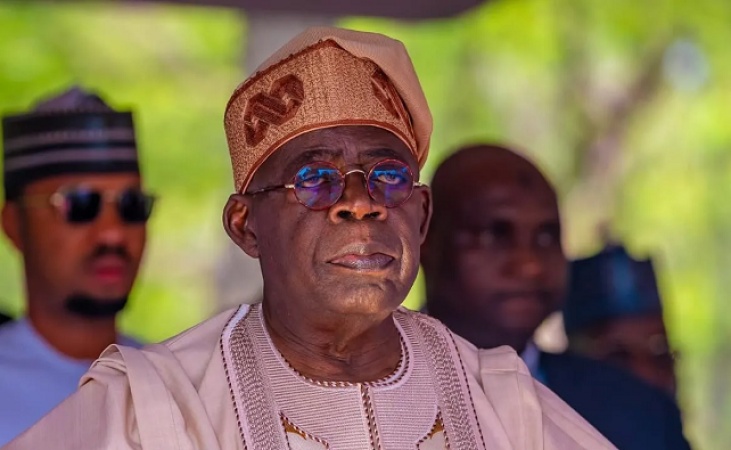
President Tinubu
Thousands of kilometres away from Nigeria’s shores, rising tensions between the United States-Israel and Iran are beginning to ripple through the global economy. For Nigeria, the fallout may come at a delicate moment, just as the country was beginning to see early gains from sweeping economic reforms introduced by President Bola Ahmed Tinubu in 2023.
After nearly three years of painful adjustments, Nigeria’s macroeconomic indicators had started to show signs of stabilisation. But the renewed geopolitical tension in the Middle East now threatens to test the resilience of those gains and deepen the cost-of-living pressures already facing millions of Nigerians.
Signs of recovery
Since 2025, the country’s macroeconomic outlook had begun to improve gradually. Nigeria’s external reserves climbed to a 13-year high of $50.45 billion, strengthening confidence in the country’s foreign exchange position and providing some buffer against external shocks.
Inflation, which eroded purchasing power sharply between 2023 and 2025, also began to ease. According to the latest Consumer Price Index released by the National Bureau of Statistics, headline inflation moderated slightly to 15.10 percent in January 2026, down from 15.15 percent in December 2025.
In response to improving conditions, the Central Bank of Nigeria signalled a shift in its policy stance. The apex bank reduced the Monetary Policy Rate (MPR) by 50 basis points to 26.5 percent in February 2026, indicating a move from emergency tightening toward what policymakers described as “cautious normalisation.”
For policymakers, these indicators suggested that the difficult reforms, including the removal of fuel subsidies and the liberalisation of the foreign exchange market, were beginning to stabilise the economy.
Yet the fragile recovery now faces a new test.
A geopolitical shock
The escalating confrontation involving the United States, Israel and Iran has rattled global energy markets and heightened uncertainty across financial markets.
Oil prices have surged as investors anticipate potential disruptions to supply, particularly around the strategically important Strait of Hormuz, a key global oil transit route.
Brent crude oil is currently trading around $99.80 per barrel, significantly higher than Nigeria’s $64.9 benchmark price in the 2026 budget.
At first glance, this surge appears beneficial for an oil-exporting country like Nigeria. Higher oil prices typically translate to stronger government revenues and improved foreign exchange inflows.
Indeed, a policy brief by the Nigerian Economic Summit Group described the crisis as a potential fiscal opportunity.
In its report titled Boom, Not Gloom, the think tank said Nigeria could earn substantial windfalls if elevated oil prices persist.
“Fiscal windfalls could range from N2.3 trillion under a short-lived crisis to N30.2 trillion under a protracted scenario,” the group noted.
Such revenue could significantly reduce the country’s over N25 trillion fiscal deficit and strengthen public finances.
But beneath the fiscal optimism lies a more complex domestic reality.
A double-edged sword
While government revenues may rise, the impact on households and businesses tells a different story.
The conflict has triggered a sharp increase in fuel prices globally, a development that transmits quickly into Nigeria’s domestic economy under the current market-based fuel pricing regime.
Prices of petrol and diesel have risen significantly, pushing up transport fares, energy costs and production expenses for businesses.
For millions of Nigerians already grappling with high living costs, the impact is immediate.
Under the former fuel subsidy regime, global price shocks were partly absorbed by government spending. But with subsidies removed, international price movements now translate directly into domestic pump prices.
That shift, economists say, could amplify inflationary pressures.
Reform gains under pressure
Abdulfatai Adedeji, research fellow at the Centre for the Study of the Economies of Africa, describes the Middle East crisis as both an opportunity and a risk for Nigeria.
“A prolonged Middle East conflict presents both opportunities and risks for Nigeria’s reform momentum and investor confidence,” Adedeji told BusinessDay.
According to him, Nigeria enjoys a geographic advantage because its crude export routes are largely insulated from disruptions around the Strait of Hormuz.
That means higher global oil prices could boost Nigeria’s foreign exchange inflows, strengthen external reserves and improve fiscal revenues in the short term.
However, the domestic economic adjustments may prove more difficult.
Recent increases in petrol prices, rising from about N840 to around N1,300 per litre, have already pushed up transportation and logistics costs across the country.
Those increases could create upward pressure on inflation and slow recovery in the real sector.
Refining offers partial relief
Nigeria’s domestic refining capacity is beginning to provide some cushion against global disruptions.
The emergence of the Dangote Petroleum Refinery has helped reduce exposure to international shipping costs, insurance premiums and supply chain disruptions associated with imported fuel.
Nigeria’s daily petrol consumption is estimated at 58–61 million litres, while domestic supply has risen to roughly 39.5 million litres.
Even so, the country remains partly exposed to international price movements, meaning prolonged geopolitical tensions could still drive domestic fuel costs higher.
Adedeji, quoted earlier, warns that financial markets could also react negatively if the conflict drags on.
“Rising global risk aversion could trigger portfolio outflows, widen sovereign spreads, and put pressure on exchange rate stability, thereby testing investor sentiment and slowing reform traction,” he noted.
Shielding households and businesses
To protect reform gains while cushioning economic pain, Adedeji says policymakers must adopt targeted interventions.
The economist argues that fiscal policy should prioritise direct support to vulnerable households rather than reversing key reforms.
Expanding targeted cash transfers under Nigeria’s National Social Safety Net Programme could help shield 13 to 15 million households from rising transport and energy costs.
“Policymakers should resist the temptation to reverse fuel subsidy reforms,” he said.
Reintroducing subsidies could undermine fiscal credibility and erode the oil revenue windfall, potentially costing Nigeria between N3 trillion and N5 trillion if global prices remain elevated.
State governments, he added, must also strengthen social registers and monitoring systems to ensure support reaches intended beneficiaries.
For businesses, particularly small and medium-sized enterprises, temporary relief measures such as energy cost support, logistics assistance and expanded SME financing could help sustain operations and employment.
Navigating uncertainty
The central bank, meanwhile, faces the difficult task of balancing inflation control with economic growth.
“From a monetary policy perspective, maintaining a cautious but flexible stance is essential,” Adedeji said.
“While tightening may be required to anchor inflation expectations and support exchange rate stability, the central bank should also ensure adequate liquidity to productive sectors to avoid an excessive credit squeeze.”
Ultimately, he stressed that a balanced policy approach will be crucial.
“A data-driven and balanced policy mix will be key to protecting reform gains while mitigating short-term welfare and growth risk.”
For Nigeria, the Middle East conflict highlights the fragility of economic recovery in an interconnected world.
Even as higher oil prices promise windfalls for government finances, the same forces are intensifying inflationary pressures that ordinary Nigerians feel most acutely.
The challenge for policymakers will be ensuring that the benefits of rising oil revenues do not come at the cost of worsening living conditions, and that the hard-won gains of reform are not eclipsed by a crisis unfolding far beyond the country’s borders. (BusinessDay)