ADAD
ADADUpdating your news feed...

NEWS EXPRESS is Nigeria’s leading online newspaper. Published by Africa’s international award-winning journalist, Mr. Isaac Umunna, NEWS EXPRESS is Nigeria’s first truly professional online daily newspaper. It is published from Lagos, Nigeria’s economic and media hub, and has a provision for occasional special print editions. Thanks to our vast network of sources and dedicated team of professional journalists and contributors spread across Nigeria and overseas, NEWS EXPRESS has become synonymous with newsbreaks and exclusive stories from around the world.












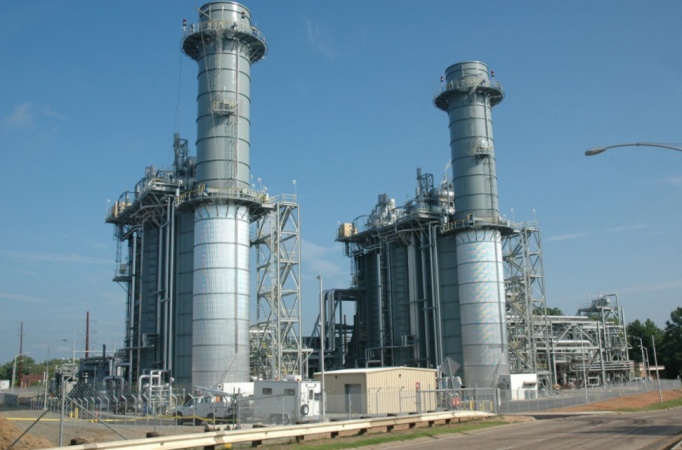
The power shortage across Nigeria may worsen as suppliers have reduced the amount of gas they supply to thermal power plants.
It would be recalled that the Nigerian Independent System Operator (NISO) had stated that thermal power plants require an estimated 1,629.75 million standard cubic feet of gas per day to operate at optimal capacity.
However, as of February 23, 2026, actual supply stood at about 692.00 mmscf per day, representing less than 43 per cent of the required volume.
The development is coming amid blackouts in many states, a situation that is crippling businesses.
The Chief Executive Officer of the Association of Power Generation Companies, Dr. Joy Ogaji, during an interview on Fresh FM in Ibadan, warned that the mounting debt across the power value chain is pushing the sector toward a major crisis.
Speaking on the situation, Ogaji alleged that the crisis stemmed from the failure of the Nigerian Bulk Electricity Trading Plc to fully pay for electricity generated by GenCos since the sector’s privatisation.
According to her, the government currently owes generation companies about N6.8 trillion, with roughly 70 per cent of the amount relating to thermal plants.
She said about 70 per cent of whatever the government owes gas-fired power plants belongs to gas suppliers, meaning gas companies are owed about N3.3 trillion out of the N4.76 trillion tied to thermal generation.
Ogaji disclosed that suppliers have informed generation companies that they will no longer supply gas to power plants unless payments are made.
“NBET is set up to buy power from GenCos and sell to DisCos. The aim is that, as they buy power, they will pay in full, but since 2013 till today, they’ve never paid in full, so this debt is now N6.8tn,” she said.
Providing a breakdown of the debt, Ogaji stated that the liabilities have grown significantly over time.
“From 2015 to December 2024, the debt profile grew to N4tn. In each month of 2025, there is a shortfall of N200bn. So if you calculate N200bn times 12, that is N2.4tn, making the whole debt N6.4tn after December 2025.
“We’re already in March 2026. The debt grew to N6.6tn in January and N6.8tn in February. At the end of March, you need to add N200bn again to make it N7tn,” she said.
Ogaji added that a significant portion of the outstanding debt is owed to gas suppliers because thermal plants account for the majority of electricity generation on the national grid.
She said: “The generation companies have hydros, and we have thermal power plants. The thermal power plants are the ones that use gas. The hydro plants use water, so they do not owe gas suppliers.
“On the grid, we have 30 power plants. Out of that, about 30 per cent are hydro now because Zungeru Hydroelectric Power Station has added 700 MW, and there are other smaller hydro plants. So, the remaining 70 per cent comes from gas.
“Therefore, for every N100 the thermal plants invoice NBET, N70 belongs to the gas suppliers. So, if we go by that ratio, out of the N6.8tn that I’m quoting, if we take out 70 per cent of that money that belongs to thermal plants, we need to work out another 70 per cent of that thermal 70 per cent, and that belongs to gas suppliers.”
Industry estimates, based on this calculation, show that about N3.3 trillion of the total debt is owed to gas producers, whose fuel powers most of Nigeria’s electricity generation.
The GenCo chief warned that the worsening debt crisis is directly responsible for the current electricity shortages.
“Yes, it is 120 per cent correct to say that the debt is the reason why we are in darkness,” she said.
Ogaji added that gas producers are increasingly insisting on payment before supplying fuel to power plants.
“Gas is not available because the gas suppliers have told us that if we need gas, we need to put money on the ground to get gas in the pipe. We owe them a lot of money,” she said.
According to Ogaji, the inability of generation companies to receive payments has also left them struggling to service bank loans obtained during the 2013 power sector privatisation.
“We owe gas suppliers, and we also owe lenders. You may have read in the papers that a bank has been threatening to take over Egbin Power Station because of the acquisition loan,” she said.
She also said GenCos’ financial burden had worsened significantly due to the sharp depreciation of the naira since the loans were obtained.
“In 2013, during the privatisation, the GenCos took loans from different banks so that they could make a lot of power available to Nigeria. But with this lack of payment, they are not able to pay their loans, and another problem is that they took those loans in dollars in 2013 when the dollar to the naira was N155 to one dollar,” she added.
Blackout, load shedding continue
Consumers in different parts of the country are grumbling as blackouts and load shedding on the national grid continue.
The low supply has affected all parts of the country, with electricity distribution companies announcing load shedding across their franchise areas as a way to ration electricity to communities.
For instance, data on the platform of the Nigerian Independent System Operator showed that Abuja Disco is getting 539 megawatts from the grid, while Ikeja Disco is receiving 533MW and Eko Disco is getting 455MW.
Ibadan Disco is getting 336MW, while Benin Disco is getting 227MW, with Enugu Disco receiving 218MW and Jos Disco getting 159MW.
Kaduna Disco is receiving 178MW, with Kano Disco getting 190MW and Port Harcourt Disco getting 196MW.
The Nigerian Electricity Regulatory Commission (NERC), in a recent report, confirmed that only 32% of the 13,625 megawatts installed capacity of electricity power plants dispatched electricity in the month of February.
NERC, in the February 2026 Operational Performance Factsheet posted on its X account, said an average of 4,384MW was available for dispatch during the month.
It said the average load factor is 93%, showing that 4,102MWh/h of available capacity was utilised.
It identified Ihovbor_2, Kainji_1 and Jebba_1 as top energy producers that stood out with strong availability and high utilisation levels.
This means that hydro power plants continue to serve as major contributors to the national grid despite the dry season, which usually leads to a drop in water levels in hydro dams.
Yesterday, many residents of Lagos continued to protest prolonged blackouts amid the scorching heat in the state.
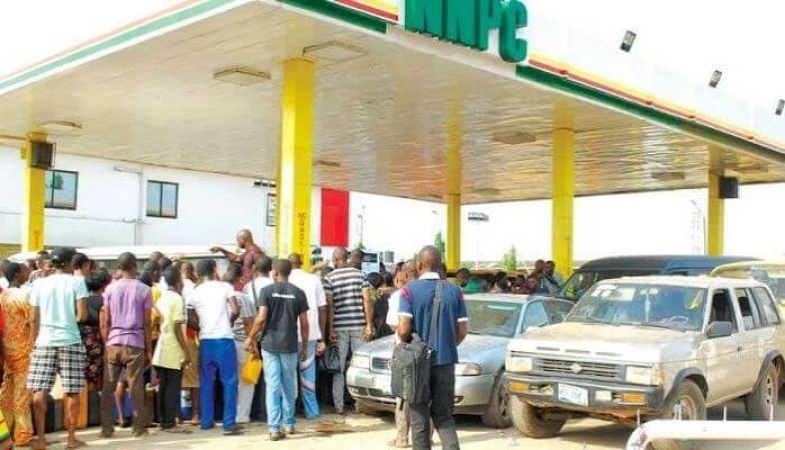
The situation is worsened by the increase in the pump price of petrol, which has made it extremely difficult for residents of the affected communities to power their generating sets.
From Fadeyi to Mushin and from Igando, Ajegunle, Ijanikin and Badagry, the story remains the same.
Frustrated over what they described as “persistent blackouts,” residents of Fadeyi yesterday took to the streets to protest the “epileptic” electricity supply across the state.
They claimed that despite the persistent blackouts, the electricity distribution companies still slammed them with outrageous estimated bills.
Some of them queried the refusal of the DisCos to comply with the Federal Government directives ordering them to give out free meters.
Mrs. Oyinlola, a mother of three who had been struggling to keep her family comfortable without power, accused the DisCos of alleged connivance with generator sellers as well as owners of petrol stations to fleece them of their hard-earned money.
“It’s been three weeks now, and it’s like living in a different era. We can’t charge our phones, the food in the fridge is getting bad, and the children are getting restless,” she said.
John Ekanem, who owns a photo studio and business café, claimed that at night residents set up makeshift lanterns, while others had invested in generators, filling the air with roaring noise from their engines.
For residents like Mrs. Oyinlola and Mr. Adeyemi, the power outage is more than just an inconvenience; it is a disruption to their daily lives, a reminder of the fragility of the infrastructure that underpins their community.
A viral video circulating on social media on Thursday showed a group of protesters, primarily young Nigerians, marching through the Fadeyi area of Lagos.
The demonstrators, carrying placards and chanting, expressed their frustration over what they described as a collapse of the power sector that is “killing” local businesses.
Some of the placards bore inscriptions such as: “No more estimated billing,” “No more epileptic power supply,” “No light, no life, no nation,” and “You’re destroying, killing so many businesses; give us regular light.”
“We are not asking for too much,” one protester was heard shouting in the footage. “Make them give us light!”
Similarly, palpable tension is hovering over Obadore, Akesan and Igando communities in Lagos, as residents threatened to stage a protest over a prolonged power outage that has plagued the area for months.
The residents have threatened to stage a 1,000-man march to the head office of Ikeja Electric, the power distribution company responsible for the area.
The residents lamented the hardships caused by the over three-month blackout, which they claimed had disrupted their businesses, compromised their safety, and subjected them to unnecessary hardships.
“We are tired of living in darkness,” said a resident who identified himself as Shakiru Ojo. “We pay our bills regularly, but Ikeja Electric has failed to provide us with the basic service we deserve,” he added.
Speaking at a press conference held on Tuesday in Lagos, Chairman of the Electricity Committee and Vice Chairman of the Akesan/Obadore Joint Community Development Association (JCDA), Dr. Adebola Ademeso, stated that they are compelled to communicate their disaffection with IEKD, specifically as “they are being treated as an irrelevant community that must be subjected to perpetual darkness, despite efforts at maintaining a cordial and peaceful mutual relationship.”
“In the event there is supply, it would not last more than 30 minutes or, at most, two hours in a week.
“At our last engagement meeting, it was agreed that five electric poles would be erected at different locations indicated by our community. But to our dismay, five poles for the month of February have not been erected in the month of March.
“Our 10 cardinal resolutions in the form of requests are as follows: we say no to continuing to pay for darkness. We demand the scrapping of the November and December 2025 bills, while that of January 2026 be negotiated,” he said.
Discos apologise, blame gas constraints
Meanwhile, in a notice to customers providing an update on power supply disruption, Ikeja Electric apologised to customers, saying:
“The current situation is due to gas supply constraints affecting the national grid. This has resulted in a significant energy shortfall, necessitating increased load shedding across all our feeders.
“Please be assured that we are in constant communication with relevant stakeholders as they work to restore normal generation levels.”
Eko Electricity Distribution Company (EKEDC) also said: “We fully understand the inconvenience this situation may be causing and deeply appreciate your patience and continued understanding during this period. Please be assured that all relevant stakeholders are working diligently to resolve the gas supply challenge and restore normal power supply as quickly as possible.”
The power outage is the same in most parts of the country. Barely one week ago, artisans and residents across Kano State told Daily Trust that the persistent blackout is crippling small businesses and worsening living conditions.
Power supply in Kano and parts of the North-West is handled by the Kano Electricity Distribution Company (KEDCO), serving Kano, Katsina and Jigawa states.
Musa Abdullahi, a welder in the Hotoro area of Kano, said he now relies almost entirely on a petrol generator.
“Before this load shedding became worse, we used to have at least eight to 10 hours of electricity daily. Now, we sometimes go two days without power. I spend between N8,000 and N12,000 daily on fuel. That is eating deep into my profit,” he said.
A tailor in Sabon Gari, Aisha Sani, said her earnings had dropped by nearly half in the last two months.
She said since she uses industrial machines that require stable power, she misses deadlines when there is no electricity.
She said she lost at least five big orders recently because she could not deliver on time.
Frozen food and cold-drink sellers are also recording heavy losses. Maryam Ibrahim, who sells frozen chicken and fish at Kurna, said she lost goods worth over N300,000 after a 48-hour outage.
In Yenagoa, artisans say rising fuel costs have forced them to increase service charges, leading to poor patronage.
Stephen Eddie, who runs a barbing salon in Amarata, said he raised his price from N500 to N800 to offset generator expenses.
In Kaduna, business owners say they have adjusted to the reality of unreliable power by adopting alternative energy sources, while residents say even when electricity returns briefly, bills remain high.
Meanwhile, the Abuja Electricity Distribution Company (AEDC), while expressing empathy with the frustrations being experienced due to the limited power allocation to its customers, said Nigeria’s power sector is currently facing significant constraints during the dry season (typically November to April).
While also blaming the gas shortage, it said hydropower generation often drops during this season due to low water levels in dams, and many thermal plants experience reduced gas supply from pipeline issues, vandalism and other supply-chain disruptions.
“These factors have led to lower overall generation and reduced allocations from the national grid to all Distribution Companies (DisCos), including AEDC.” (Daily Trust)