Updating your news feed...

NEWS EXPRESS is Nigeria’s leading online newspaper. Published by Africa’s international award-winning journalist, Mr. Isaac Umunna, NEWS EXPRESS is Nigeria’s first truly professional online daily newspaper. It is published from Lagos, Nigeria’s economic and media hub, and has a provision for occasional special print editions. Thanks to our vast network of sources and dedicated team of professional journalists and contributors spread across Nigeria and overseas, NEWS EXPRESS has become synonymous with newsbreaks and exclusive stories from around the world.













Loading banners
Loading banners...

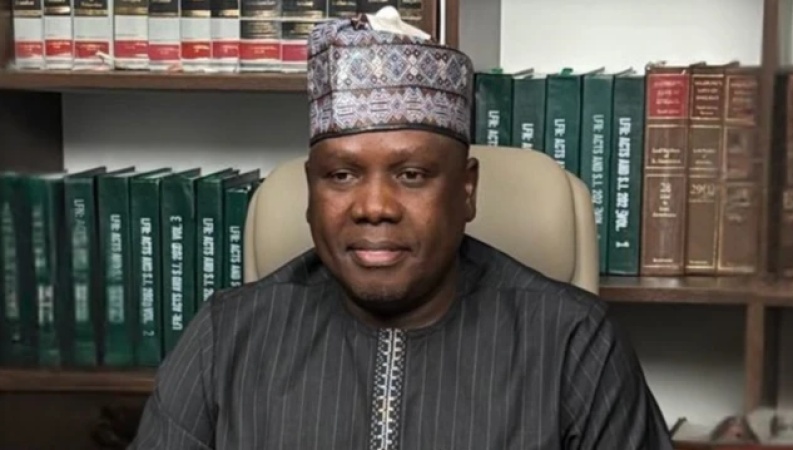
Presidential spokesperson, Daniel Bwala
By ABDULRAZAQ MAGAJI
For good or ill, Daniel Bwala’s recent appearance with Mehdi Hasan on Al Jazeera quickly has become one of the most discussed political media moments involving a Nigerian government spokesperson in recent times. At the end of the day, Bwala, the government spokesman became the story. If anything, Bwala must be licking his wounds, and those who tricked him into sitting across the table with Hasan must be feeling fulfilled, for taking their pound of flesh from an ideological turncoat.
When government spokespersons agree to interviews with tough international journalists, they step into an arena where preparation, clarity, and composure are essential. Unfortunately, that was not the case when Bwala sat down with a formidable interviewer like Mehdi Hasan. What unfolded was far less a robust defence of government policy and more a cautionary tale about the risks of entering a high-stakes interview unprepared.
The clash between Bwala and Hasan was always likely to be intense. Hasan has built a global reputation for rigorous questioning, sharp interruptions, and relentless follow-ups that force guests to defend every claim. Many seasoned politicians have struggled in that format. Yet effective spokespersons understand the terrain beforehand: they anticipate difficult questions, prepare clear talking points, and maintain discipline in their responses.Bwala appeared to underestimate this dynamic.
From the outset, the conversation became uneven. Rather than presenting concise, evidence-based responses, Bwala often drifted into long explanations that failed to directly answer Hasan’s questions. In modern broadcast journalism, especially on platforms where time is of essence, such evasiveness rarely works. The more a guest avoids a question, the more persistent the interviewer becomes. Hasan, sensing the hesitation, pressed harder.
The result was a series of exchanges in which the interviewer maintained control of the discussion while the spokesman struggled to regain footing. Instead of steering the conversation toward the Nigerian government’s achievements or policy priorities, Bwala repeatedly found himself defending statements he had already made. In the theatre of political communication, that shift, from proactive messaging to reactive defence, is often the first sign that an interview is slipping away.
Another issue was tone. Government spokespersons must balance firmness with calm authority. During the Interview, however, Bwala occasionally sounded defensive and irritated. While such reactions are understandable, especially when under pressure, they rarely play well with audiences. Viewers tend to interpret emotional responses as weakness, particularly when the interviewer remains composed as Hasan appeared to be.
Meanwhile, Hasan maintained the role he is known for: the relentless prosecutor. His sharp, quick, and confrontational questioning style allowed him to dominate and dictate the pace of the interview. Each time Bwala attempted to broaden the discussion, Hasan redirected it back to the central issues. In effect, the spokesman was forced to argue on the interviewer’s terms rather than his own. That imbalance was perhaps the defining feature of the encounter.
A successful spokesperson does not necessarily “win” a hostile interview; the real objective is to communicate the government’s message clearly despite difficult questioning. On that score, Bwala struggled and failed as viewers were left with more memories of the confrontation itself than with any coherent explanation of government policy.
In today’s digital media environment, such moments travel quickly. Clips circulate across social media, stripped of context but rich in drama. What might have been a routine policy interview quickly became a viral example of a cornered and unsure-footed presidential spokesperson. For critics of the Nigerian government, the exchange served as confirmation of their skepticism; for its supporters, it raised awkward and uncomfortable questions about media strategy.
The lesson here is not merely about one interview. It speaks to a broader challenge facing many government publicists in the global media age. International broadcasters like Al Jazeera operate within a journalistic culture that prizes aggressive questioning and forensic debate. So, it is expected that spokespersons who enter that arena must match that intensity with preparation and discipline. Otherwise, the interview itself becomes the headline.
For Daniel Bwala, the encounter with Mehdi Hasan will linger as a reminder of how unforgiving modern political journalism can be. And the lesson here for all of us is that, in politics, losing control of the narrative means losing the argument before the audience.
•Magaji magaji778@gmail.com writes from Abuja.