Updating your news feed...

NEWS EXPRESS is Nigeria’s leading online newspaper. Published by Africa’s international award-winning journalist, Mr. Isaac Umunna, NEWS EXPRESS is Nigeria’s first truly professional online daily newspaper. It is published from Lagos, Nigeria’s economic and media hub, and has a provision for occasional special print editions. Thanks to our vast network of sources and dedicated team of professional journalists and contributors spread across Nigeria and overseas, NEWS EXPRESS has become synonymous with newsbreaks and exclusive stories from around the world.























Loading banners
Loading banners...

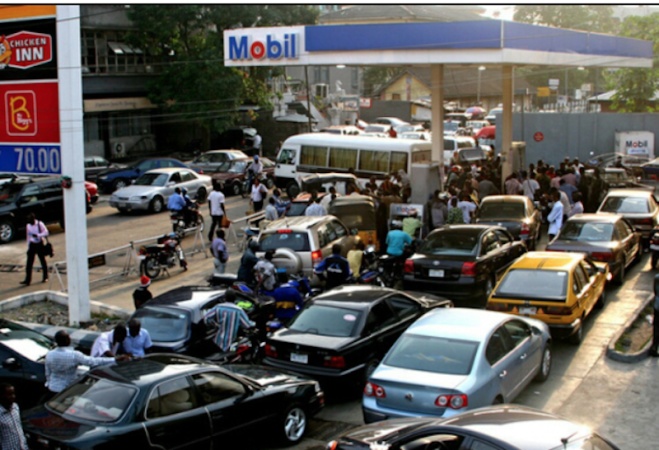
Motorists queue to buy petrol at a filling station
By NANA MUSA
Many motorists in Abuja have expressed frustration over the recent increase in the pump price of Premium Motor Spirit (PMS), popularly known as petrol.
They questioned why marketers raised the price of existing stock before receiving new supplies.
The News Agency of Nigeria (NAN) reports that many fuel stations used to sell between N875 and N880.
NAN reports that the Nigerian National Petroleum Company Limited (NNPCL) is presently selling at N1,261, while other fuel outlets are selling between N1, 250 and N1,350 and above.
Investigations by NAN showed that pump price of petrol had been increased thrice in one week.
Following the development, many commercial and private car owners had parked their cars as they could not afford the cost of fuelling them.
Checks by NAN across the FCT also showed that there were few commercial vehicles operating.
Many commuters, including civil servants were seen stranded at various bus stops, as the few commercial vehicles operating had increased transport fares.
Some motorists, who spoke to NAN, expressed sadness about the situation, while calling on the Federal Government to intervene on the unstable fuel price and its hardship on citizens.
Some motorists told NAN that the sudden increase had added pressure to their daily expenses and worsened the cost of transportation and goods.
Mr Ibrahim Sadiq, a commercial driver in the Wuse area, said that the development was difficult to understand because many stations adjusted their prices almost immediately.
“Most of the fuel in their tanks was bought at the old price. So why increase the pump price while still selling the old stock which was bought at a cheaper rate,’’ he asked.
Sadiq said that the frequent adjustments had made it difficult for transport operators to maintain stable fares, often leading to disagreements with passengers.
Similarly, Mrs Chinyere Okeke, a civil servant said the situation had become unpredictable for motorists.
“Every week, there is a change in price, it affects our budgeting because transportation costs keep rising.
“This situation affects everything like food stuff among others,” she said.
Another motorist, Mr Musa Abdullahi, said that marketers should be monitored by the regulatory authorities to ensure fairness in pricing.
“Even before official announcements, some filling stations quickly adjusted their meters, authorities need to check this practice,” he said.
Abdullahi urged clearer guidelines on price adjustments to prevent arbitrary increases and protect consumers.
A business owner at Utako market, Mr Sani Wasiu, said that the increase would affect business.
“I have already ordered for more goods but while they were loading, the increase in pump price of petrol occurred, and it made me spend more on transportation than the goods.
“I need to sell and make profit, this is also applicable to other business owners because that is what we all suffer.
“If the pricing is stable, the cost of food will be reduced and it will triple down to everything,” Wasiu said.
However, industry stakeholders said the pricing pattern was largely influenced by market dynamics following the deregulation of the downstream petroleum sector.
An official of the NNPCL who spoke on condition of anonymity, said that the petrol pricing in a liberalised market often reflects prevailing supply costs and anticipated replacement prices.
According to the official, marketers sometimes adjust pump prices based on the expected cost of replenishing their stock.
“When the landing cost of petrol increases, marketers factor is the amount it will take to buy the next supply, that is why prices may change even before old stock is exhausted,” the official said.
A representative of the Nigerian Midstream and Downstream Petroleum Regulatory Authority (NMDPRA), who also spoke on condition anonymity, said that the agency always monitor activities in the downstream sector to ensure compliance with regulatory standards.
According to the official, while prices are determined by market forces under deregulation, marketers are expected to operate transparently and avoid exploitative practices.
An economic analyst, Mr Wale Johnson said that the fluctuation in global crude oil prices, foreign exchange rates and supply logistics remain key factors influencing petrol prices in the country.
He urged authorities to strengthen monitoring mechanisms and improve communication with the public to reduce uncertainty surrounding fuel pricing. (NAN)